

Audio By Carbonatix
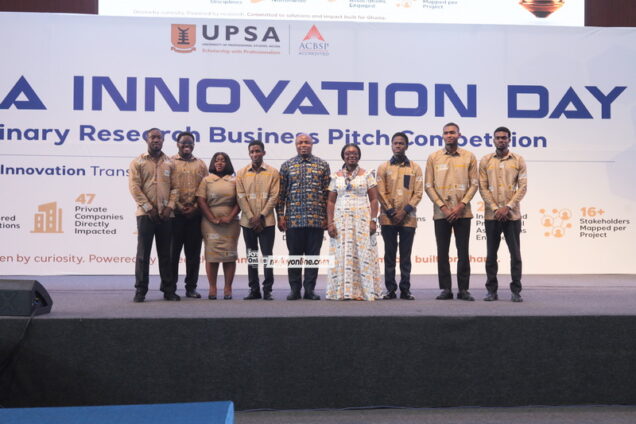
The University of Professional Studies, Accra (UPSA) is intensifying efforts to bridge the gap between academia and industry by transforming student research into practical solutions to real-world problems.
The initiative is part of a broader innovation and creativity drive led by UPSA Vice-Chancellor, Prof. John Kwaku Mensah Mawutor, to ensure that academic research does not remain confined to university shelves but contributes to solving problems in society.
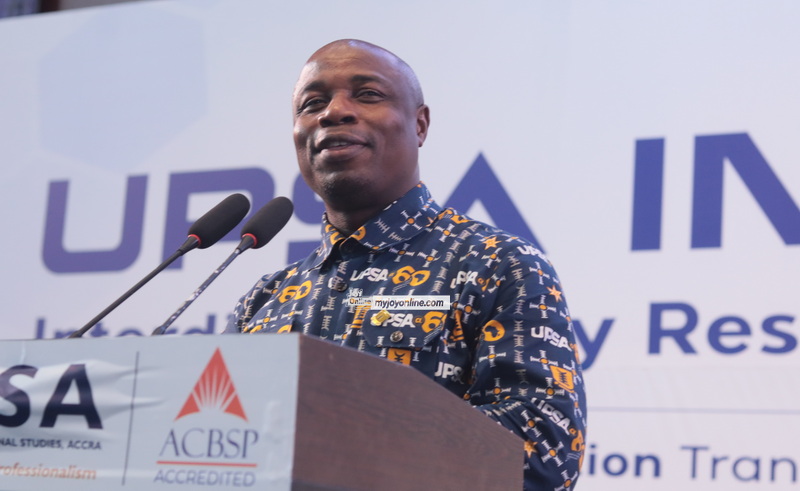
Speaking at the UPSA Innovation Day Cohort programme, Prof. Mawutor said universities had long been criticised for producing research that rarely translates into practical solutions.

“Our main objective is to move research from the shelves to the market,” he said.
“As we all know, universities, particularly at the undergraduate level, usually introduce students to basic research. We teach them how to conduct research, but at the end of the day, their work often remains on the shelves.”
He said the situation had also discouraged some students from undertaking research because they could not see its practical impact.
Pairing disciplines to solve real problems
Prof. Mawutor said UPSA introduced an interdisciplinary model last year under which students from different academic programmes collaborate to develop practical solutions.
“Instead of allowing an accounting student to conduct research solely in accounting or taxation, for instance, we now require every accounting student to work with an information technology student,” he explained.
He said research findings from one discipline could then be transformed into digital products by students from another discipline.
He cited a team of accounting students that developed a tax solution which, after collaboration with IT students, was transformed into a digital tool that could help taxpayers assess their tax obligations.
“These are the kinds of solutions we need in today’s world. Everything we are doing is geared towards solving real problems,” he said.
‘Ghanaians are naturally innovative’
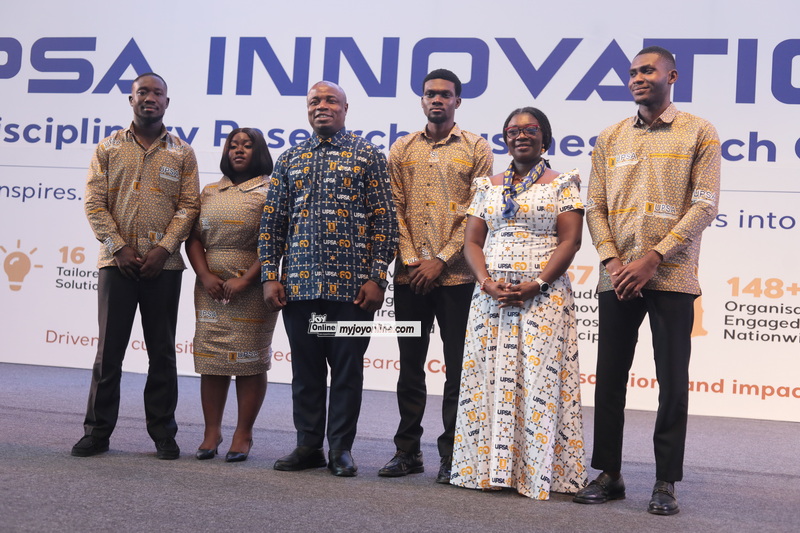
Responding to concerns about the level of innovation in Ghanaian universities, Prof. Mawutor said the challenge was not a lack of talent but the absence of adequate platforms and opportunities for students to demonstrate their abilities.
“Ghanaians are naturally innovative. Once someone decides to attend a university, it shows that the person wants to acquire knowledge.
“We must provide students with platforms and environments that allow them to become more innovative,” he said.
He said students were now encouraged to engage with companies, communities and individuals to identify real problems and develop practical solutions.
One example, he said, was a facility-booking platform developed by students to allow users to check venue availability, make bookings and pay online without physically visiting the campus.
“That is innovation. If we underestimate these students and fail to provide them with the right platforms, they will never have the opportunity to demonstrate their abilities,” he said.

‘We want to produce millionaires before graduation’
Addressing concerns that thousands of graduates leave Ghanaian universities each year without the practical skills required to solve national problems, Prof. Mawutor said UPSA was determined to contribute to changing the situation.
“We must start somewhere. We must stimulate their innovative potential for the benefit of Ghana,” he said.
He said the university wanted to expand the way it celebrates student achievement at future congregations by recognising entrepreneurial accomplishments alongside academic excellence.
“We often celebrate academic performance, but in the coming years, whenever we hold our congregations, we want to celebrate not only academic excellence but also entrepreneurial achievements,” he said.

“We want to produce millionaires before they graduate. That is the dream, and it will come to pass.”
Prof. Mawutor said UPSA management would also work to connect student innovators with potential investors.
He disclosed that one participant in the innovation cohort had already secured employment through the initiative.

Developing locally relevant research
The Vice-Chancellor also said faculty members were being encouraged to develop theories and teaching materials that reflect Ghanaian realities.
He cited the university’s Book Ownership Project, which encourages lecturers to develop teaching materials using familiar local examples, such as Melcom, rather than relying predominantly on examples from foreign markets.
“Next year, you will see many theories being developed and propounded by our lecturers here. You will see bigger and better innovations,” he said.
The initiative forms part of UPSA’s broader effort to make university education more practical, entrepreneurial and responsive to the needs of industry and society.
Latest Stories
-
NPP national elections: 3,000–4,000 police to handle security, traffic in Kumasi – Karbo
1 hour -
Atta Akyea fumes as Manhyia MP is to spend another night in EOCO custody
2 hours -
SSNIT says La Beach clearance was to protect hotel investments, beaches to remain public
2 hours -
APSU congratulates St Augustine’s College after back-to-back National Investment Quiz wins
2 hours -
Renewed flood intervention at Mallam Junction raises hopes among residents, businesses
3 hours -
St Augustine’s College retain National Investment Quiz title after nail-biting grand finale
3 hours -
Education infrastructure investment will drive Banda’s development – Ahmed Ibrahim
3 hours -
Teacher unions strike: Gov’t presents fresh proposals as talks end inconclusively
4 hours -
51,000 teachers’ promotion arrears to be validated for October payment – Education Minister
5 hours -
Kwabena Boamah appointed Board Chair for Impact Investing Ghana
5 hours -
Striking teacher unions to meet Fair Wages and Salaries Commission on October 6
5 hours -
EOCO working with AG to arraign Nana Baffour Awuah before weekend court
5 hours -
Duraplast reassures customers after fire, announces October 5 reopening
5 hours -
Call off strike, gov’t will not renege on promotion arrears pledge – Haruna Iddrisu to teacher unions
5 hours -
Committee set up to validate teachers eligible for 20% deprived-area allowance – Education Minister
5 hours