

Audio By Carbonatix
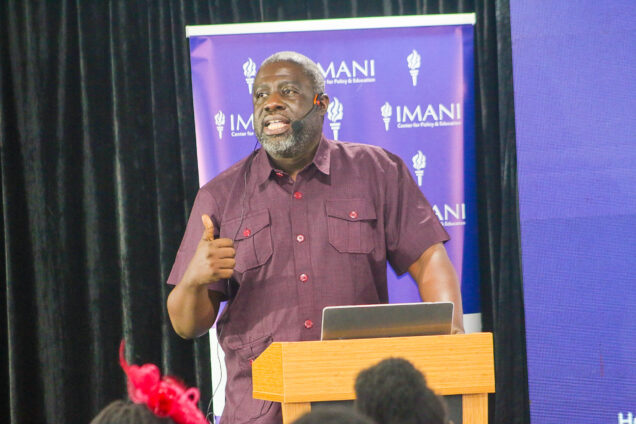
The Head of Capacity Development at the West Africa Civil Society Institute (WACSI), Charles Kojo Vandyck, has called on civil society organisations (CSOs) to give young people greater decision-making power, including opportunities to serve on boards, design programmes and control resources.
He said the growing influence of youth-led movements across Africa showed that young people were changing how civic action was organised and challenging traditional structures of civil society.
Speaking on Tuesday, August 25, at the Students and Young Professionals African Liberty Academy (SYPALA) 2026, organised by the IMANI Centre for Policy and Education in partnership with the University of Professional Studies, Accra (UPSA), Mr Vandyck said young people were increasingly less interested in conventional organisational structures.
“In many countries in Africa, wherever I go, I see young Africans, they are organising differently. They are less attracted to traditional organisational structures. They do not have time for that. They do not always need an office.
They do not always need a constitution. They don't necessarily need a five-year strategic plan before they act,” he said.
According to him, youth-led mobilisation was demonstrating that meaningful social change could emerge from networks and movements rather than only from large, formally established organisations.
He cited youth-led movements in Ghana and Kenya as examples of how ordinary citizens could mobilise around shared concerns and demand change.
“The movements are demonstrating to us that social change does not always require a large, organised CSO or a large, organised NGO. It requires a network. It requires a movement. It requires thousands of ordinary citizens such as yourself, deciding that something must change,” he said.
However, Mr Vandyck cautioned that digital mobilisation alone could not guarantee sustained social change.
He said while digital platforms and hashtags could bring people together around an issue, institutions remained necessary to translate public mobilisation into lasting policy and community-level action.
“I've seen that the digital mobilisation is powerful, but sustained change requires institutions. So hashtags can mobilise, but they find it difficult to build policies. You can't use hashtags to provide legal support. You can't use hashtags to sustain community organising,” he said.
He therefore proposed closer collaboration between established CSOs and emerging movements, arguing that civil society organisations could provide the institutional support needed to sustain youth-led campaigns.
“The future is that CSOs must work as infrastructure for movements,” he said.
Mr Vandyck also challenged civil society organisations to move beyond programmes designed for young people towards arrangements that allow young people to exercise actual authority.
He argued that simply having youth-focused programmes was not enough if young people remained excluded from key decisions about resources and organisational direction.
“Give young people power. Let them sit on boards. Let them control resources. Let them design programmes. Let them make mistakes,” he said.
He added: “Let young people lead. This is what I say all the time.”
Latest Stories
-
John Boadu pledges unity, reconciliation as he takes over as NPP National Chairman
1 minute -
‘Whatever the personal cost, I will not abandon my duty’ – Baffour Awuah assures Salomey Bafoh
3 minutes -
Government to increase funding for Houses of Chiefs to speed up dispute resolution
4 minutes -
Govt’ to introduce digital property rate system to boost MMDAs’ revenue – Mahama Ayariga
6 minutes -
Traditional Medicine Practice Council closes three unlicensed spa and massage centres in Ashanti Region
9 minutes -
Let’s accept the reality and move along – Mike Oquaye on NPP’s decision to make flagbearer party leader
11 minutes -
Early presidential primary helped cool tensions in NPP – Prof. Mike Oquaye
28 minutes -
NDC congratulates new NPP executives, urges national interest above party interests
31 minutes -
NPP implementing 2024 election review recommendations in stages – Prof Mike Oquaye
32 minutes -
Ghana Rugby Union announces managerial changes
33 minutes -
US removes all bombers from RAF Fairford base
34 minutes -
France closes up to 500 schools Monday over student protests
34 minutes -
Girl, 12, fatally shot in US during ‘dispute over parking space’
35 minutes -
NPP is a party for all classes – Prof. Mike Oquaye
35 minutes -
Chief Justice urges Judiciary to strengthen foundations of justice
35 minutes