

Audio By Carbonatix
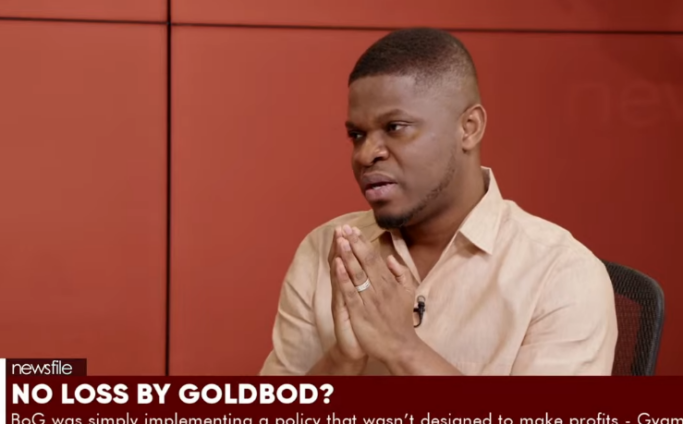
Chief Executive Officer of the Ghana Gold Board (GoldBod), Sammy Gyamfi, has defended the Ghana Gold Board’s (GoldBod) revenue-generation model, insisting that the institution’s earnings come from legally approved fees and charges for services rendered to players in the gold industry.
According to Mr Gyamfi, GoldBod’s sources of funds are clearly provided for under the law and include allocations approved by Parliament, funds raised from financial markets, borrowing, as well as fees and charges generated from its operations.
Speaking on Newsfile on JoyNews on Saturday, August 22, he said GoldBod’s revenue comes from a range of statutory services, including licensing, assaying, field inspections and other regulatory activities within the gold sector.
“When you apply for an aggregator licence, you pay an application fee of $100,000 to the Gold Board. And when we approve your application, you pay a licence fee of the cedi equivalent of $500,000,” Mr Gyamfi explained.
He said GoldBod also charges different fees for self-financing aggregators and various categories of gold-buying licences.
Mr Gyamfi identified large-scale mining companies as another source of revenue for GoldBod.
He explained that mining companies are required to submit their gold to GoldBod for assaying before the gold can be exported.
“Large-scale mining companies, before they will export gold, must bring that gold to us to assay,” he said.
He explained that the assaying process involves equipment, workers, consumables and maintenance, which necessitates the payment of fees by mining companies.
“Large-scale mining companies will have to pay an assay fee of $90 per every sample we assay,” he added.
According to Mr Gyamfi, GoldBod officers also conduct field inspections at mining companies to monitor the smelting process and ensure that gold quantities and purity are not under-declared.
“When we visit, we charge them $840 per visit,” he said.
Mr Gyamfi said exporters of artisanal and small-scale mining gold are also required to pay an assaying fee approved by Parliament.
He said the charge applies regardless of whether the exporter is the Bank of Ghana, the Ministry of Finance, a self-financing aggregator or a private exporter.
He added that GoldBod also issues licences to refineries, jewelers and fabricators, who pay application and licensing fees.
According to him, all these charges contribute to GoldBod’s revenue.
“All these fees put together is what gave us our non-tax revenue of GH¢970.7 million,” Mr Gyamfi said.
He noted that GoldBod’s non-tax revenue increased significantly from GH¢307.7 million in 2024 to GH¢970.7 million in 2025.
Latest Stories
-
Ghana must rethink spending priorities amid recurring blackouts – Kofi Bentil
7 minutes -
GoldBod is the best we’ve done with our gold resources yet – Kofi Bentil
24 minutes -
‘I never insulted Afenyo-Markin, he got the response he deserved’ – Sammy Gyamfi
36 minutes -
We’ve moved gold purchases to Interbank rate – GoldBod CEO
60 minutes -
‘We’re not milking the state like a parasite’ – Sammy Gyamfi defends GoldBod fees
1 hour -
‘You can’t call it losses today after defending it’ – Sammy Gyamfi to NPP on Gold-for-Oil Programme
1 hour -
Unclaimed car? Efua Abban’s experience with shipping a car to Ghana from the United States
1 hour -
GoldBod revenue comes from legally approved fees – Sammy Gyamfi
2 hours -
Ghana cautions Tijjaniya Muslim pilgrims over road travel to Senegal
2 hours -
Mfantsiman old girls rally support for ICT library as school marks 66th Speech Day
2 hours -
We won’t stay silent on deliberate smear campaigns – GoldBod CEO
2 hours -
Ghana’s grid not the strongest – Jinapor admits as gov’t eyes critical power investments
2 hours -
I support calls for Energy Minister to appear before Parliament – Sagnarigu MP
3 hours -
Frequent power trips alarming; urgent measures needed to prevent nationwide blackouts – Ben Boakye
3 hours -
Blackout: Akosombo control station works to be completed next month – Energy Minister insists
3 hours