

Audio By Carbonatix
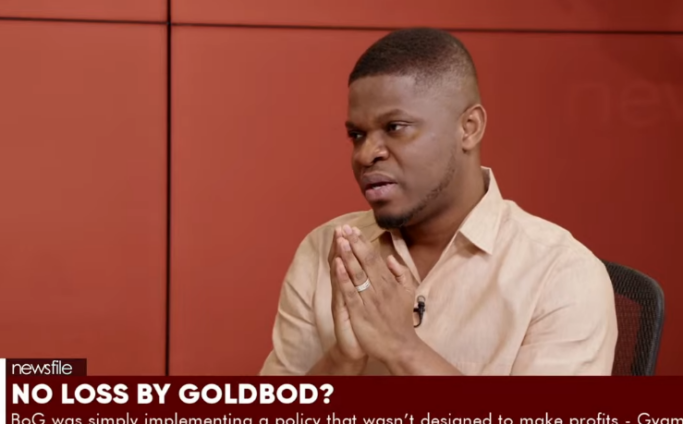
Chief Executive Officer of the Ghana Gold Board (GoldBod), Sammy Gyamfi, has defended the Ghana Gold Board’s (GoldBod) revenue-generation model, insisting that the institution’s earnings come from legally approved fees and charges for services rendered to players in the gold industry.
According to Mr Gyamfi, GoldBod’s sources of funds are clearly provided for under the law and include allocations approved by Parliament, funds raised from financial markets, borrowing, as well as fees and charges generated from its operations.
Speaking on Newsfile on JoyNews on Saturday, August 22, he said GoldBod’s revenue comes from a range of statutory services, including licensing, assaying, field inspections and other regulatory activities within the gold sector.
“When you apply for an aggregator licence, you pay an application fee of $100,000 to the Gold Board. And when we approve your application, you pay a licence fee of the cedi equivalent of $500,000,” Mr Gyamfi explained.
He said GoldBod also charges different fees for self-financing aggregators and various categories of gold-buying licences.
Mr Gyamfi identified large-scale mining companies as another source of revenue for GoldBod.
He explained that mining companies are required to submit their gold to GoldBod for assaying before the gold can be exported.
“Large-scale mining companies, before they will export gold, must bring that gold to us to assay,” he said.
He explained that the assaying process involves equipment, workers, consumables and maintenance, which necessitates the payment of fees by mining companies.
“Large-scale mining companies will have to pay an assay fee of $90 per every sample we assay,” he added.
According to Mr Gyamfi, GoldBod officers also conduct field inspections at mining companies to monitor the smelting process and ensure that gold quantities and purity are not under-declared.
“When we visit, we charge them $840 per visit,” he said.
Mr Gyamfi said exporters of artisanal and small-scale mining gold are also required to pay an assaying fee approved by Parliament.
He said the charge applies regardless of whether the exporter is the Bank of Ghana, the Ministry of Finance, a self-financing aggregator or a private exporter.
He added that GoldBod also issues licences to refineries, jewelers and fabricators, who pay application and licensing fees.
According to him, all these charges contribute to GoldBod’s revenue.
“All these fees put together is what gave us our non-tax revenue of GH¢970.7 million,” Mr Gyamfi said.
He noted that GoldBod’s non-tax revenue increased significantly from GH¢307.7 million in 2024 to GH¢970.7 million in 2025.
Latest Stories
-
Kwabena Boamah appointed Board Chair for Impact Investing Ghana
2 minutes -
Striking teacher unions to meet Fair Wages and Salaries Commission on October 6
16 minutes -
EOCO working with AG to arraign Nana Baffour Awuah before weekend court
19 minutes -
Duraplast reassures customers after fire, announces October 5 reopening
27 minutes -
Call off strike, gov’t will not renege on promotion arrears pledge – Haruna Iddrisu appeals to teacher unions
29 minutes -
Committee set up to validate teachers eligible for 20% deprived-area allowance – Education Minister
33 minutes -
Five-member committee to search for new Black Stars coach after Sports Ministry-GFA meeting
1 hour -
Pinktober: Breast cancer survival exceeds 90% when detected early – Breast Society of Ghana
1 hour -
TCDA to adopt Upper West’s MATCO mango farm as northern prototype, issues warning against felling shea trees
1 hour -
‘Fear delegates’ tag: Afoko touts genuineness among delegates ahead of NPP delegates conference
1 hour -
John Boadu: The leader our party needs at this time – Amb. Edward Akwasi Boateng
2 hours -
Baffour Awuah: EOCO arrested, detained MP after hours of waiting, questioning – Afenyo-Markin
2 hours -
EOCO court warrant authorised search of Baffour Awuah’s law firm, not residence – Afenyo-Markin
2 hours -
NPP delegates conference: 3,000 to 4,000 police personnel deployed for security in Kumasi – Anthony Karbo
2 hours -
KGL Foundation commits $200,000 to support juvenile football for the next two years
2 hours