

Audio By Carbonatix
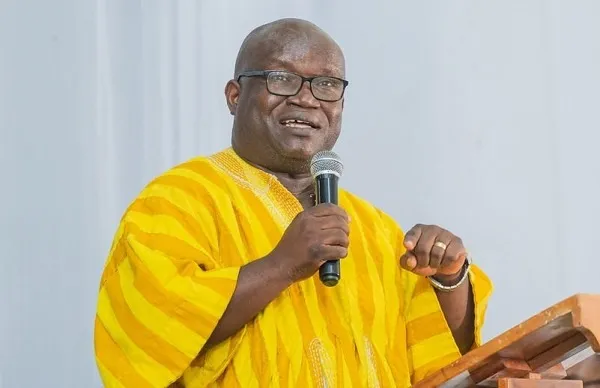
Convener of the Media Coalition Against Galamsey, Ing. Ken Ashigbey, has accused some Metropolitan, Municipal and District Assemblies (MMDAs) of facilitating illegal mining by collecting fees and charges from operators engaged in galamsey.
Ing. Ashigbey said the alleged practice raises serious questions about the commitment of local authorities to the fight against illegal mining, particularly when public institutions mandated to protect communities and the environment are accused of collecting revenue from activities deemed unlawful.
He argued that officials who knowingly facilitate illegal mining could potentially be held liable under Ghana's mining laws, which criminalise not only unauthorised mining but also acts that aid, facilitate, encourage or promote activities carried out in contravention of the law.
His comments come against the backdrop of the JoyNews investigative documentary, A Tax for Galamsey: The Extortion Racket Fuelling Illegal Mining, which exposed allegations that a district assembly in the Amansie Central District of the Ashanti Region had been collecting payments from operators of prohibited mining equipment.
The JoyNews investigation found alleged instances in which illegal miners were required to pay fees to enable them to continue operating, with payments reportedly formalised through stickers, receipts and other documentation linked to the District Assembly. The investigation described the arrangement as creating a parallel taxation system around illegal mining.
The exposé further reported that operators of changfan machines were allegedly charged about GH¢6,000 annually, while operators using excavators were also allegedly subjected to payments in exchange for continued operation.
The revelations triggered calls for investigations, with the government subsequently directing the relevant authorities to examine the allegations. The Lands Ministry said it had taken notice of the documentary and would investigate the conduct of officials implicated in the report.
Speaking on TV3 on Saturday, August 22, Ing. Ashigbey said investigations had uncovered instances in which officials of some assemblies allegedly went to illegal mining sites to collect fees and charges from operators.
He also alleged that some assemblies had charged miners for the use of equipment that the government had prohibited as part of efforts to combat galamsey.
“Then you also have the situation where these assemblies too would then take changfans, equipment that are proscribed by the government, which we say is illegal, and they charge for it; there is evidence; that evidence is collected by a media house, presented to the government, and what we hear is that it is not true,” he said.
The allegations are particularly significant in light of the Minerals and Mining (Amendment) Act, 2019 (Act 995), which amended the Minerals and Mining Act, 2006 (Act 703) to strengthen penalties for illegal mining and related offences.
The amended Section 99 criminalises conduct in which a person purposely aids, facilitates, encourages or promotes acts carried out in contravention of the mining law.
It also specifically criminalises the use of floating platforms and other equipment for mining in or along natural water bodies, as well as the provision of excavators or other equipment for mining operations contrary to the law.
The Minerals Commission lists Act 995 among the principal laws governing Ghana's mining sector, alongside the Minerals and Mining Act, 2006 (Act 703) and the 2015 amendment, Act 900.
Ing. Ashigbey therefore questioned why no decisive action had been taken against municipal and district authorities allegedly involved in collecting money from operators engaged in unlawful mining.
He challenged the argument that the issuance of receipts or the collection of officially sanctioned fees could legitimise an otherwise illegal activity.
“How is it that the MP for Oda mentions the DCE for Oda as charging 14,000 for people who are involved in illegality, and the MCE’s only defence is that they did not have a permit?” he asked.
Ing. Ashigbey further questioned whether the affected miners had obtained the necessary environmental permits before commencing their operations, insisting that the absence of the required authorisations would render the activities illegal.
His concerns echo the central finding of the JoyNews A Tax for Galamsey investigation: that the collection of fees from illegal mining operators risks creating the impression that payment to a public authority can substitute for the licences and environmental approvals required by law.
The issue has since moved beyond the initial Amansie Central allegations.
President John Dramani Mahama, speaking in March 2026, said the JoyNews exposé had helped uncover a practice that was not confined to one district. He said investigations indicated that several districts in gold-mining areas were engaging in similar revenue-collection practices involving mining equipment.
The President subsequently directed that assemblies should stop taxing changfan machines and other equipment associated with illegal mining, stressing that internally generated revenue should not be derived from unlawful activities. Government also warned MMDCEs to immediately stop taxing illegal miners and cautioned that officials who failed to comply could face sanctions.
The government position underscores the significance of Ing. Ashigbey's concerns over the role of local authorities in the galamsey fight.
He said authorities must confront the issue more decisively, warning that continued involvement of public officials in activities linked to illegal mining was deepening the environmental and economic consequences of galamsey.
“We don’t seem to see the challenge that is confronting us; this thing is eating us up,” he said.
The controversy also raises a broader question about the effectiveness of Ghana's decentralised system in the fight against illegal mining.
While MMDAs have responsibilities for local development and revenue mobilisation, Ing. Ashigbey's argument is that such responsibilities cannot extend to collecting revenue from activities that the state itself has declared illegal.
The JoyNews investigation has consequently placed the spotlight on whether local government structures are strengthening enforcement or, in some instances, creating financial incentives that allow illegal mining to continue.
Latest Stories
-
I haven’t experienced any envy in the gospel music industry — Ohemaa Mercy
16 minutes -
Prayer does not solve everything — Ohemaa Mercy
27 minutes -
New PURC office symbolises stronger consumer protection – Dr Jinapor
1 hour -
Rev. Wengam re-elected Assemblies of God, Ghana General Superintendent
1 hour -
Less than 20km of clearing left to connect Accra-Kumasi Expressway to Kumasi – Agbodza
1 hour -
US judge strikes down policy suspending immigrant visa processing for 75 nations
1 hour -
MCEs collecting fees from galamseyers are facilitating illegality – Ken Ashigbey
1 hour -
Developer LMI Holdings commits to completing first 700 Saglemi housing units
2 hours -
Africa’s next chapter will be built by institution-builders, not idea-havers
2 hours -
Wenchi Traditional Council suspends Twafohene indefinitely
2 hours -
Kpassa-Merimeri road undergoes filling and levelling works to improve accessibility
2 hours -
9 Blue Water Guards arrested over alleged bribery, impersonation
3 hours -
Wildlife guard shot dead during Kakum patrol
3 hours -
‘I reject them without qualification’ — Afenyo-Markin hits back over Sammy Gyamfi’s claims
4 hours -
GoldBod must appear before a parliamentary inquiry to answer for gold-trade losses — Appiagyei
4 hours