

Audio By Carbonatix
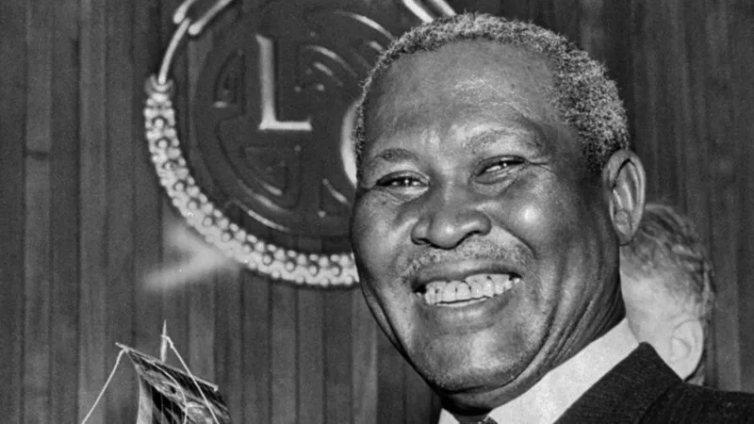
A South African court has begun a fresh inquest into the death of one of the most renowned campaigners against the racist system of apartheid, which had initially been described as accidental.
A 1967 inquest ruled that Chief Albert Luthuli was walking on a railway line when he was struck by a train and died after fracturing his skull.
Activists and his family have long cast doubt on the official version of events, and have said they welcomed the re-opening of the inquest.
Luthuli, who at the time of his death was the leader of the then-banned African National Congress (ANC), won the Nobel Peace Prize in 1960 for spearheading the fight against apartheid.
The ANC went on to lead the struggle against white-minority rule and came to power in 1994, following the first democratic elections.
The National Prosecuting Authority (NPA) has said that it "will be presenting evidence before the court in an attempt to have the initial findings into the deaths of Chief Luthuli... overturned". It has not said what that evidence is.
Nearly six decades ago, the initial inquiry into the Nobel laureate's death "found that there was no evidence which disclosed any criminal culpability on the part of any of the employees of the South African Railways or anyone else", the NPA said last week.
But campaigners suspected the authorities had killed him and covered it up.
Luthuli's grandson, Sandile Luthuli, told the BBC that the initial investigation had been a "whitewash meant to cover up the activities of the [former] apartheid government".
"We look forward to an independent judiciary that will preside over this matter and [make] independent findings on exactly what transpired on that fateful day in July 1967," he told the BBC.
Sandile Luthuli praised the NPA for its handling of the complex case and the ongoing engagement with relatives since the matter was referred to prosecutors in the early 2000s.
On the family's expectations from the nearly month-long hearing, Luthuli said they hoped to find closure on two levels - first on how chief Luthuli really died and secondly, who should be held criminally liable for his death.
"Hopefully, through this inquest, we will be able to find both. If not, maybe the first one, being exactly the opportunity to correct the historical record and really debunk his myth of him being hit by a train," he said.
Another of Luthuli's grandchildren, Albert Mthunzi Luthuli, told South Africa's IOL news site that the family welcomed the re-opening of the inquest, even though it was now years after the deaths of "many people that we suspected of being involved in my grandfather's murder".
"We believe the TRC [Truth and Reconciliation Commission] let many families of victims down by giving amnesty to apartheid murderers," he added, referring to the post-apartheid process where perpetrators of violence in the previous decades were encouraged to come forward to fully confess their crimes.
At the time of his death, Luthuli was not allowed to leave his residential area in Groutville - now in KwaZulu-Natal province - or take part in politics.
He was South Africa's first winner of the Nobel Peace Prize. The award was later given to three other South Africans: Archbishop Desmond Tutu in 1984, and Nelson Mandela and FW de Klerk in 1993.
The Luthuli case is one of two highly anticipated inquests into the deaths of anti-apartheid figures re-opening on Monday. The other concerns lawyer Mlungisi Griffiths Mxenge, who was killed in 1981, but this was postponed to 17 June after a brief sitting on Monday.
He had been stabbed 45 times and his throat had been slit.
An inquest into his death a year later failed to identify his murderers and it was only nine years later that they were revealed - when Butana Almond Nofemela, confessed to killing Mxenge and seven other ANC members.
He was part of a covert hit-squad, or counter-insurgency unit, that detained and killed anti-apartheid activists.
Nofemela, together with the squad's commander Dirk Coetzee and David Tshikalange, were in 1997 found guilty of Mxenge's murder but were granted amnesty by the TRC before the criminal case could be concluded.
Explaining the reopening of the inquest into Mxenge's death last year, the justice ministry said this was because new evidence had emerged, suggesting that "certain critical information" had not been presented to the TRC.
In South Africa, inquests often look into determining how a person died and whether anyone should be held responsible for their death.
Latest Stories
-
Trust, but verify – Mary Addah warns against blind support for OSP
22 minutes -
If we scrap it, what do we replace it with? – Mary Addah defends OSP trust surge
40 minutes -
24-Hour Economy Authority, NPA sign MoU to drive round-the-Clock petroleum operations
52 minutes -
Utility tariffs drop from today as PURC announces electricity, water cuts
1 hour -
Megan Thee Stallion taken to hospital during Moulin Rouge performance
1 hour -
Italian Christmas meal tragedy turns into murder inquiry
2 hours -
Divorced couples in Japan can now share custody of their children
2 hours -
Tiger Woods to ‘step away and seek treatment’ after crash
2 hours -
Airfares rise as Airport Infrastructure Levy takes effect from today
2 hours -
4 Killed in Buipe–Tamale Highway crash as Fire Service rescues survivors
2 hours -
Tunisian journalist sentenced to two years, union denounces systemic attack on media
3 hours -
Nigerian lawmakers approve increased $49.4bn 2026 budget
3 hours -
Nigeria allocates more crude cargoes to Dangote refinery for May, sources say
3 hours -
Senegal president backs new anti-LGBT law banning ‘promotion’
3 hours -
Nigeria warns its citizens in South Africa to be cautious after march turns violent
3 hours