

Audio By Carbonatix
Some Civil Society Organisations are proposing reforms in national policy strategies to include family planning and safe sex, as they argue that abstinence education in schools is failing to reduce adolescent pregnancies.
They observe that restrictive legal frameworks, insufficient funding, and gaps in reproductive health education continue to be a bane to Ghana’s efforts in clamping down on teenage pregnancies and child marriages.
The country’s average teenage pregnancy rate currently stands at 15.2%, with the Savannah and Ashanti regions leading the devastating menace plaguing the youth.
The situation is further exacerbated by Socio-cultural constraints, inconsistent policy implementation, and a lack of legal harmonization.
Teenage pregnancy continues to be on the rise in Ghana – from a national average of 14.2% in 2014, the 2022 Demographic and Health Survey reports a 1% increase in nearly a decade.
The Savannah, Ashanti and North East regions top the list of teenage pregnancy rates, recording 26% and 24% respectively.
The worrying trend has been attributed to failed strategies, including the Ghana Education Service’s sole policy on preaching abstinence.
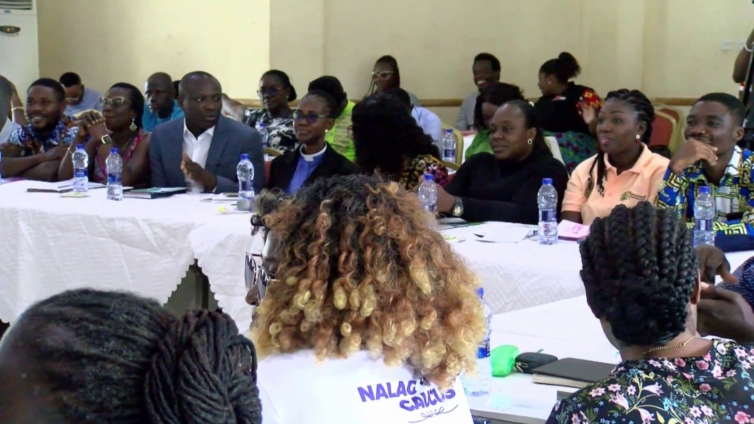
At the Ashanti regional workshop on Sexual Reproductive Health Rights in Ghana, stakeholders noted that strategies adopted to tame the growing menace are failing to yield the needed results.
Advocacy and Youth Coordinator at Marie Stopes International, Henrietta Kaakyire Atta, highlighted the importance of reproductive health education.

“There is a fuss about when young people receive information about their reproductive health, they become promiscuous. But there is age-appropriate information. There are young girls who are abused and can’t tell their parents about it. They don’t even know whether or not what they engage in is an abuse. Teaching young people about their reproductive health is not about teaching them to go and have sex,” she noted.
Ghana reaffirmed its dedication to improving Sexual Reproductive Health through contraceptive access and utilization under the 2030 Family Planning commitments.
Ashanti Regional Head of the Gender Department, Ama Nyantah Boateng is advocating for reforms in sexual education policy in schools.
“Sensitization is still a primary issue in teaching the students, even though we call for some modification of the sexual education policy. Not all the children will carry along what we teach them, but we will still preach abstinence,” she noted.
The growing menace is a potential bane to Ghana’s socioeconomic growth and national development.
Population Policy Analyst at Development Advocacy Initiative Africa, Dr. Godfred Bonnah Nkansah wants frantic effort to clamp down on the canker.
“We are significantly outside the belt of accelerated development. It’s therefore not enough to keep the full focus on job creation, but pay attention to family planning. Let the families be capacitated to have the numbers they can take care of,” he said.

In advancing sexual reproductive health and actualizing the SDGs Agenda 2030 commitments, there are calls for urgent parliamentary action to bridge the gaps and foster sustainable development.
“Parliament must listen to the calls of the citizens and address the issue so that at the end of the day it can foster national development,” Programs Manager at Parliamentary Network Africa, Gilbert Borketey Boye-Fio, advised.
The workshop, organised by the Parliamentary Network Africa in collaboration with Marie Stopes International, was aimed at empowering champions for Reproductive Health Policy influencing through education and supportive environments.
Latest Stories
-
Bush burning and biodiversity: Bonyanto’s 10-year model of zero-fire record
3 minutes -
Baba Jamal votes, calls for peaceful election in Ayawaso East by-election
3 minutes -
Legal Education Reform Bill, 2025: Analysis and recommendations for a transformative legal training in Ghana
7 minutes -
Police presence at polling stations speaks negatively of our democracy — Boakye Agyarko
17 minutes -
Gov’t to commence enrollment for affordable homes under National Homeownership Fund
18 minutes -
We make the wrong choices when money rules elections – Boakye Agyarko
21 minutes -
Ziavi exhibits indigenous Ewe culture as it buries late Togbega Kwaku Ayim IV
24 minutes -
Ghana invites Chinese investors to drive industrial agriculture
30 minutes -
Global markets on edge as US-Israeli strikes on Iran send gold and oil prices to record highs
34 minutes -
Teacher, farmer die in shocking incidents in Assin Fosu
51 minutes -
Iran World Cup participation in doubt after US-Israeli strikes
57 minutes -
Over 1,500 public sector appointments upheld after post-election probe — Kwakye Ofosu
58 minutes -
541 last-minute appointments under Akufo-Addo gov’t revoked to uphold due process – Kwakye Ofosu
1 hour -
Philip Nai: Politicians must champion the creative economy now!
1 hour -
Afanyi Dadzie Writes: From Ghana’s Major Mahama to Liberia’s Austin Tengeeh: When will ‘mob justice’ end?
2 hours