

Audio By Carbonatix
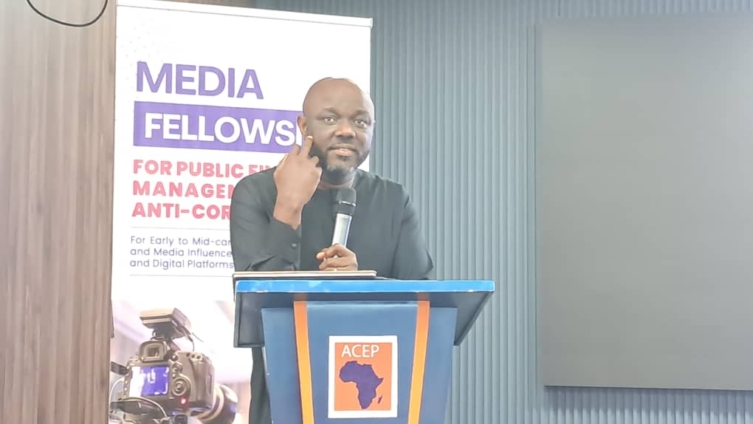
Executive Director of the Africa Centre for Energy Policy (ACEP), Benjamin Boakye, has challenged the media and civil society to intensify their role in demanding accountability from duty bearers, stressing that effective resource prioritisation is the key to transforming Ghana’s infrastructure and social services.
Speaking at a two-day Media Fellowship organized by ACEP for selected journalists from across the country, Mr. Boakye said that if the country could trace and improve the use of its financial resources, Ghana could generate an additional GH₵2 billion next year and as much as GH₵50 billion over the next few years.
He argued this could be invested in critical infrastructure such as roads, hospitals, and schools — significantly transforming the nation.
He lamented that despite Ghana’s annual budget of about GH₵50 billion, the country still struggles to procure basic medical equipment, often outsourcing laboratory tests to other countries. According to him, many of these lifesaving tools cost less than $10 million, meaning the challenge is not a lack of money but poor prioritisation of national needs.
“Governments will prioritise anything, but what impacts you? If they need to have a fanfare, they will do that immediately and spend money on it,” he said, calling on citizens and the media to demand that public resources are spent on what matters most.
Mr. Boakye noted that inefficiencies in governance and public service delivery cost lives, citing cases where inadequate ambulance services, medical negligence, and under-resourced health facilities prevent citizens from receiving timely care.
He further decried the poor quality of publicly funded projects, sharing personal observations of substandard buildings, schools, and offices across the country — including structures without iron rods or proper slabs, and school buildings so unsafe that authorities forbid pupils from accessing upper floors.
“These are projects executed with public funds, under the supervision of engineers, yet the results are sometimes dangerously inadequate,” he said. “If resources are not optimized, we can not develop.”
He called for reform in how the country invests and monitors public projects, emphasizing the media’s crucial role in exposing inefficiencies and ensuring accountability.
“We are depending on you to take up the hard job of monitoring and examining the delivery of public services,” Mr. Boakye told the participants. “This is just the beginning. We must improve governance to improve the lives of our people.”
The ACEP Media Fellowship, held over two days, was aimed at equipping journalists with the knowledge and skills to effectively track public resource use, investigate governance lapses, and amplify citizen voices in demanding transparency and accountability.
Latest Stories
-
‘We’ve become quite experienced in negativity’ – Liverpool’s Slot
5 hours -
Legendary manager Lucescu dies days after resigning
5 hours -
One dead as train travelling 99mph collides with lorry in France
5 hours -
Airlines cut flights and hike fares as fuel prices surge
5 hours -
Kane inspires Bayern to first-leg advantage over Real Madrid at Bernabéu
6 hours -
Wireless Festival cancelled after Kanye West blocked from coming to UK
6 hours -
Wa West MP commissions five boreholes for the benefit of his constituents
6 hours -
Havertz’s late strike hands Arsenal narrow first-leg advantage over Sporting
6 hours -
Damang mine award: Minority not against Ghanaian participation; we’re asking for fair process – Konadu
6 hours -
NPA to enforce stricter registration rules for petroleum tankers
6 hours -
Manhyia South MP laments decline in hospitality operations in his constituency
7 hours -
How a simple clean charcoal innovation could benefit Ghana’s climate future
7 hours -
NPA, COMAC launch Safety Week 2026 to promote risk management in petroleum sector
7 hours -
Stakeholder engagement resolves onion trade impasse
7 hours -
Gender Ministry holds staff durbar, welcomes new Chief Director
7 hours