

Audio By Carbonatix
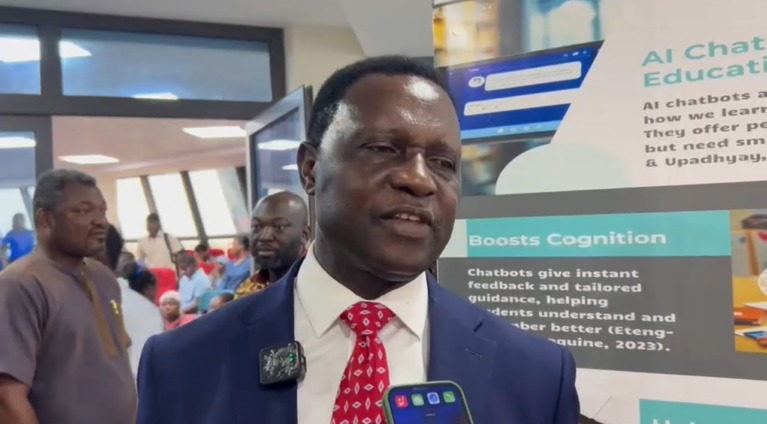
Former Minister for Education, Dr Yaw Osei Adutwum, has called on the government to prioritise investments in Artificial Intelligence (AI), Science, Technology, Engineering and Mathematics (STEM), and robotics education, stressing that such interventions are crucial to Ghana’s transformation agenda.
According to him, the country’s educational reset and economic competitiveness largely depend on sustained investment in technology-driven education and the provision of adequate infrastructure, particularly at the Kwame Nkrumah University of Science and Technology (KNUST).
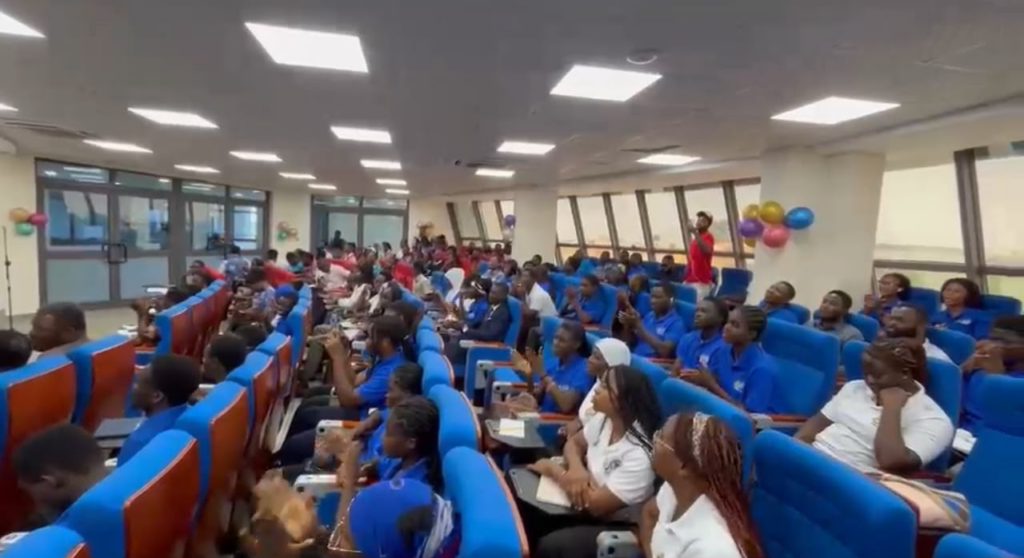
Dr Adutwum made the call at the Faculty of Educational Studies Students’ Association (FESSA) Summit at KNUST, held under the theme: “The Future-Ready Educator: AI Integration, Digital Pedagogy, and Educational Excellence.”
He noted that KNUST’s efforts in integrating AI into education, especially in biomedical sciences, have the potential to position Ghana among the most innovative countries on the African continent.
“If the government wants to reset the country as it has indicated, then education must be one of its priorities,” he stated, adding that Ghana can attain the developmental heights of advanced economies if it places greater emphasis on AI integration, STEM education and robotics.
“With this STEM education and for the sake of the country and our future, looking at what Singapore and South Korea did, it is an opportunity for the government now to also continue the work and make sure that STEM education becomes a centerpiece of education transformation in Ghana,” he asserted.
Dr. Adutwum further indicated that several reforms introduced during his tenure as Education Minister are beginning to yield results and should not be abandoned.
During his administration, the government embarked on a major STEM expansion agenda, including the construction of 20 STEM Senior High Schools and Centres, the establishment of STEM and robotics programmes in selected institutions, curriculum reforms under the Standards-Based Curriculum, and increased investments in digital learning and teacher training.
Data from the Ministry of Education indicates that over 1.2 million learners have benefited from STEM-related interventions introduced in recent years, while thousands of teachers have undergone training in digital pedagogy and technology-based instruction.
The former minister maintained that continuity in educational policies is essential to ensuring long-term national development.
He emphasised that the current administration should provide the necessary resources and support systems to sustain the reforms initiated under his leadership.
Meanwhile, Senior Lecturer and Postgraduate Coordinator at the Department of Teacher Education at KNUST, Dr. Patrick Swanzy, also appealed to the government to provide infrastructure to support AI integration within teacher education programmes.
He expressed concern that national interventions often focus on a few institutions while overlooking KNUST’s growing contributions to educational innovation.
“We need AI laboratories to train teachers on digital pedagogy and facilities to train them on the field,” he said.
Dr. Swanzy further stressed the need to incorporate AI into teacher education curricula.
“The AI integration itself should be integrated into the curriculum that’s the teacher education curriculum and there must be infrastructure that will also be made available for teachers to be trained on how to use AI in the classroom. But if teachers are not trained and the infrastructure is not available, then it becomes difficult for AI to be integrated,” he said.
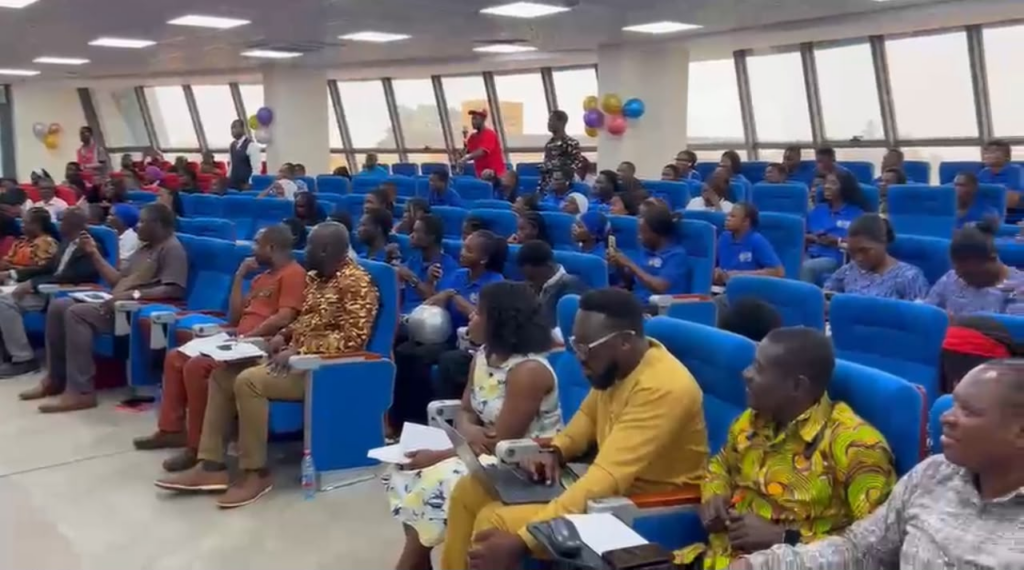
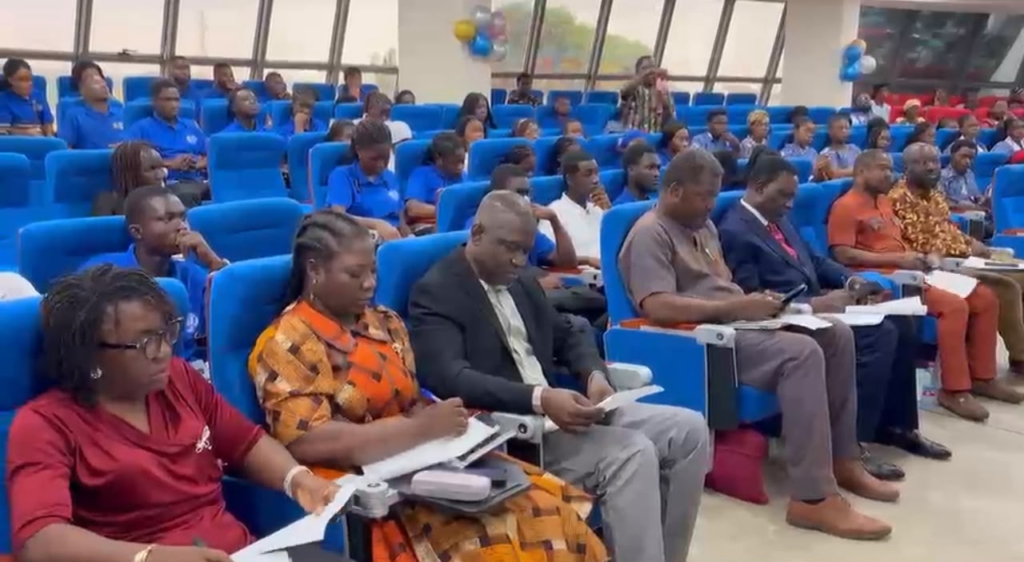
The FESSA summit brought together academics, policymakers, student teachers, and education stakeholders to deliberate on strategies to prepare future educators for the rapidly evolving digital landscape.
According to organisers, initiatives being championed under reforms spearheaded by Dr. Adutwum have introduced programmes such as BS STEM Manufacturing, BS STEM Robotics, Aerospace and Aviation studies to equip student teachers with critical thinking, creativity and innovation skills.
President of FESSA, Prince Adu Amoateng, appealed for urgent support, noting that although students are enthusiastic about the programmes, inadequate resources remain a major challenge.
“We are calling on the government and to the various directors of education to come to our aid and come and help us, bring all the necessary equipment that we will need. The students are enjoying the programme but the tools and the resources that are needed is what we lack,” he explained.
Stakeholders at the summit unanimously agreed that sustained investment in AI infrastructure, teacher training and STEM education could significantly accelerate Ghana’s educational transformation and position the country as a leader in technology-driven learning in Africa.
Latest Stories
-
World Bank maintains Ghana’s growth rate forecast at 4.8% in 2026
52 minutes -
Cedi was worst African currency in quarter 2, 2026 – World Bank
1 hour -
AI gains can lift three times as many people out of poverty in Ghana – World Bank
2 hours -
Police arrest suspect over jewellery theft during fire outbreak
4 hours -
EOCO returns Hanan’s £6,700, GH¢2,750 and devices after defence challenge
4 hours -
Opplift Youth Entrepreneurs Summit 2026 equips entrepreneurs with skills, mentorship and support
4 hours -
Rival clubs want range of punishments for Man City
4 hours -
Tear gas in Paris and Marseille as school protests grow across France
5 hours -
Kane inspires England to win over Czech Republic in UEFA Nations League
5 hours -
Finland orders halt to work on two Google data centres
5 hours -
Substitute Merino scores twice as Spain win in Croatia
5 hours -
Ronaldo wants Portugal ‘punishment’ but not retiring
5 hours -
White House defends Trump comment to let Iran ‘take out’ LA and San Diego
5 hours -
Asos confirms hackers sent ‘unauthorised’ notification to app users
5 hours -
US televangelist Jim Bakker, disgraced from sex scandal and fraud, dies at 86
6 hours