


Audio By Carbonatix
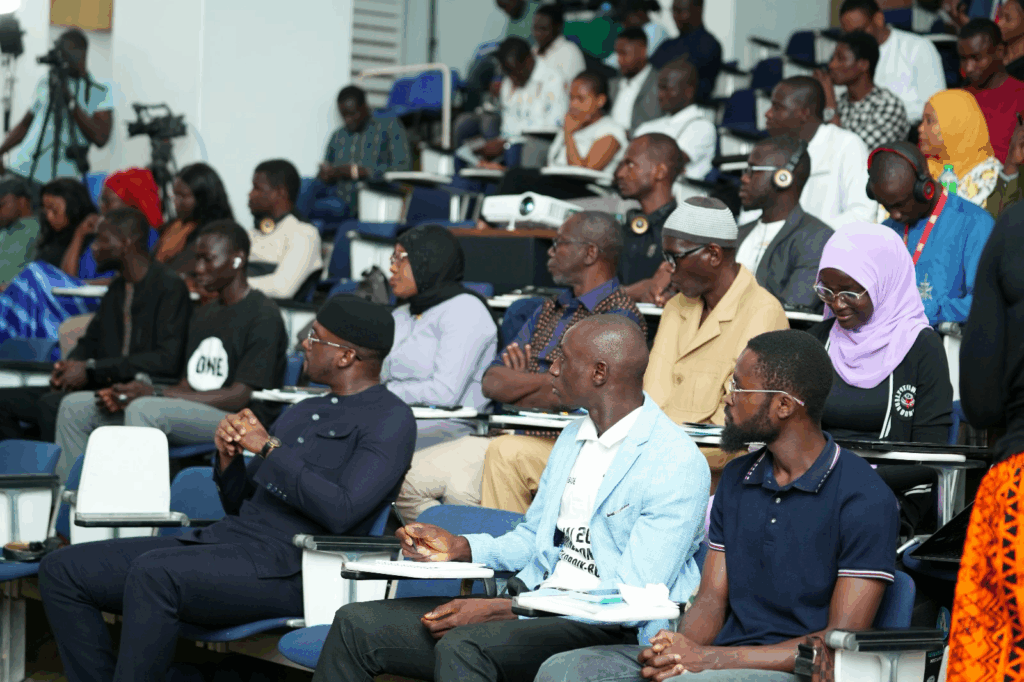
On Africa Day 2025, participants from across the continent and the diaspora gathered in Dakar, Senegal, and online for a powerful Pan-African Dialogue centred on reparative justice.
Held under the theme “Reparative Justice for Africans: Reclaiming Dignity and Building Accountability,” the event brought together policymakers, civil society leaders, youth activists, traditional authorities, artists, and academics for an intergenerational conversation grounded in memory, justice, and action.
Hosted at Hotel Ngor Diarama and streamed live in English and French, the hybrid event aligned with the African Union’s 2025 theme: “Justice for Africans and People of African Descent Through Reparations.”
Speakers challenged participants to move beyond commemoration toward concrete, unified action.
“We need to go beyond declarations and act concretely to move Africa’s agenda ahead,” said Ousseynou Ly, spokesperson for the Office of the President of Senegal.
“The shadow of slavery, colonialism, and apartheid is still visible across our continent. We owe it to our young generation to remember—and to act.”
Dr. Eyole Nganje Monono, Chairperson of the AU ECOSOCC Political Affairs Cluster, echoed that call.
“The quest for justice and reparations is rooted in the shared history of transatlantic slavery, colonialism, and apartheid. The African Union is committed to addressing these historical injustices.”
Participants emphasised that reparative justice is not only about the past—it’s about dismantling the systems of inequality that persist today.
“This year’s theme resonates as a call to action—an invitation to confront past injustices and build a fairer future,” said Desire Assogbavi, Advocacy Advisor at the Open Society Foundations.
“The scars left by slavery, colonisation, apartheid, and systemic discrimination remain visible. These historical injustices have generated persistent inequalities, hindering the development of our nations and the well-being of our people.”

A central focus of the dialogue was the push for a Common African Position on Reparations, structured around four pillars:
- Moral and historical recognition of slavery, colonisation, apartheid, and systemic racism.
- Structural reform and economic sovereignty to redress global trade, finance, and governance inequalities.
- Cultural restitution and identity reclamation, including the return of stolen artefacts and the restoration of African heritage.
- Domestic recommitment to good governance, peace, democracy, and social investment.
“The reparative justice we demand from the world also requires greater accountability from African leaders towards their own people,” Assogbavi said.
“African states must improve governance, fight corruption, and invest in education, health, and economic opportunities.”
The conversation extended to modern consequences of historical injustice, including environmental and climate harms.
“To address historical injustices means acknowledging the profound harm caused by slavery, colonialism, and apartheid—and the continuing impact on our people,” said Brian Kagoro, Managing Director at Open Society Foundations.
“Reparative justice means building a more equitable future by addressing systemic inequalities—wealth disparities, unequal access to services, and environmental degradation.”
He stressed the need to address both psychological and material harms.
“Victims and survivors are still healing from the collective trauma and psychological scars of oppression,” he said.
“Reparations must restore dignity and empower people to reclaim control over their futures.”
“This includes addressing climate injustice, pollution, biodiversity loss, and unequal responsibility for historical emissions,” Kagoro added.
“This is also a matter of international law and human rights. Reparations represent the highest expression of international principles of justice and dignity. They take many forms—financial compensation, public apology, memorialization, guarantees of non-repetition.”
“Ultimately, reparations are about creating the conditions for a just and equitable future,” he concluded. “Not just for healing the past, but for transforming tomorrow.”
The event featured expert presentations, cultural performances, youth dialogues, and dynamic audience engagement. It also spotlighted the central role of youth, media, and artists in sustaining the movement for justice.
“Reparative justice goes beyond financial compensation,” Assogbavi emphasised.
“It entails recognition of the harm suffered, restitution of looted cultural property, and the implementation of policies that address structural imbalances.”
Organised by the Open Society Foundations, the National Youth Council of Senegal, West African Democracy Radio, AU-ECOSOCC, Junior Chamber Senegal, and The ONE Campaign Francophone Africa Directorate, the gathering marked a bold step forward in Africa’s collective journey to reclaim dignity and demand transformative justice.
“On Africa Day, we honour not just our history, but our agency—our right to shape a future built on equity, dignity, and accountability,” Kagoro said in closing.
Latest Stories
-
Mayweather to fight kickboxer before Pacquiao rematch
22 minutes -
India and Canada reset ties with ‘landmark’ nuclear energy deal
31 minutes -
Interior Ministry releases funds to settle 2025 rent allowance arrears for security services
1 hour -
Ghana evacuates diplomatic staff from Iran; embassy shut indefinitely — Ablakwa
1 hour -
France to boost nuclear arsenal and extend deterrence to European allies
2 hours -
Chinese community in Ghana marks ‘Year of the Horse’ with grand new year festival
2 hours -
When regional instability becomes national risk: Ghanaian tomato traders killings
2 hours -
Photos: President Mahama meets Tanzania President Suluhu Hassan
2 hours -
Mahama calls for cessation of Iran-US-Israel conflict, urging return to dialogue
3 hours -
Fuel prices could rise if Middle East conflict escalates – ACEP Boss
3 hours -
Elsie Addo Awadzi: Leadership reflections, one year on; 7 lessons from 7 years in public office
3 hours -
Finance Minister announces expiration of DDEP-induced restrictions on domestic bond issuance
3 hours -
Gov’t urged to aid private nursing training colleges to ease burden on public ones
3 hours -
Kumasi Mayor vows to keep Kejetia Market free from highly inflammable materials
3 hours -
Ghana safe from fuel supply disruptions amid Middle East tensions – Dr Oppong
3 hours