

Audio By Carbonatix
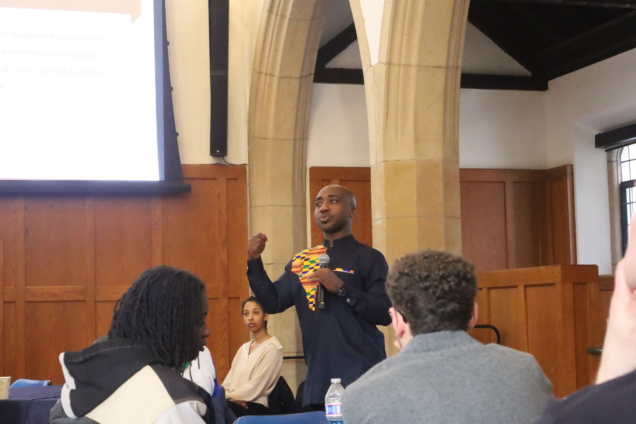
The Africa Head of Infrastructure and Capital Projects at Deloitte, Yaw Appiah Lartey, has expressed worry about how the operates in a state of profound paradox, despite its dynamism and undeniable global footprint
According to him, the continent captures only a small fraction of the value of its cultural exports, and the vast majority of its creators operate in the informal economy, lacking basic protections and struggling to build sustainable livelihoods.
He disclosed this at a leadership conference in New York, USA organised by Yale Model African Union (YMAU).
About 60% of African creators earn less than US$100 a month. Mr. Lartey said it is not attractive to invest in creators in Africa because businesses are too closely tied to individual personalities rather than institutionalised systems, whilst Income lacks durability and predictability, leading investors to apply significant discounts.
In addition, creators often cannot prove ownership of their most valuable assets.
Mr. Lartey also highlighted the policy gaps within the creative industry including the absence from national planning, institutional fragmentation and culture budget allocations.
He also mentioned that the creative economy is characterised by high levels of informality, hence no social protection for workers. For instance, in Kenya, 84% of creative enterprises are informal.
Another critical policy gap, he said, is the absence of frameworks that enable investment to flow into the creative economy.
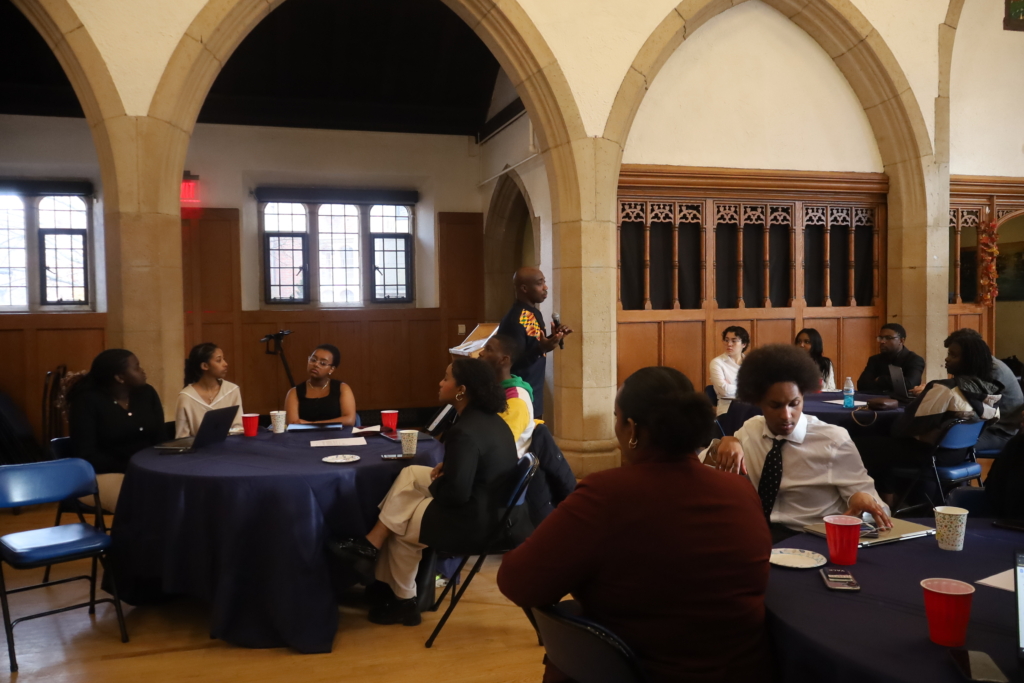
He enumerated strategic recommendations in the short term to be implemented by governments, development partners, private sector investors and creative industry stakeholders.
For creative economy observatory, he called for the establishment of data on creative economy size, employment and value.
Regarding simplify business registration for creatives, he suggested a streamlined, low-cost registration process for creative enterprises.
For medium term, he urged the enactment of modern copyright and AI legislation to address modern digital realities and the establishment of a finance facility for creative sector.
In the long-term, he called for a regional production hubs to build film studios and fashion hubs for industrial-scale production.
Latest Stories
-
When regional instability becomes national risk: Ghanaian tomato traders killings
12 minutes -
Photos: President Mahama meets Tanzania President Suluhu Hassan
25 minutes -
Mahama calls for cessation of Iran-US-Israel conflict, urging return to dialogue
45 minutes -
Fuel prices could rise if Middle East conflict escalates – ACEP Boss
49 minutes -
Elsie Addo Awadzi: Leadership reflections, one year on; 7 lessons from 7 years in public office
1 hour -
Finance Minister announces expiration of DDEP-induced restrictions on domestic bond issuance
1 hour -
Gov’t urged to aid private nursing training colleges to ease burden on public ones
1 hour -
Kumasi Mayor vows to keep Kejetia Market free from highly inflammable materials
1 hour -
Ghana safe from fuel supply disruptions amid Middle East tensions – Dr Oppong
1 hour -
Ghana Development Awards 2026 set to celebrate excellence in nation-building and economic recovery
2 hours -
IMANI opens applications for 12th SYPALA summer seminar
2 hours -
Khamenei’s wife dies after suffering injuries in air strike – Iranian media
3 hours -
Modernising customs operations: Leveraging advanced technology to combat fraud and inefficiencies
3 hours -
Accra Professional Ladies Open returns after three-year hiatus to mark International Women’s Day
3 hours -
Savannah police command lauds Yagbonwura and others for sustaining current peace
3 hours