

Audio By Carbonatix
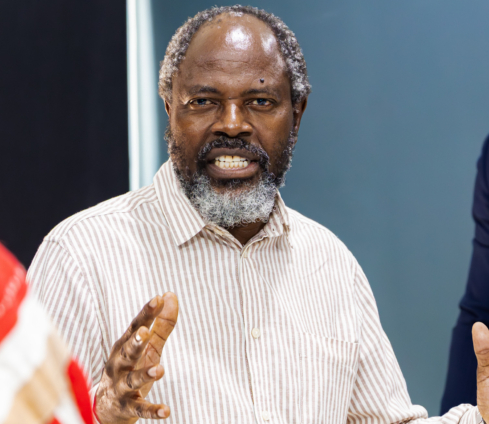
Former Reuter's staff member and Zimbabwean national, Cris Chinaka, has emphasised the importance of training African journalists to effectively address the issue of illicit financial flows (IFFs).
In a recent initiative, Mr. Chinaka travelled to Ghana, where he led a workshop aimed at equipping Ghanaian journalists with the necessary skills to report on financial crimes and promote greater accountability across the continent.
"I think it is important for us, African journalists to focus on this very important subject of illicit financial flows because Africa is a continent that is losing billions of dollars every year due to illicit financial flows in our economy therefore it is important that journalists acquire the skills, the knowledge and the motivation to cover this area" he told journalists after a five-day training on IFFs held in Greater Accra region.
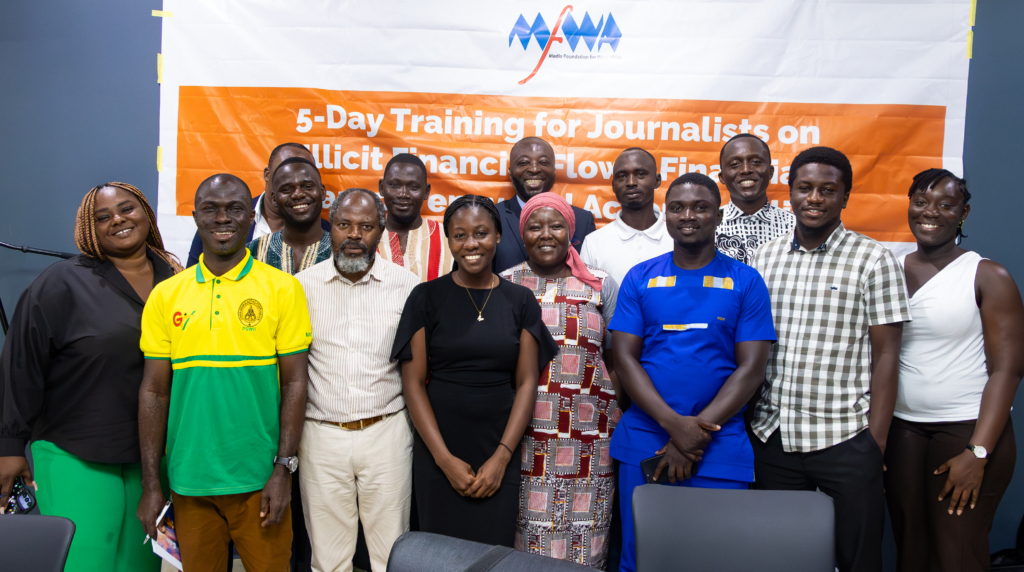
The training, which saw ten journalists from various media outlets participate, was organised under the auspices of the Media Foundation for West Africa (MFWA) and supported by the Thomson Reuters Foundation.
This programme forms part of a wider effort to combat the illegal transfer of funds out of Ghana and Africa at large, a challenge that deprives the continent of crucial financial resources needed for its development.
"The money that Africa is losing to illicit financial flows is critical to Africa's development, it is critical for tackling some of the woes that we have as a continent, the woes of development of our schools, the health services on the continent, it is important for the development for farming, agriculture, and food production, it is important for job creation," he said.
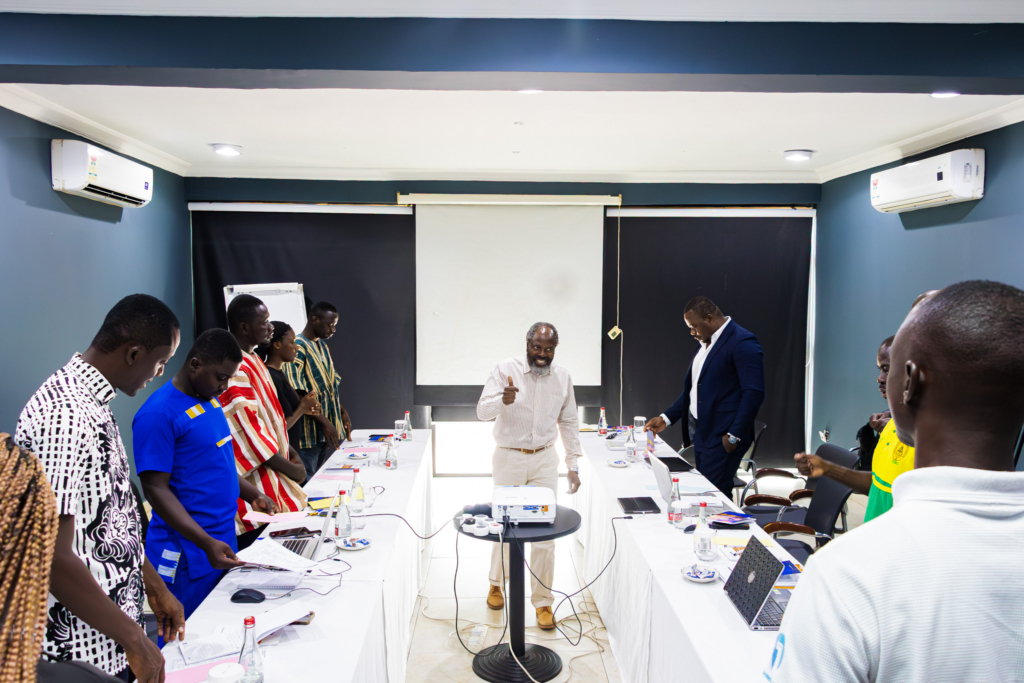
During the workshop, Mr. Chinaka, who has vast experience in investigative journalism, shared his expertise on how to identify and report on illicit financial flows, a growing issue that has far-reaching consequences for African economies, and narrowed it to the Ghanaian context with expectations from the journalist to be able to identify and report on the menace.
He also discussed the crucial role of the media in holding powerful actors accountable and the need for journalists to have access to accurate financial data and the tools to uncover corruption and money laundering.
The workshop provided journalists with valuable skills, including how to track the movement of illicit funds, the legal frameworks around financial crimes, and the importance of investigative techniques in uncovering hidden financial flows.
The goal is to enhance their ability to report on these complex issues, ultimately contributing to the broader effort to reduce corruption and increase financial transparency within the region.
This initiative comes at a time when Africa continues to grapple with the adverse effects of illicit financial flows, which deprive governments of vital resources for public services and development.
In 2020, the United Nations Conference on Trade and Development's Economic Development in Africa Report estimated that $88.6 billion, equivalent to 3.7% of Africa’s GDP, leaves the continent as illicit capital flight.
According to the report, Africa could gain $89 billion annually by curbing illicit financial flows.
By empowering journalists with the knowledge and tools to combat this financial crime, Mr. Chinaka, MFWA, and Thomson Reuters Foundation are helping pave the way for a more informed and accountable media landscape across the continent, especially in West Africa.
The training has been organised in Kenya and Tanzania, with a total of 30 journalists trained across the three countries.
The Media Foundation for West Africa remains committed to supporting journalists in their efforts to combat corruption and promote good governance, with programmes like this training workshop playing a pivotal role in advancing the cause.
Before the training, MFWA and Thomson Reuters Foundation supported Ghana's giant private media organisation, The Multimedia Group with equipment to help tackle IFFs.
Latest Stories
-
Fruit juice and more could be next under Ghana’s transit crackdown – FABAG
2 minutes -
Absa Bank Ghana provides specialised asset financing to support largest indigenous mining contractor
57 minutes -
Gold edges higher as inflation jitters ease; key US data in focus
1 hour -
Katy Perry loses trademark case against Australian designer Katie Perry
1 hour -
Bridgerton star on dealing with One Piece casting backlash
2 hours -
Woman charged with attempted murder after shooting at Rihanna’s home
2 hours -
Ho Nurses Training College mounts pressure on UHAS to release its facilities
2 hours -
140 suspects, 27 dockets – Kwakye Ofosu says ORAL is already delivering results
2 hours -
Cabinet approves special tribunals to tackle corruption and illicit wealth cases
2 hours -
Ghana Immigration Service rescues 73 from abuse in an anti-fraud operation
3 hours -
EOCO freezes ¢1.5bn in assets linked to corruption investigations – Kwakye Ofosu
3 hours -
Wildlife to replace historical characters on British banknotes
3 hours -
China and North Korea to resume passenger train service after 6-year halt
4 hours -
Meghan to headline ‘girls’ weekend’ in Australia for 300 women
4 hours -
ORAL: We won’t manipulate judiciary for political ends – Gov’t spokesperson
4 hours