

Audio By Carbonatix
Without South Africa, Africa is already in net zero. However, Africans stand to suffer the most from the global policies of the energy transition. About 35 out of 50 most climate-vulnerable countries are in Africa.
Adaptation capacity is low, and there are no resources to build resilience. The effects of the climate crisis are expressed in many familiar ways - droughts are causing food insecurity, Sea level rise is washing away coastal communities; and floods causing destruction to critical infrastructure.
These challenges have produced climate refugees, and continue to impose huge financial burdens on national budgets.
The solution to this obviously daunting stress on human societies, now called “energy transition” also targets the source of revenue and feedstock for industrial development - oil and gas resources. Estimates show that over 50% of the export revenue of African producers rely on oil and gas exports, whilst Africa’s agricultural revolution will depend on increased use of fertilizer beyond the Abuja Declaration, for which natural gas is an important feedstock.
In response to the legacy pollution of the oil and gas industry, previous efforts were made to tie funding to environmental commitments - the Equator Principle, by which major financial institutions provided funds for only projects with demonstrably low environmental impact.
Today, many IOCs have scaled-down investments due to the increased priority of huge debt payouts over new investments as well as the climate policies of their originating countries.
African Producers expectedly are discussing a new strategy - a shift from a conservative approach to oil development to an accelerated development strategy, to ensure that the resources are exploited much more quickly before they become stranded.
Acceleration requires an aggressive exploration strategy, reduced project timelines, and simplified and speedy project approval processes, among others.
Rystad Energy forecasts that a 30% increase in exploratory drillings will be recorded across the region in 2022, compared to 2021 levels after a significant decline during the COVID-19 period; but beyond exploration, more funds are needed to bring commercial discoveries to production.
The industry’s replacement CAPEX is about 80 per cent of total spending according to a Deloitte Report, but financial constraints have led to spending cuts with negative implications for project development. In addition to the financing constraints, demand for oil is projected to slow down.
The International Energy Agency projects oil demand to grow by about 1 per cent CAGR (Compound Annual Growth Rate) in the medium term as against 1.25 per cent during the 2010- 2015 period and will decline in the long term.
The current levels of high gas prices although attractive to producers, will adversely affect the growth of the industry in the long term as cheaper alternative fuels like renewable energy will replace gas demand leading to the stranding of gas assets. The basis for acceleration has been well established. The challenge is - how do we finance acceleration strategy in the oil and gas industry?
There are important choices to make.
First, Europe is in search of new sources of natural gas for energy generation due to the geopolitics of the Russian War in Ukraine. There is therefore renewed hope that European financing for gas projects is feasible under the circumstances.
However, such financing will likely be tied to gas supply off-take conditions similar to the Chinese model of infrastructure financing. Export of gas at the expense of domestic utilization of gas for industrial development, therefore, becomes the chosen option.
It is not surprising that the proposed African Regional Pipeline Project, extending the West African Gas Pipeline to Morocco follows an export/revenue-led model against the domestic industrial model.
Second, low-risk-capital financing, also called value investment has proven persuasive as an alternative source of financing, with a pool of capital in search of general projects. That is, they do not have serious environmental commitments.
These investment capital - sovereign wealth funds, pension funds, insurance funds - are atypical of the traditional sources of oil and gas investment, as they require firms to make profits irrespective of the level of oil prices, in order to maintain the value of the investment.
They have a low tolerance for the size of volatiles the oil industry exhibits. This choice of oil financing is not without difficulties. It may require adjustments to fiscal terms by host countries’ governments including for example adopting sliding scale fiscal arrangements, tax credits during downtimes, and effective cost management enough to generate free cash flow to ensure steady returns.
It is also important for African producers to change the current narrative that borders on “climate colonialism”. That is, the notion that the developed countries polluted to develop, and Africa must therefore be allowed to also pollute in as far as it is financing the development of our countries.
This is the same unsustainable path the developed countries followed that brought us to the current climate crisis. The fact is, Africa needs not to pollute to develop. It can produce oil and gas in a responsible and environmentally benign manner.
We need such an important balance, as was effectively articulated by President Nana Addo Dankwa Akufo-Addo at COP26, “Ghana acknowledges the importance and effects of Climate Change, and the urgent need to combat it, and we acknowledge equally the importance of protecting our development.
We believe that a balance must be struck and maintained between our social, economic and environmental imperatives”. This narrative will provide the basis for attracting funding for oil and gas projects from “activist investors”, who must understand that Africa will accept high standards of environmental governance.
The time has come for African countries to negotiate for technologies that support low-carbon products such as Carbon Capture and Storage, replacing hydraulic-based production with electric-based, and conducting carbon-neutral auctions, among others. The global North must also meet its commitments towards Africa’s adaptation efforts, and recognise the “common but differentiated responsibility” principle of the Paris Agreement.
In November 2022, the World gathers in Egypt at COP27, the African COP, as it is being called, to deliberate on progress made in our global climate efforts. I have presented in this piece reflections on the future of Africa’s energy landscape, which will be defined by the decisions we make today.
The choices are difficult, but not insurmountable. Africa must emerge from the COP27 stronger, and more purposeful, and chart a path that can stand the test of time.
*****
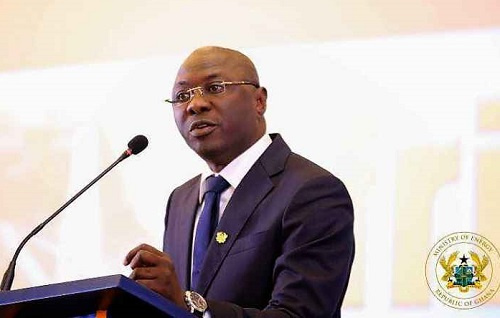
Mohammed Amin Adam is the Deputy Minister of Energy (with responsibility for the petroleum sector). He has worked extensively on extractive industries and resource management as a University lecturer, advisor on resource governance and a campaigner for transparency in resource management around the globe.
Latest Stories
-
Total expenditure as of July 2026 amounted to GH¢147.07bn, 16% below target – BoG
3 hours -
Total revenue & grants stood at GH¢144.5bn in July 2026, slightly below target – BoG
3 hours -
Ghana Sports Fund urges sports federations to submit credible proposals and measurable targets
3 hours -
Sally Rooney books withdrawn in UK over Palestine Action support
3 hours -
Musk says US government may be behind slowdown of Ukraine drone speeds
3 hours -
Picking Chief Justices nearing retirement could give Mahama immense power – Bentil
4 hours -
Netflix to shed 1,000 jobs in steepest cuts since 2022
4 hours -
Burnham had two hospitality dinners with Man City chairman, deleted records show
4 hours -
Semenyo ‘froze’ after alleged racist abuse, court told
4 hours -
‘Shameless’ – Mourinho critical of Vinicius Jr ban timing
5 hours -
Loyalty can outweigh competence in Chief Justice selection – Bentil
5 hours -
Man City suffer as PSG masterclass sets up Champions League win
5 hours -
Customer Service Africa CEO urges business leaders to observe staff and customer interactions
5 hours -
On night of mayhem for Liverpool, Barcola arrives in style
5 hours -
Muzic Mensah finds healing and renewed love in new single ‘WayƐ Late’
5 hours