

Audio By Carbonatix
Ghana’s persistent electricity reliability challenges may soon see a technology boost as tech developers work to introduce and harness the power of Artificial Intelligence (AI).
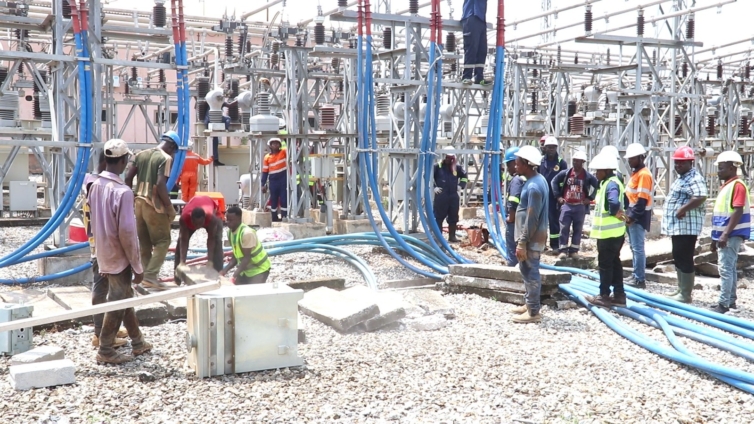
The “AI for Energy” project under the Artificial Intelligence for Sustainable Development (AI4SD) initiative is collaborating with the Ghana Grid Company (GRIDCo) to predict transformer faults and schedule preventive maintenance through the use of AI.
The AI4SD Energy theme lead, Prof. Francis Kemausuor, revealed that the goal is to reduce downtime caused by transformer failures, a major contributor to power outages.
“Transformers are critical not only for electricity distribution but also for industrial operations. When they fail, the resulting downtime is expensive and affects thousands of homes and businesses,” Prof. Kemausuor noted.
The project, still in its early stages, is currently training AI models using publicly available data from academic and industrial sources.
These models are being tested to determine the suitable model for use with Ghana’s grid data.
“We have requested for data from GRIDCo. Once we receive it, we shall test the models using the GRIDCo data” Prof. Kemausuor said.

According to the Energy theme lead, the collaboration with GRIDCo involves access to several years of transformer performance data.
He added that, “The initial plan is to pilot the system using a few transformers”. “If successful, the technology will be scaled across the national grid”
“We’re looking for transformers with long-term operational data. That history is key for AI systems to identify patterns that can lead to faults.”
Explaining how the system would work, Prof. Francis Kemausuor gave the analogy of a mobile phone overheating.
“Let’s say your phone shouldn’t operate in a temperature beyond 50 degrees Celsius. If it does repeatedly, it might break down. A transformer has similar parameters. If we can track and analyze those using sensors and AI, we can prevent failures before they happen,” he explained.
The initiative is also looking outward, hoping to learn from international examples.
“There are companies in France and Finland already doing this. We want to visit them, study their systems, and see what can be adapted for Ghana,” he said.
Prof. Kemausuor acknowledged the support of the French government through the French Embassy in Ghana, which is backing the AI4SD initiative.
He also extended an invitation to local AI experts to collaborate on the project.
“This work is a collective effort. Our team includes young engineers and computer scientists who are gaining valuable skills along the way. We’re excited about the potential to improve electricity reliability for Ghanaians using AI.”
Latest Stories
-
TaxForGalamey: Stop taxing galamsey immediately or face sanctions – Gov’t cautions MMDCEs
2 minutes -
FNB Ghana strengthens balance sheet with higher earnings and improved asset quality
14 minutes -
Stakeholders call for stronger action to advance women’s economic empowerment at UKGCC–British High Commission IWD Event
22 minutes -
Global Network of Export-Import Banks holds 6th exchange programme in Accra
26 minutes -
Prudential Bank Ladies celebrate IWD with candid talk on Love, Life, and Livelihood
27 minutes -
Kejetia Market now a ‘death trap’ – Federation of Kumasi Traders warns
29 minutes -
NDPC DG urges shift to resilient, shock-responsive social protection systems
30 minutes -
New Town building collapse: Enforce existing laws — Architecture Alliance
33 minutes -
Kudus to play under new coach as Tottenham appoint De Zerbi
34 minutes -
Gov’t may review fuel taxes amid rising oil prices – Kwakye Ofosu
43 minutes -
Iran–US conflict pushes fertilizer prices higher, raising food security risks in 2026
49 minutes -
Iran using children in security roles in war, reports and witnesses say
52 minutes -
Evalue-Ajomoro-Gwira MP pledges to safeguard peace in Lower Axim and Nsein
55 minutes -
Global collaboration in focus as Malaysia courts Ghanaian top business executives
1 hour -
Evalue Ajomoro Gwira MP calls for calm amid Lower Axim and Nsein chieftaincy tensions
1 hour