

Audio By Carbonatix
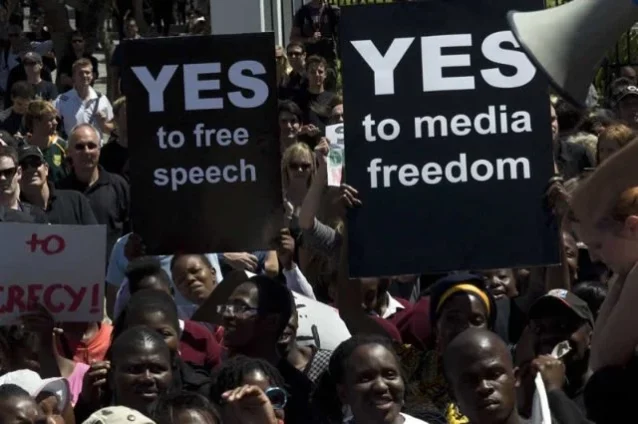
As Ghana gears up for the 2024 polls, concerns are mounting over a surge in attacks on the country's press.
The Ghana Journalists Association (GJA) has meticulously recorded 45 instances of assaults on journalists and media institutions between 2019 and 2023. Shockingly, 2023 witnessed the highest annual incidents, culminating in a disturbing attack on United Television by youths associated with the ruling New Patriotic Party. The attackers faced legal consequences, were convicted and fined GH₵2,400 ($203) each.
Over the past few years, Ghana has witnessed a concerning decline in press freedom. In 2021, Ghana proudly held the 30th position among 180 countries in the global press freedom index.
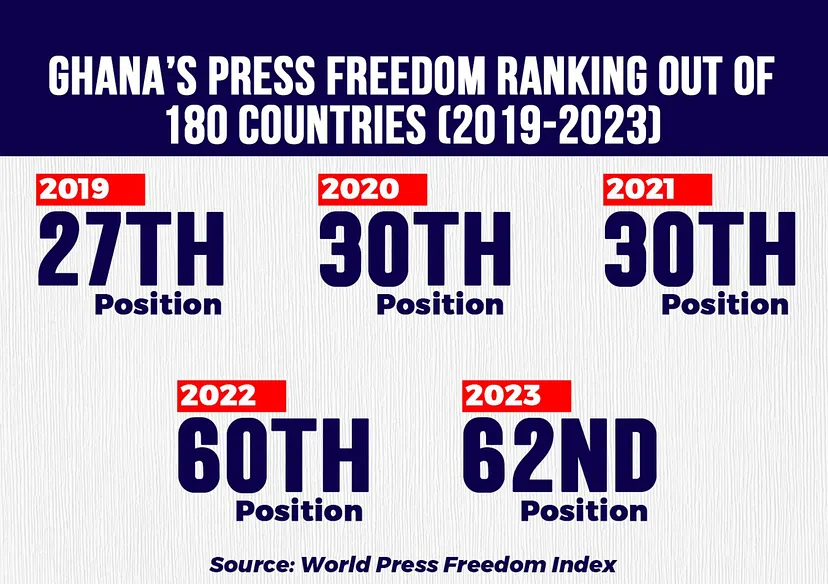
However, this accolade took a dramatic nosedive by 2023, plummeting to a distressing 62nd position on the same index. The approach to the 2024 general elections, merely within a 330-day countdown, has been marred by an alarming increase in reported cases, with at least seven incidents occurring in less than a year. October 2023 particularly stood out as a hotspot, witnessing three cases reported in less than a week.
These incidents underscore a troubling trend in the suppression of journalism in the country. The increasing intolerance of government authorities towards criticism has cowed many journalists into practising self-censorship to protect their jobs and personal security.
Compounding this issue is the substantial ownership of a third of the country’s media outlets by politicians or individuals closely associated with political parties.
This ownership influence perpetuates the production of partisan content, significantly undermining the neutrality and credibility of news dissemination.
While the National Media Commission is ostensibly designed to help regulate the media space and ensure professionalism among practitioners, and as well insulate the state-owned media from governmental control, government's continued selection of a good number of Commission members as dictated by the national constitution, has left the nation still waiting for the day when the Commission will be angry enough to advocate for let alone lead the prosecution of these politically-exposed attackers of media practitioners.
The result is a media space susceptible to political interference and regrettably, cases of death threats against investigative journalists by politicians persist, while instances of police violence against journalists often go unaddressed.
Essentially, Ghana’s struggle with declining press freedom and the challenged independence of its media represent a critical challenge to its democratic values.
Follow Isaac Kofi Agyei on:
Twitter (X): @isaackofiagyei
LinkedIn: Isaac Kofi Agyei
Latest Stories
-
Strong emergency governance framework key to saving lives – GRNMA President
59 minutes -
Dubai’s tourism industry reels from ‘brutal’ impact of war
1 hour -
Ghana must establish dedicated emergency centres, not rely on hospital units – GRNMA President
1 hour -
Judge dismisses most of Blake Lively claims in harassment suit against Baldoni
1 hour -
Treatment can start in a taxi – KATH Dep. Dir. slams ‘unacceptable’ rejection of emergency patients
1 hour -
Refugee’s death after release by US immigration authorities ruled homicide
1 hour -
US Army chief of staff asked to step down by Hegseth, sources say
2 hours -
‘No space for emergencies’ – Dr Bonney warns of systemic collapse as hospitals operate at 300% capacity
2 hours -
Ghana’s emergency system not equipped for current demands – GRNMA President
2 hours -
De Zerbi apologises to fans for Greenwood comments
3 hours -
Dr Gideon Boako empowers 2,200 Tano North SHS candidates, pledges full boarding kits
3 hours -
Emergency care failures unacceptable – Deputy Health Minister
3 hours -
Gender Minister follows up on Bulemi case with visit to Accra Psychiatric Hospital
3 hours -
Ghana’s emergency care crisis: Dr. Asiedu Sarpong calls for preventative approach to healthcare reform
3 hours -
NPP faces internal pressure as group opposes second term for incumbent general secretary
3 hours