

Audio By Carbonatix
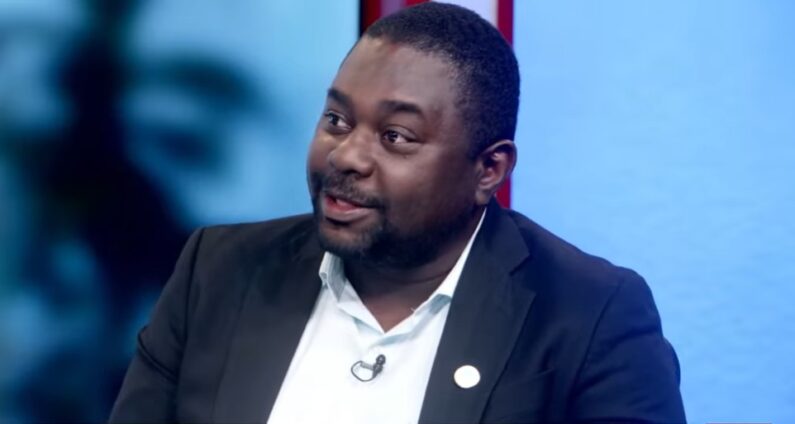
Dr Joseph Bonney, an Emergency Medicine Specialist, has issued a stark warning regarding the state of Ghana’s healthcare infrastructure, asserting that the nation’s leading facilities are currently operating far beyond their breaking point.
Speaking during a JoyNews dialogue on Ghana’s emergency crises on Thursday, 2nd April 2026, Dr Bonney highlighted that, “Our hospitals are always full with no capacity for emergencies, with no space for emergencies”.
His comments follow the hit-and-run death of Charles Amissah, an employee of Promasidor Limited, whose case has become a flashpoint for public anger over delayed emergency responses and overcrowded wards.
The "300% Capacity" Crisis
While official figures might suggest a manageable number of beds, such as the 37 currently cited for the Cape Coast Teaching Hospital's emergency department, Dr Bonney revealed that the ground reality is one of extreme stretching.
He noted that departments built for dozens are often forced to see over 100 patients simultaneously.
Using "Queuing Theory," Dr Bonney explained that when a system operates at 100% capacity constantly, and in the cases of Komfo Anokye and Cape Coast Teaching Hospitals, at 300%, it loses any buffer for both predictable and unpredictable events.
“There will be some road crash... people that will be involved in one accident or the other. You can always predict that these will happen. But what happens to the unpredictable events where it is above and beyond what you can handle?” Dr Bonney questioned.
Beyond the Hospital Gates
Dr Bonney challenged the notion that simply gaining entry to a hospital equates to receiving healthcare. For patients like the late Charles Amissah, the quality of care is dictated by the environment they enter.
Being in an overcrowded emergency department that cannot provide adequate or continuous care means a citizen is not receiving the healthcare they are entitled to as a Ghanaian, he lamented.
Patient harm occurs when organisational holes, such as a lack of funding, resources, and technical systems, align.
He saidhealthcare workers are often the "last hole" in this model, bearing the brunt of public frustration while working tirelessly to innovate outside their scope to save lives.
A Policy-Reality Gap
The specialist pointed out a glaring contradiction between Ghana’s international commitments and its domestic reality. In 2023, Ghana signed a WHO resolution for integrated emergency and critical care to achieve Universal Health Coverage. Furthermore, the country is set to sign a new global strategy this year spanning from 2026 to 2035.
“Are we able to say that as a country, we can achieve what we have signed up for? Do we have the capacity to say this?” Dr Bonney asked, noting that while Ghana's tiered healthcare system is among the best-designed on the continent, the "organisational structure" and "technical systems" required to support it remain missing.
The death of Charles Amissah, he suggested, was not just an isolated accident, but an "unpredictable event" hitting a system that had already run out of space to save him.
Latest Stories
-
GRA fully recovers $154k legacy debt owed by foreign entities between 2022 and 2024
1 minute -
Kwesi Pratt Jr warns bus preachers are adding to passengers’ stress with accident prophecies
2 minutes -
MTN Ghana to spend $1.1bn in 3 years, build 500 new sites as MoMo hits 44% Growth
4 minutes -
I have no regrets joining Assemblies of God – Mahama
4 minutes -
Starlink restrictions in Ukraine war linked to political situation, Zelensky aide says
7 minutes -
Furniture boost for Techiman North schools as MP donates to 20 institutions
8 minutes -
Assemblies of God to loan 10,000-seater dome for Ghana@70 celebrations
8 minutes -
Government to audit 2,016 community network sites – Communications Minister
8 minutes -
Heritage Series notes: BoG promises more inclusive cedi with improved sizes, tactile features
25 minutes -
‘We want answers’ – Family seeks probe into 14-year-old’s death 12 days after starting SHS
36 minutes -
No preacher has the right to impose beliefs on bus passengers – Kwesi Pratt Jr backs preaching ban
40 minutes -
Africa Maritime Security Forum opens in Accra with call for stronger continental cooperation
41 minutes -
Techiman North MP fulfills promise with new CHPS Compound in Kokoago
51 minutes -
Enterprise Trustees, Sinapi Aba launch ‘Asetenapa Plan’ to promote retirement savings among informal workers
53 minutes -
Gov’t working to ensure GAUA strike is called off by October 16 – Haruna Iddrisu
58 minutes