

Audio By Carbonatix
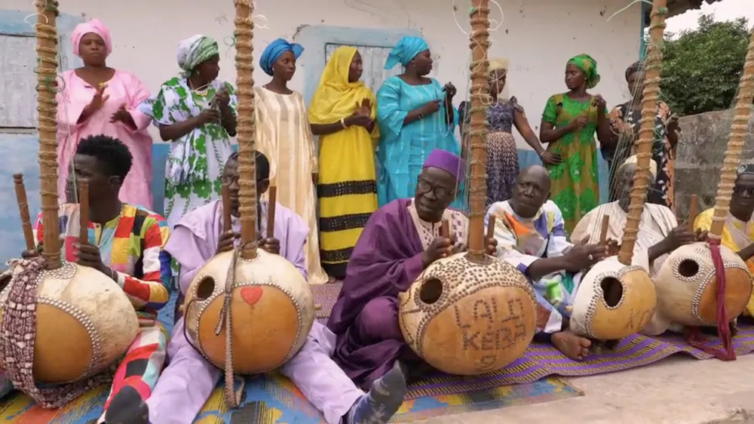
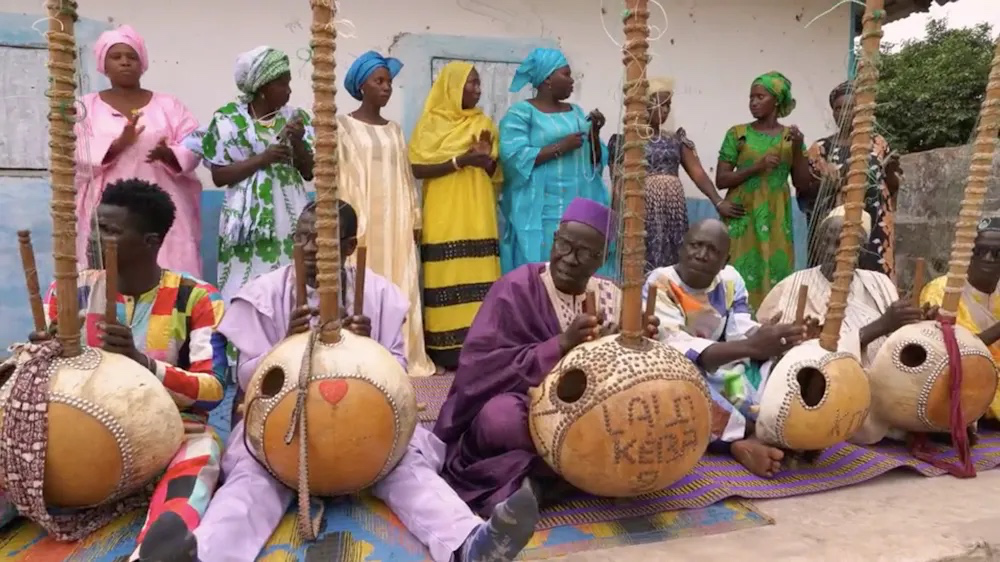
The evening air in the Malian capital Bamako was saturated with the sounds from a quartet of Kora players waiting their turn to perform at a local bar. Unlike the more sophisticated bars frequented by Bamako’s socialites and their big spending friends, this very club was basic and very much open to even the low-budget hawker on the street but had great music and a wonderful ambience. Bands who perform are given three hours to entertain the crowd. The Kora playing quartet had been slated for the very end of the night. It was their second time performing and had requested to be given the late-night slot.
Their lead singer, Amadou, bespectacled with an unkempt afro hair and moustache which distinguished him from the others, three of his upper front teeth roiled in aluminium, thick silver rings rested on both thumbs, said something in Bambara, the popular language spoken in the country, to one of the bandsmen. His lanky frame indicated he had not eaten for more than a month, but, as I later witnessed that night, no matter the amount of food that entered his belly, the body shape remained the same. Their road manager, a stout-looking man with a round face partly covered in thick dark glasses, adjusted his mud-cloth shirt before squeezing the last smoke of the already distressed piece of cigarette.
He let loose the piece and with his left foot, mashed it to the ground. He whispered something into the ears of one of the bandsmen adjusting the strings on his instrument. The group mounted the stage to wild cheers from a mixed crowd of locals and foreigners. The open-air at the bar also meant more beer for customers. This was back in 2007. I had gone to Mali with a group of foreign journalists to document the story of the band whose songs were inspired by the griots in their community. The journalists wanted to assess the impact of ancient storytelling and the impact of Malian music on the global stage.
The piece also investigated how storytellers (Griots) have managed to transfer the purity of history across generations without embellishing it with non-essential material. We operated three cameras on that very night. Seated a few metres away from the stage, our table was decorated with bottles of foreign and local beer. The bottles were not consumed until later when we were through with the filming and our gear was packed and stored in the Nissan van. Our fixer was a local Malian schoolteacher I had met in Tamale through a mutual friend. In his late 30s at the time, a calm and great person, he interpreted every song performed on that night. The performance lasted close to three hours and by the time everything was done, the moving sounds of long-distance truck drivers were heard from a distance.
A new day had come to meet us. Our next stop was Gao, the home city of the Kora players. I had read about Gao in history books during my secondary school and university days. I was, therefore, looking forward to visiting this popular town that shaped my sense of history about the Malian Empire. Gao is in the eastern part of Mali and is now a place said to be a haven for militants. We met with the band members at a location and headed off to Gao. None of them spoke English but thanks to our fixer whose English was better than my French, we managed to squeeze everything we wanted from them. The journey was very long. We got to Gao late into the night. We slept in our tents outside of an open field. We were told we did not need security and that the village was safe.
Though tired and my eyes wobbling, we managed to go through the layout for the morning filming. The sounds of village women heading to the riverside woke me up. They greeted me in a language I had no idea of. I responded by waving at a sign of reverence. Later in the day, the entire community gathered under an ancient baobab tree. We had then visited the chief’s palace and paid the necessary respect. The purity of the tradition was something that kept playing in my head throughout the trip. Several griots or storytellers sat on a mate. They each went through different stories at different times. The youngest among them, a 15-year-old, narrated a moving story about an intricate part of the culture.
It was the story of slavery and how a local stood up against the slave traders and conquered them. For a moment I thought an ancient spirit had taken hold of his body; he kept the fine details so accurate one of the storytellers, about 80 years of age, applauded him. Everyone joined with applause. Like other communities or villages in the country, an unspoken policy existed which made it mandatory for children to be taught about their history, so they take over from those before them. Storytelling is an integral part of our identity and from it, we have our being and heritage, the bandsmen told us.
Latest Stories
-
Conflicts among care providers linked to maternal, neonatal deaths – Expert
54 minutes -
GIS marks 10th TIME conference, champions improved teaching practices
1 hour -
BRICS Or Balance? What Ghana’s bid really means
1 hour -
GPRTU wants full TRAFFITECH-GH implementation to start in 2027
2 hours -
Mahama announces plans to import electric wheelchairs for PWDs
2 hours -
KGL U17 Colts 2026: Western beat Prempeh Elite Academy to set up final final with Greater Accra Region
2 hours -
Late Solanke strike salvages 10-man Spurs draw at Man United
2 hours -
Gender Ministry to monitor welfare of Nana Akua Addo’s children amid domestic violence case
2 hours -
Benedict Okyere Yeboah: Ghana’s football problem goes beyond sacking a coach
3 hours -
GPL 2026/27: Darkwah Wiafe’s winner sees All Blacks beat Kotoko
3 hours -
ITF World Tour : Patel Wins Boys’ Singles Final at J100 Accra
3 hours -
Ghana must pursue BRICS partnership if it brings economic benefits – Kpebu
3 hours -
Success and Wright Claims J100 Accra Girls’ Doubles Championship
3 hours -
ITF J100: America’s Wright wins J100 Accra Girls’ Singles Title
3 hours -
Expedition hopes to find aviator Amelia Earhart’s plane on remote island
3 hours