


Audio By Carbonatix
Ghana, on the 26th of June 2025, joined the global community in commemorating the International Day Against Drug Abuse and Illicit Trafficking, designated by the United Nations General Assembly.
The purpose of the day is to strengthen global cooperation in combating drug-related problems and to promote public health and preventative measures instead of punitive measures.
This year's campaign aims to raise awareness about the importance of treating people who use drugs with respect and empathy.
READ ALSO: Govt to crack down illicit trafficking networks – Vice President assures nation
It is also aimed at providing evidence-based, voluntary services for all; offering alternatives to
punishment; prioritising prevention; and leading with compassion.
The 2025 awareness Day is held on the theme "Breaking the Chains: Prevention, Treatment and Recovery for all".
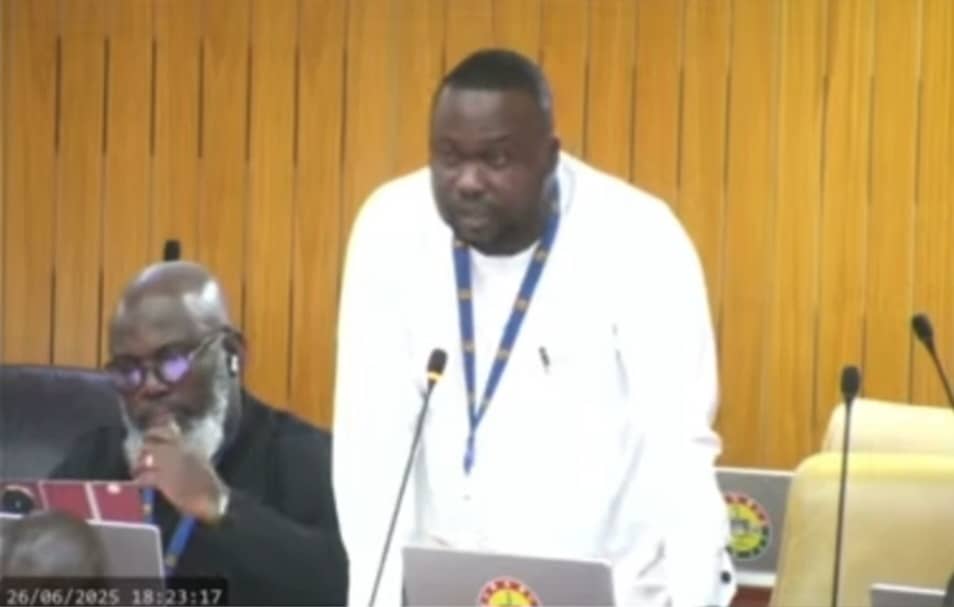
Haruna Mohammed, the Member of Parliament (MP) for the Asunafo North Constituency in the Ahafo region, in a statement on the floor of Parliament, said the situation in Ghana is very severe and needs urgent attention.
Mr Speaker, he stated, the global drug crisis affects millions, with the United Nations Office on Drugs and
Crime (UNODC) reporting that nearly 200 million people use illicit drugs worldwide, including cannabis, cocaine, opiates, and synthetic substances.
Less than one-fifth of those affected receive adequate treatment. In Ghana, the situation is dire.
The MP indicated that, according to a 2023 study by the Ghana Health Service and the Mental Health Authority, approximately 1.25 million Ghanaians grapple with drug-related issues, with marijuana, tramadol, codeine, and synthetic opioids being the most prevalent.
He noted that a 2024 study by the Department of Children, Ministry of Gender, Children, and Social Protection, revealed that 7% of adolescents aged 10–17 reported lifetime alcohol use, with increasing experimentation with substances like tramadol.
Shockingly, he added, the Mental Health Authority noted in 2023 that 3,765 cases of mental disorders were linked to alcohol and 5,554 to other psychoactive substances, predominantly affecting the 20-34 age group, with children as young as 10-14 presenting substance-related conditions.
"Mr Speaker, a disturbing social media trend known as 'Wonim Red' or 'Red 225' has emerged, linked to the abuse of an unlicensed combination of tapentadol and carisoprodol, known as Super Royal-225. This dangerous substance poses severe risks, including seizures, respiratory distress, and death," Mr Haruna Mohammed cautioned.
He indicated that videos of youth, some in school uniforms, engaging in substance use have proliferated on social media, normalising this perilous behaviour and amplifying the crisis.
The Asunafo North legislator emphasised that Ghana's current rehabilitation infrastructure is woefully inadequate.
He noted that facilities like Pantang Hospital, Accra Psychiatric Hospital, and Ankaful Psychiatric Hospital are overstretched, with limited capacity to meet the growing demand for counselling, detoxification, and
rehabilitation.
Mr Haruna Mohammed reiterated that access to residential rehabilitation, particularly in Accra and other regions, remains severely constrained.
The lawmaker proposed the following urgent measures:
- Establishment of Regional Rehabilitation Centres: The creation of well-funded, state-of-the-art
rehabilitation centres in every region, staffed with trained professionals to provide
comprehensive care, including detoxification, counselling, and reintegration programmes. - Strengthened Public Awareness Campaigns: Intensify nationwide campaigns through
traditional media, community outreach, and social media to educate the public on the dangers of substance abuse. - Regulation and Monitoring of Harmful Substances and Trends: Collaborate with the
Narcotics Control Commission (NAcOC), Food and Drugs Authority (FDA), and cybersecurity
agencies to regulate the sale of prescription drugs like tramadol and monitor social media
platforms to curb the spread of harmful trends. - Investment in Data-Driven Policies: Leverage research and data collection, as emphasised by this year's theme, to inform targeted interventions, drawing inspiration from global successes
like Portugal's model of prioritising treatment over punishment.
Latest Stories
-
Ghana must value skilled trades, build resilient learners — Ibn Chambas
3 minutes -
Ghana must rethink education around relevance, resilience and responsibility — Ibn Chambas
6 minutes -
Prince Harry faces defamation lawsuit from charity he co-founded
8 minutes -
South Korea deploys thermal cameras to track escaped zoo wolf
10 minutes -
Calls for royal meeting with Epstein survivors grow ahead of US visit
13 minutes -
Ibn Chambas advocates blend of technology and human values in education
15 minutes -
UMA improves healthcare access in Asutifi North with GH₵700k ‘Kim Taylor Legacy’ Walkway
19 minutes -
Scholarships Authority and Fanaka University offer sponsorship for procurement and supply chain studies
23 minutes -
Bisa Kdei drops new single ‘Go N Look’ featuring Medikal
29 minutes -
Benin facing rising terrorism in north as French military presence faces growing criticism
30 minutes -
UEW Public Lecture Series 2026: Education debate ‘about the soul of Ghana’s future’ — Dr Ibn Chambas
31 minutes -
EU fingerprint and photo travel rules come into force from today
58 minutes -
Anti-LGBTQ+ Bill: Ghanaians demand expedited passage, not dialogue – Ntim Fordjour to Mahama
1 hour -
EU airline industry warns of fuel shortages if Strait of Hormuz stays closed
1 hour -
White House staff told not to place bets on prediction markets
1 hour