

Audio By Carbonatix
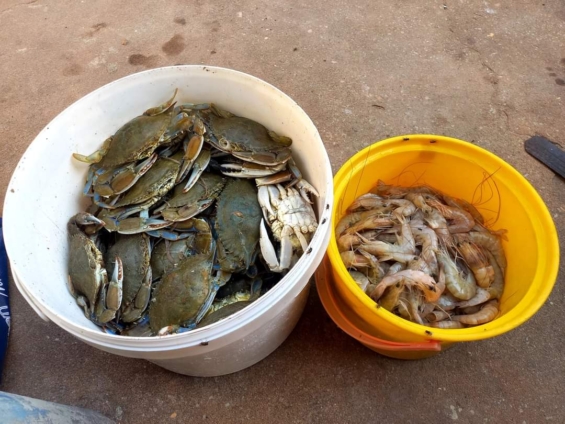
The periodic opening and closing of the Azizadzi floodgates have inadvertently led to an unexpected bumper harvest of crabs and shrimps in the lagoons of the Keta and Anloga districts.
Local fishermen and residents have reported an increased abundance of these aquatic species, resulting in a significant economic boost for the communities.
The Azizadzi floodgates, strategically designed to manage water levels in the lagoons and prevent flooding in the surrounding areas, have unintentionally created ideal conditions for the proliferation of crabs and shrimps.
The fluctuation of water levels, coupled with the regular opening and closing of the floodgates, has allowed for the easy entry and exit of these aquatic species.

Fishermen in the area have observed a substantial increase in their daily catches, attributing the phenomenon to the changing water dynamics caused by the Azizadzi floodgates.
The unexpected windfall has provided a welcome relief for the local fishing communities, which have been grappling with various challenges in recent times.
"I have been a fisherman in this area for over two decades, and I have never seen such a prolific harvest of crabs and shrimps. It's like nature has rewarded us for the challenges we face," said Kofi Mensah, a local fisherman from Keta.
In an interview with MCE for Keta, Emmanuel Gemegah, the eased availability of crabs and shrimps has not only impacted the local economy but has also created opportunities for the expansion of businesses in the seafood industry.
Local markets are witnessing a surge in the supply of these prized catches, leading to lower prices and increased accessibility for residents.

However, concerns have been raised about the sustainability of this unexpected boon. Environmentalists and fisheries experts are closely monitoring the situation, urging the local authorities to conduct thorough assessments to ensure that the increased harvest does not lead to overfishing or negatively impact the delicate ecological balance of the lagoons.
Emmanuel Gemegah noted that the Keta and Anloga districts have become a focal point for researchers studying the interplay between water management systems and aquatic ecosystems.
The unintentional consequences of the Azizadzi floodgates serve as a reminder of the intricate relationship between human activities and the natural world, prompting a reevaluation of the environmental impact assessments for similar projects in the future.
As the communities in Keta and Anloga enjoy the unexpected abundance of crabs and shrimps, discussions are ongoing about the long-term management of the Azizadzi floodgates and how to balance the needs of flood control with the preservation of the region's rich aquatic biodiversity.
Latest Stories
-
Tyson Fury dominates Makhmudov, calls out Joshua next
6 minutes -
I have supported highway authority financially to fix roads in my constituency – A Plus
1 hour -
US, Iran fail to reach peace agreement after marathon talks in Pakistan
2 hours -
ECG kicks off Phase Two of transformer upgrades at Lashibi; brief outages expected
2 hours -
Port crises loom as 11,000 drivers threaten four-day strike
3 hours -
A source of excellence across generations – Vice President Opoku-Agyemang lauds Mfantsipim
4 hours -
(Photos) Mfantsipim School launches historic 150th anniversary
4 hours -
Knights and Ladies of Marshall group backs Catholic Bishops’ stance on anti-LGBTQ+
5 hours -
Bright Simons writes: All the Filla in the Ibrahim Mahama/E&P – Gold Fields Saga
6 hours -
Monetise Idiocy In Ghana
6 hours -
The Ghanaian prophet and the mysterious death of his scottish wife Charmain Speirs
6 hours -
Nearly 400 sentenced in Nigeria for links to militant Islamists
7 hours -
Ghana’s recovery supported by gold strength despite global oil price pressures – Standard Bank Research
7 hours -
Methodist Church hails Mfantsipim@150; calls for “fresh consecration” to excellence
7 hours -
‘Excellence is our inheritance’ – Nana Sam Brew-Butler hails Mfantsipim’s 150-year reign in leadership
7 hours