

Audio By Carbonatix
Security Lecturer at the Kofi Annan International Peacekeeping Training Centre, Dr Victor Doke, has expressed deep concern about recent attacks on some police personnel in the volatile town of Bawku in the Upper East region.
In an interview on Joy FM's Middaynews on Thursday, April 10, he suggested that the attack was a clear sign of serious mistrust between the people and the security agencies deployed in the conflict-prone area.
This, he explained, is because the people believe that their operations may be skewed to support one faction of the conflict — a development he says is dangerous for peace-building efforts.
“The people who do not trust the security services in Bawku may have observed or concluded that the security forces are engaging in activities they perceive to be supporting one side of the conflict. And this will not be tolerated,” Dr Doke explained.
“The attack on state security is an indication of strong mistrust. And this is very critical. It’s very, very dangerous when the security personnel, who are supposed to protect lives and enforce the law, face such distrust from the very people they are supposed to protect,” Dr Doke added.
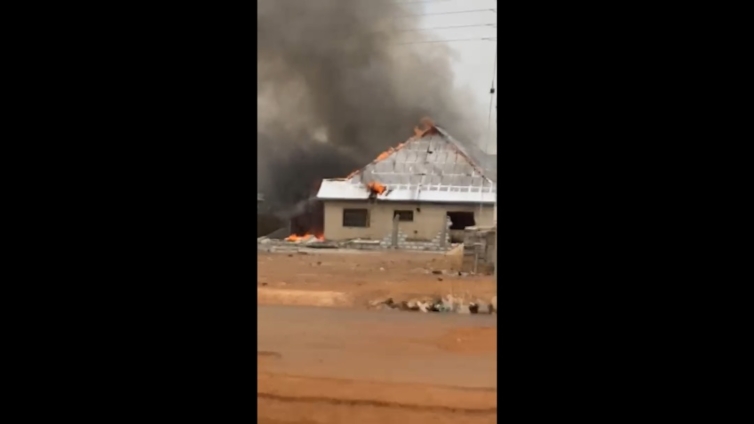
This follows the latest surge in violence in Bawku, where renewed clashes on Wednesday afternoon led to the death of one person and the setting ablaze of the private residence of the Bawku Divisional Police Commander, ACP Adamu Seidu, in the Upper East Region.
He noted that while security agencies may be undertaking peacekeeping efforts in the area, the perception of bias — whether real or imagined — is damaging the credibility of the state’s peace mission.
He added that such a situation points to entrenched positions among the youth in Bawku, making the search for lasting peace even more difficult.
“To achieve peace, you need trust among all stakeholders — and this includes the security apparatus. Without that trust, peace efforts are almost impossible,” he emphasised.
Dr Doke suggested that while current security measures like curfews, patrols, and an increased presence of personnel may help manage violence in the short term, sustainable peace will require a different approach.
He proposed that peace-building activities should not solely be left to security agencies, but must involve neutral state institutions like the National Peace Council or civil society organisations.
“For activities aimed at fostering coexistence between the factions, it is critical that these initiatives are led by neutral bodies. If the security agencies take the lead without transparency and trust, the youth may read ill motives into their actions,” he warned.
Dr Doke called for enhanced collaboration between security agencies and all stakeholders, especially the grassroots, to rebuild trust in the Bawku area.
Latest Stories
-
Drone strike hits wedding celebration in Sudan, killing at least 30 people
3 minutes -
UEW Public Lecture Series 2026: We’re preparing children for a past that no longer exists — Dr Ibn Chambas warns
9 minutes -
AMA to begin night enforcement against unscreened food vendors
10 minutes -
Nkawie Circuit Court remands 30-year-old mason over Mpasatia shop break-in
12 minutes -
Fintechs’ collaboration no longer optional – MMFL CFO
13 minutes -
KMA to prohibit other assemblies from accessing Oti landfill site over looming sanitation crisis
16 minutes -
GTA supported A Plus’ Gomoa Easter Carnival – Abeiku Aggrey
16 minutes -
GRA to tighten controls on importation of right-hand drive vehicles
34 minutes -
You can’t leave a bigger legacy than Petroleum Hub project – Western Regional Chiefs tell President Mahama
36 minutes -
Lawra MP cuts sod for GH₵11m multipurpose dining hall construction at Birifoh SHS
37 minutes -
Ghana defend African Schools Football Championship title after shootout win over Burkina Faso
41 minutes -
Ghana’s education system must evolve or risk becoming irrelevant – Patricia Obo-Nai warns
48 minutes -
Ghana Health Service responds to dead fish incident at Tema Port
60 minutes -
David Vondee lauds Mahama for emergency Cabinet meeting and key resolutions
1 hour -
Universities should focus on churning out impactful graduates rather than merely adding new programmes — UEW VC
1 hour