

Audio By Carbonatix
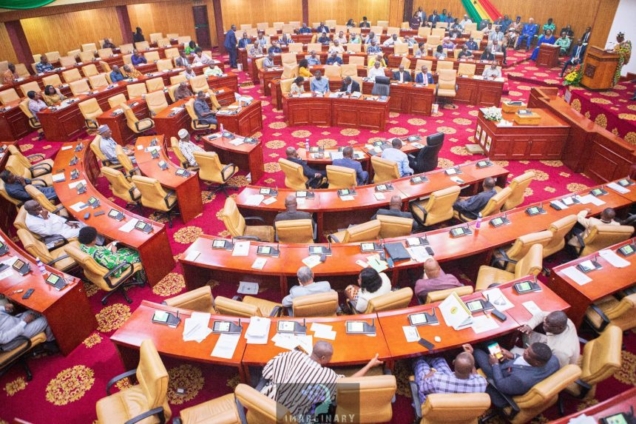
Parliament has approved a landmark lithium mining agreement between the Government of Ghana and Barari DV Limited, clearing the way for large-scale commercial extraction of the strategic mineral despite strong opposition from the Minority Caucus.
The deal, tied to the development of the Ewoyaa lithium deposit in the Central Region, is expected to position Ghana as a major player in the global battery minerals market, which is being driven by surging demand for electric vehicles and renewable energy storage.
Announcing the terms of the agreement in Parliament on Thursday, March 19, Minister for Lands and Natural Resources Emmanuel Armah-Kofi Buah said the country stands to benefit significantly from a revised fiscal regime that links royalties to international prices.
He explained that under the newly enacted sliding-scale legislation, Ghana will earn higher revenues when market prices are strong.
“In the current dispensation, and given the global market price of lithium, Ghana will get 12% royalties due to the sliding scale legislation that has matured into law,” he stated.
Strategic mineral for the energy transition
Lithium is a key component in rechargeable batteries used in electric vehicles, smartphones and grid-scale energy storage systems, making it one of the most sought-after minerals in the global transition away from fossil fuels.
Industry analysts say demand for lithium is projected to grow exponentially over the next decade as governments accelerate decarbonisation policies.
Ghana’s Ewoyaa deposit is considered one of the most significant hard-rock lithium discoveries in West Africa and could become the country’s first lithium-producing mine.
Officials say the project will diversify Ghana’s mining sector, which is currently dominated by gold, while creating new export streams and industrial opportunities.
Expected economic benefits
Government projections indicate that the mine could generate:
- Substantial royalty revenues and taxes
- Thousands of direct and indirect jobs
- Infrastructure development in host communities
- Foreign exchange earnings
- Opportunities for local contractors and suppliers
Authorities have also emphasised provisions for local participation and value addition, including the possibility of downstream processing within Ghana.
Minority rejects agreement
Despite the projected benefits, the agreement faced stiff resistance from the Minority, who argued that their concerns were not adequately addressed before the deal was presented for ratification.
Minority Leader Alexander Afenyo-Markin announced that all opposition members present voted against the pact.
“We, the 87 Minority, vote en bloc against this [lithium] agreement to the extent that the Lands Minister did not carry our concerns on board and insist on carrying the report in its current form and shape,” he declared on the floor of the House.
Opposition lawmakers have previously raised issues relating to revenue sharing, environmental safeguards, community benefits and the long-term value of Ghana’s stake in the project.
Debate over resource governance
The approval comes amid a broader national debate over how Ghana should manage newly discovered critical minerals to avoid repeating historical challenges associated with extractive industries, including limited local value retention and environmental degradation.
Civil society groups have urged the government to ensure transparency, strict regulatory oversight and equitable distribution of benefits to affected communities.
Sliding-scale royalty system
Central to the government’s defence of the agreement is the sliding-scale royalty framework, which adjusts the state’s earnings according to market conditions.
Under this system:
- Royalties increase when global prices rise
- Government revenues are protected during price downturns
- The fiscal regime remains competitive for investors
Officials say the current 12 percent royalty rate reflects favourable market conditions for lithium and could generate substantial public revenue if prices remain strong.
Ghana enters the critical minerals race
The ratification signals Ghana’s entry into the rapidly expanding global market for critical minerals essential to clean energy technologies.
Several African countries, including Zimbabwe and Namibia, are also developing lithium industries, intensifying competition to attract investment while maximising national benefits.
Experts say Ghana’s political stability, established mining framework and infrastructure could make it an attractive destination for long-term investors.
Implementation phase begins
With parliamentary approval secured, attention now shifts to final regulatory clearances, project financing and construction timelines.
Government officials say strict environmental standards will be enforced, and community engagement programmes will be prioritised as the project moves toward production.
If successfully implemented, the Ghana–Barari DV lithium venture could mark a transformative moment in the country’s economic diversification agenda, though lingering political divisions suggest debates over resource governance are far from settled.
Latest Stories
-
MamaCare CEO warns unresolved conflicts among health workers could undermine maternal and neonatal care
18 minutes -
Health professionals urged to translate medical knowledge into practice to save mothers
24 minutes -
Conflicts among care providers linked to maternal, neonatal deaths – Expert
2 hours -
GIS marks 10th TIME conference, champions improved teaching practices
2 hours -
BRICS Or Balance? What Ghana’s bid really means
3 hours -
GPRTU wants full TRAFFITECH-GH implementation to start in 2027
3 hours -
Mahama announces plans to import electric wheelchairs for PWDs
3 hours -
KGL U17 Colts 2026: Western beat Prempeh Elite Academy to set up final final with Greater Accra Region
3 hours -
Late Solanke strike salvages 10-man Spurs draw at Man United
3 hours -
Gender Ministry to monitor welfare of Nana Akua Addo’s children amid domestic violence case
4 hours -
Benedict Okyere Yeboah: Ghana’s football problem goes beyond sacking a coach
4 hours -
GPL 2026/27: Darkwah Wiafe’s winner sees All Blacks beat Kotoko
4 hours -
ITF World Tour : Patel Wins Boys’ Singles Final at J100 Accra
4 hours -
Ghana must pursue BRICS partnership if it brings economic benefits – Kpebu
4 hours -
Success and Wright Claims J100 Accra Girls’ Doubles Championship
4 hours