

Audio By Carbonatix
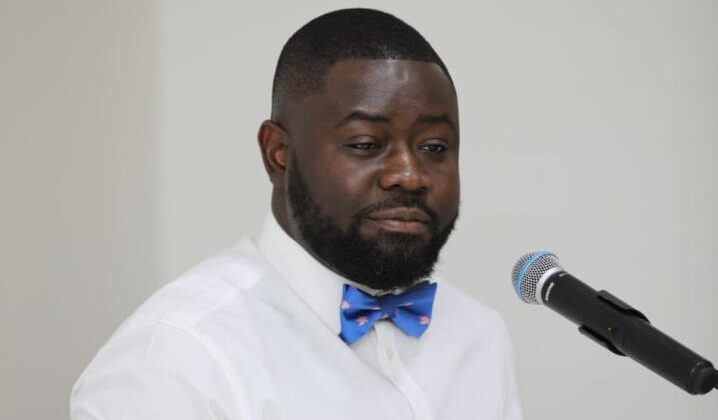
A Ghanaian citizen, Dr Yaw Twerefour, has invoked the original jurisdiction of the Supreme Court, challenging the constitutionality of the allocation and disbursement of District Assemblies Common Fund (DACF) monies to Members of Parliament (MPs).
The suit, filed against the Attorney-General, the Administrator of the District Assemblies Common Fund, the Minister for Local Government, Decentralisation and Rural Development, and the Minister for Finance, seeks a series of declarations and orders aimed at ending what the plaintiff describes as an unconstitutional diversion of funds intended for local government administration.
At the heart of the case is the long-standing practice of allocating portions of the DACF to MPs under various arrangements, including the "MPs Common Fund", "Constituency Labour Projects", and "Constituency Labour Monitoring and Evaluation" programmes.
Dr Twerefour argues that such allocations are inconsistent with Article 252 of the 1992 Constitution, which establishes the DACF as a constitutionally earmarked fund for the benefit of Metropolitan, Municipal and District Assemblies.
According to the writ, the plaintiff is asking the Supreme Court to declare that the DACF is intended exclusively for the administration, benefit and utilisation of District Assemblies and should not be allocated to or controlled by Members of Parliament or any other persons outside the constitutionally designated framework.
The suit further seeks a declaration that any formula approved for the distribution of the fund that earmarks a portion for MPs is unconstitutional, null and void.
Dr Twerefour is also challenging the reported practice of paying DACF monies directly into the personal bank accounts of Members of Parliament.
He contends that such payments violate Articles 187 and 252 of the Constitution and undermine the principles of transparency, accountability and public financial management.
The plaintiff argues that once public funds are transferred into personal accounts, they become difficult to monitor, audit and recover, thereby frustrating the constitutional mandate of the Auditor-General and increasing the risk of diversion, misuse and financial loss to the state.
In his reliefs, Dr Twerefour is seeking an order of perpetual injunction to prevent the allocation or disbursement of DACF monies to MPs outside the framework of District Assemblies.
He is also asking the court to direct that all future DACF disbursements be made only into designated public accounts of District Assemblies in accordance with the Constitution and the Public Financial Management Act, 2016 (Act 921).
Additionally, the plaintiff wants the Supreme Court to order the Auditor-General to conduct a comprehensive audit of all DACF monies previously disbursed to Members of Parliament and to report on the utilisation and accountability of those funds.
The suit further requests an order for the recovery of all monies that may have been unlawfully disbursed from the DACF to MPs through personal or other accounts.
Application for Injunction
Alongside the substantive action, Dr Twerefour has filed a motion for interlocutory injunction seeking to halt any further disbursement of DACF monies to Members of Parliament pending the final determination of the case.
The application specifically asks the Supreme Court to restrain the Administrator of the DACF and the Minister for Finance from approving, authorising or effecting payments from the fund to MPs under any of the existing arrangements.
It also seeks an order preventing the transfer of DACF monies into the personal bank accounts of Members of Parliament while the case is before the court.
In an affidavit supporting the application, Dr Twerefour states that he obtained official DACF formula documents through the Right to Information Act and that those documents demonstrate that portions of the fund have been allocated to Members of Parliament.
He further relies on a special audit report commissioned by the Ministry of Finance, which he says confirms that DACF monies were paid directly into MPs' personal bank accounts and that significant amounts were disbursed without adequate documentation or accountability.
The plaintiff argues that the alleged constitutional breaches are ongoing and that public funds may be irretrievably lost if the court does not intervene immediately.
He maintains that damages would not provide an adequate remedy because public funds, once spent, cannot easily be restored and lost audit trails cannot be reconstructed.
According to the affidavit, granting the injunction would preserve the constitutional status quo and protect public resources pending the Supreme Court's final determination of the constitutional questions raised.
The case is expected to test the constitutional limits of parliamentary involvement in the administration of the District Assemblies Common Fund and could have far-reaching implications for public financial management, decentralisation and accountability in Ghana.
Find Dr. Twerefour's writ and motion below.
Latest Stories
-
NDC threatens sanctions over oversized campaign posters, gives aspirants 5 days to comply
16 minutes -
Star Oil paid GH¢2.7bn in taxes, levies in nine months of 2026
30 minutes -
Samson’s Take: The rule of law is cheaper before the bulldozer
31 minutes -
GRA blames system failure for delay in issuing receipt over passenger’s customs duty
52 minutes -
Livestream: Newsfile discusses World Cup visa scandal, beach demolitions, education strikes, BRICS bid
56 minutes -
NC-PTAs welcomes end of teachers’ strike, urges parents to prepare children for Monday
1 hour -
Government procures over 2,000 transformers as Ghana’s electricity access hits 89.13% – Energy Minister
2 hours -
UTAG-UG threatens strike on October 19 over unpaid allowance
2 hours -
Let The Constitution direct Chieftaincy to deliver “All Development Is Local”
3 hours -
John Jinapor outlines renewable energy, nuclear power priorities for 2027
3 hours -
Ghana explores centre of excellence for hearing, communication and cochlear implant care
4 hours -
Schizophrenia-related disorders lead mental health cases recorded in Ghana
5 hours -
Dutch authorities enlist Ghana in hunt for fugitive drug lord Bolle Jos
5 hours -
Ghana housing finance conference adopts communiqué to improve affordable housing access
9 hours -
Special Initiatives Minister urges Wa Technical Institute to enrol more girls as EU-backed solar training lab opens
10 hours