

Audio By Carbonatix
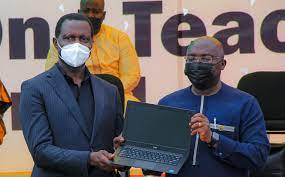
In Ghana, the conversation around quality education is ever-present, and Vice President Bawumia's recent proposal to provide laptops to high school freshmen and sophomores has sparked considerable discussion.
At first glance, this initiative may seem promising, especially in the context of our digital age. Yet, skepticism lingers among many citizens, particularly as this announcement emerges close to election season.
There’s a growing sentiment that such grand promises may not align with past experiences. For instance, the "one teacher, one laptop" initiative faced significant challenges and ultimately did not meet its goals.
If the management of a smaller group proved problematic, one might wonder about the feasibility of extending similar support to a much larger student population.
This pattern of ambitious announcements often leads to disappointment. While the government seeks to capture public attention with bold initiatives, the follow-through tends to lack the necessary substance.
There are critical foundational issues in our education system—like outdated facilities, inadequate resources, and the need for better teacher training—that often go unaddressed in favor of more visible, yet superficial, projects.
The recent laptop initiative appears to be another example of this approach, drawing focus away from pressing issues within our educational framework. Questions arise about the transparency of the procurement process and the logistics involved in distribution.
Such concerns could hint at deeper systemic challenges that may undermine the effectiveness of this program.
Moreover, there’s an ongoing need for solutions that are sustainable and genuinely address the long-term needs of students and educators alike.
Quick fixes, while appealing in the short term, may not contribute to the kind of substantive improvement that Ghanaian students deserve.
As we examine the motivations behind these initiatives, it’s essential to look beyond the headlines. While the prospect of digital tools for education is exciting, the real measure of progress lies in the strategic planning and genuine investment in our schools.
Ghanaians aspire to more than just well-intentioned proposals; they seek actions that lead to meaningful change.
Ultimately, it’s crucial for our leaders to focus on building trust through consistent and effective governance.
The people of Ghana deserve a commitment to deep, lasting reforms that prioritize the needs of students over mere political gains.
It is time to elevate the conversation around education and ensure that initiatives truly reflect a dedication to progress rather than a fleeting spectacle.
Latest Stories
-
Ghana’s recovery supported by gold strength despite global oil price pressures – Standard Bank Research
6 minutes -
Kwaku Azar writes: A-G vs OSP
39 minutes -
Mfantsipim–Adisadel rivalry built excellence, not division – Sam Jonah
1 hour -
Vice President launches Mfantsipim’s 150 years of shaping Ghana’s greatest mind
1 hour -
I assure Otumfuo, Mahama will join him to commission KNUST Teaching Hospital by end of this year – Haruna Iddrisu
2 hours -
Barcelona dominate derby to extend La Liga lead
2 hours -
Gov’t to roll out free special education for persons with disabilities from July 1 – Education Minister
2 hours -
Importers and Exporters Association declares full support for Publican AI port system
3 hours -
“We used it to test our officiating officials’ readiness” – Bawah Fuseini after CAA Athletics event
3 hours -
Volleyball emerges as Ghana’s fastest rising sport
3 hours -
National Sports Fund needs strong leadership from the top – Administrator David Wuaku
3 hours -
JoySports Exclusive: Steve McLaren in talks with GFA after expressing interest in Black Stars job
3 hours -
Fire guts auto parts warehouse at Bubuashie, one fire officer injured
3 hours -
I owe my victory to coach Ofori Asare – Allotey after winning WBA Africa Gold Super Flyweight belt
4 hours -
Church of Pentecost supports over 2,000 BECE candidates in Obuasi with career guidance seminar
5 hours