

Audio By Carbonatix
The Ministry of Health (MoH) has challenged the perception that Ghana's persistent "no-bed syndrome" is primarily the result of inadequate hospital infrastructure, arguing instead that the underlying problem is ineffective management and coordination of available beds across health facilities.
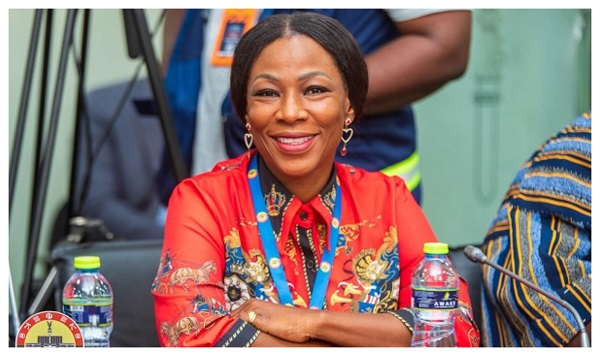
Appearing before Parliament's Economy and Development Committee, the Deputy Minister of Health, Dr Grace Ayensu-Danquah, said current data available to the ministry indicates that hospital bed occupancy nationwide is about 60 per cent, suggesting that a significant number of beds remain unoccupied.
She explained that the recurring challenge of patients being turned away from health facilities is largely due to the absence of a centralised system that provides real-time information on bed availability across hospitals.
"If we have more beds, why are we having no-bed syndrome? I believe the occupancy rate is 60%. So with 100 beds in a hospital, 60 of them are occupied; 40 are open. So now why does somebody come and have a no-bed syndrome?" she questioned.
According to the Deputy Minister, establishing an integrated bed management system would enable ambulance services and emergency response teams to identify available beds instantly and transport patients directly to facilities with the required capacity.
She said such a system should provide up-to-date information on specialised units, including intensive care, maternity and orthopaedic wards, to improve emergency referrals and reduce delays in accessing treatment.
"We believe that if we have a proper management system that tells you that, for instance, in real time, Ridge Hospital has one ICU bed, two maternal beds and one orthopaedic bed, when the ambulance is coming, we can know where to take the patient," she said.
Dr Ayensu-Danquah maintained that the ministry's data does not support assertions of a nationwide shortage of hospital beds, stressing that many facilities still have available capacity. She said the challenge lies in ensuring that healthcare providers and emergency responders have immediate access to accurate information on where those beds are located.
Her comments come amid continued public concern over incidents of patients reportedly being denied admission because of the unavailability of beds—a situation widely referred to as the "no-bed syndrome."
The Ministry of Health has in recent months been exploring measures to strengthen emergency healthcare delivery, including improving referral systems and enhancing coordination among hospitals.
Dr Ayensu-Danquah said improving bed management through technology and better information sharing would help ensure that patients receive timely care, optimise the use of existing hospital infrastructure and reduce complaints associated with the no-bed syndrome.
Latest Stories
-
Power restoration fault suspected in Kumasi Central Market fire
1 hour -
The 7-foot giant of Ngleshie Amanfro: Seven-foot Ghanaian Ephraim Saawa dreams of joining the national basketball team
2 hours -
Government promises support for Kumasi Central Market fire victims
2 hours -
Vibes The Movie: Big Ghun’s Ghanaian film earns five nominations at 2026 REFFA
3 hours -
MamaCare CEO warns unresolved conflicts among health workers could undermine maternal and neonatal care
3 hours -
Health professionals urged to translate medical knowledge into practice to save mothers
3 hours -
Conflicts among care providers linked to maternal, neonatal deaths – Expert
5 hours -
GIS marks 10th TIME conference, champions improved teaching practices
5 hours -
BRICS Or Balance? What Ghana’s bid really means
5 hours -
GPRTU wants full TRAFFITECH-GH implementation to start in 2027
5 hours -
Mahama announces plans to import electric wheelchairs for PWDs
6 hours -
KGL U17 Colts 2026: Western beat Prempeh Elite Academy to set up final final with Greater Accra Region
6 hours -
Late Solanke strike salvages 10-man Spurs draw at Man United
6 hours -
Gender Ministry to monitor welfare of Nana Akua Addo’s children amid domestic violence case
6 hours -
Benedict Okyere Yeboah: Ghana’s football problem goes beyond sacking a coach
6 hours