

Audio By Carbonatix
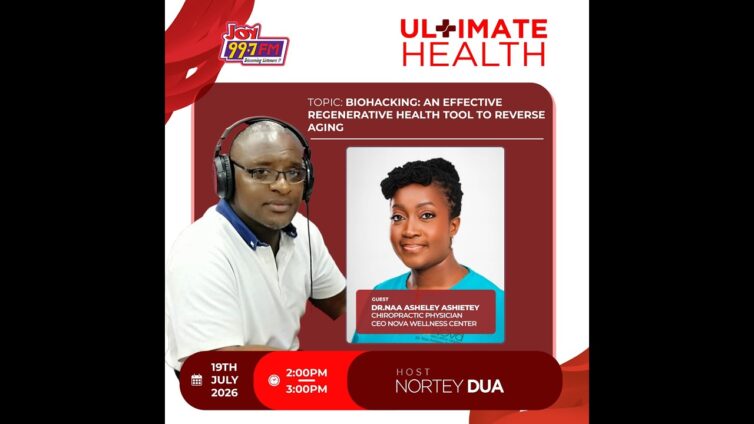
Early morning sunlight could be one of the simplest and most effective ways to improve health, slow biological ageing and enhance longevity, according to Dr Naa Asheley Ashietey, founder of Nova Wellness Center.
Speaking on Joy FM's Ultimate Health programme with Nortey Dua on Sunday, July 19, Dr Ashietey urged Ghanaians to embrace what she described as "basic biohacks" that are readily available and cost nothing, beginning with regular exposure to natural sunlight.
She explained that while biohacking is often associated with expensive technology and advanced treatments, some of the most effective interventions are simple lifestyle practices that almost anyone can adopt.
"I've come up with a list of 10 biohacks that are at our fingertips. They don't cost any money. They are very basic, and if you're able to master these, it's going to go a long way to help. If not, then we can look into the advanced modalities."
Dr Ashietey identified sunlight as the number one biohack, saying many people in Ghana fail to take advantage of the country's abundant sunshine despite living in a tropical climate.
She observed that modern lifestyles often keep people indoors throughout the day.
"We wake up, get into our cars, drive to work, stay inside the office all day, and then drive back home. We simply don't get enough sunlight," she said.
According to her, spending between 15 and 20 minutes outdoors in the early morning—preferably between 7:00 a.m. and 10:00 a.m.—can significantly improve vitamin D production.
She explained that vitamin D plays a crucial role in hormone production and overall health.
"Vitamin D is extremely important because it is a precursor for many of our hormones. One of the most important is melatonin, the hormone that helps us sleep."
Dr Ashietey noted that exposure to early morning sunlight helps regulate the body's circadian rhythm—the internal biological clock responsible for controlling sleep and wakefulness.
According to her, morning sunlight signals to the body that it is time to become active, while sunset prepares it for rest.
"When you wake up and go into the sun, you're telling your body it's time to begin the day. Later, when the sun goes down, your body naturally prepares for sleep."
She argued that this natural process has become disrupted as more people spend long hours indoors or remain glued to electronic devices.
- READ ALSO: Nova Wellness CEO urges Ghanaians to embrace simple ‘biohacks’ for better health and longer lives
The result, she said, is a growing number of people suffering from insomnia and poor-quality sleep.
Dr Ashietey stressed that quality sleep is one of the most important components of healthy ageing.
She recommended that adults with a regular working schedule should aim to be in bed between 9:00 p.m. and 10:00 p.m. and obtain at least six to seven hours of uninterrupted sleep each night.
"It's only when you sleep that your brain removes toxins, rejuvenates and gets you ready for the next day."
She explained that the brain's glymphatic system becomes active during deep sleep, clearing waste products that accumulate throughout the day.
According to her, poor sleep has been associated with memory loss, anxiety, depression and cognitive decline.
Dr Ashietey also referred to research suggesting that many Alzheimer's disease patients had a history of chronic insomnia before developing the condition, highlighting what she described as a significant relationship between insufficient sleep and long-term brain health.
The wellness expert cautioned against taking mobile phones, televisions and other electronic devices to bed.
She said the light emitted by screens keeps the brain stimulated and suppresses the natural production of melatonin, making it harder to fall asleep.
"Most of us go to bed with our phones, and we don't realise that the light from these devices keeps the brain active even when we're trying to sleep."
She encouraged people to create a sleep-friendly environment by keeping bedrooms dark, quiet and free from unnecessary distractions.
Recognising that healthcare professionals and other shift workers often have irregular sleep schedules, Dr Ashietey said they should still try to obtain morning sunlight whenever possible.
She recommended that those returning home after night shifts spend a short period outdoors before sleeping to support vitamin D production.
She also advised shift workers to create an artificial night-time environment during daytime sleep by blocking out light, reducing noise and avoiding electronic devices.
"Our bodies are intelligent and can adapt to different schedules, but we still need to support them by creating the right conditions for quality rest."
Dr Ashietey also discussed advances in wellness assessments that measure biological rather than chronological age.
She said tools that analyse heart rate variability can assess how the nervous system responds to stress and estimate whether an individual's body is ageing faster or slower than expected.
Such assessments, she explained, provide insight into overall health and resilience, helping individuals make informed lifestyle changes before chronic illnesses develop.
Turning to nutrition, Dr Ashietey said intermittent fasting can improve metabolic health and support weight management when practised correctly.
However, she warned that extended fasts lasting 24 to 72 hours are not suitable for everyone.
According to her, people should first understand their overall health status before attempting prolonged fasting, as excessive fasting can place additional stress on the body.
"If you finish dinner around six in the evening and have breakfast at seven or eight the next morning without snacking, you've already completed about 14 hours of intermittent fasting."
She said this approach allows much of the fasting period to occur during sleep, making it easier on the body while still offering potential metabolic benefits.
Throughout the discussion, Dr Ashietey maintained that the foundations of good health are often simple rather than expensive.
She encouraged Ghanaians to take advantage of natural resources such as sunlight, establish consistent sleep routines, minimise screen exposure before bedtime and adopt healthier eating habits.
According to her, these basic biohacks can improve energy levels, enhance cognitive function, reduce stress and potentially contribute to healthier ageing and longer life.
Latest Stories
-
Kaizen as a strategic pathway for micro business scale-up in Ghana
4 minutes -
Minister orders suspension of Obuasi SHS headmaster over alleged sexual misconduct following JoyNews investigation
8 minutes -
Over 38,000 commercial, 150,000 residential customers unbilled – Ghana Water MD
37 minutes -
Several injured as Sprinter bus collides with ‘trotro’ at Odorkor
38 minutes -
Ghana records progress on reparatory justice agenda – Ablakwa
55 minutes -
Mahama commissions Christian Tetteh Yohuno Ward Complex at Police Hospital
1 hour -
Vice President calls for wider access to Ghana’s political party histories
1 hour -
Republic Bank JoyNews Habitat Fair to connect prospective homeowners with exhibitors in Ho from October 16 to 18
1 hour -
Obaasima Summit: ‘AI is not a spiritual attack’ — Rev. Dr. Ofori-Boateng urges young women to embrace technology
1 hour -
GHS to distribute 80,000 pairs of locally-made protective footwear to health workers
2 hours -
GoldBod boosts local jobs as 90% of gold undergoes refining in Ghana – Sammy Gyamfi
2 hours -
The search for the politically unblemished: Are we asking the impossible of public appointees?
2 hours -
Ghana seeks climate finance access for debt-restructuring countries
2 hours -
Afenyo-Markin urges stronger media scrutiny of public institutions
2 hours -
GoldBod recovers GH¢38.7m in legacy PMMC debts, targets remaining arrears
2 hours