

Audio By Carbonatix
It is widely understood that municipal solid waste, if not managed correctly, can be an environmental and health hazard. However, medical waste, by its very nature poses a significantly higher risk to both the environment and especially to the community. In addition, it is estimated that 15% of waste created by health-care activities are classified as hazardous waste, which includes biomedical waste.[1]
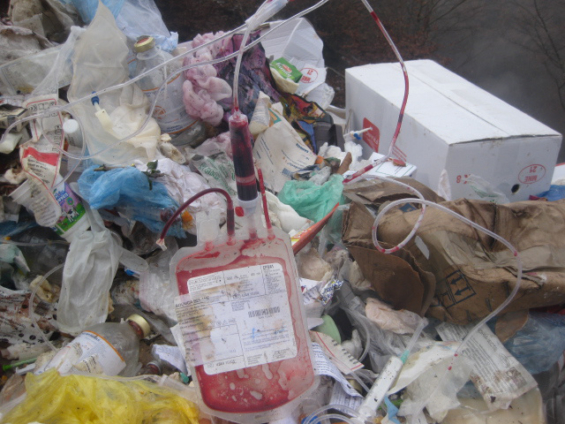
Biomedical waste is waste generated from biological and medical sources including medical laboratories, hospitals and clinics. This classification of waste includes discarded blood, tissue from surgery or birth, gloves, used bandages, and sharps such as syringes, needles, and blades. An estimated 16 billion injections are administered worldwide annually. In Africa, and specifically Ghana, a large proportion of the needles and syringes are discarded as general solid waste and not treated as medical waste.
Biomedical waste has a higher risk of injury or infection compared to ordinary waste, therefore, safe and reliable methods for its management are crucial. Inadequate and inappropriate handling of biomedical waste is likely to have serious public health ramifications through direct contact or indirectly through the environment. An example of the indirect impact is observed when farmers irrigate their crops with the same source of water from drains that are used to dispose of the biomedical waste. In 2012, this allegedly occurred in Accra, when liquid medical waste from the 37 Military Hospital flowed freely into the main gutters of the capital city for over a year, affecting the health especially of those living close to the hospital.[2]
According to the World Health Organization (WHO), “National legislation is the basis for improving medical waste practices in any country. It establishes legal controls and permits the national agency responsible for the disposal of medical waste, usually the ministry of health, to apply pressure for their implementation. The law should be complemented by a policy document, and by technical guidelines developed for implementation of the law.”[3] National legislation combined with rigorous enforcement, is thus one of the major prerequisites for effective management of biomedical waste in Ghana.
Despite a detailed Ministry of Health Policy guideline on medical waste handling published in March 2006, the purported need for complementarity between the law and the policy paper does not exist in Ghana because national legislation on handling biomedical waste does not exist. It is against this backdrop that this report aims to expatiate on the advantages of such legislation and the potential health risks of not having it.
Read the full report below:
Latest Stories
-
Joseph Cudjoe raises alarm over potential revenue loss in Truedare AI Customs deal
18 seconds -
Video: Awoshie-Anyaa Highway: Years of fatal crashes caused by faulty traffic lights
5 minutes -
No financial transactions with Ghana Card yet, says NIA
11 minutes -
Former Netherlands Fire Chief engages GNFS Tema Command on capacity building
12 minutes -
Finance Ministry defends Publican AI rollout amid stakeholder concerns
14 minutes -
Police arrest 5 in Asankrangwa robbery; cash and guns retrieved
15 minutes -
Why I joined NPP – Jeneral Ntatia
16 minutes -
Three UDS students remanded over alleged armed robbery
20 minutes -
Kudus Mohammed at risk of missing World Cup 2026 after fresh injury blow
23 minutes -
Minority urges cocoa farmers to resist pressure from galamseyers
23 minutes -
President Mahama applauds astronaut Christina Koch’s Ghana ties in Artemis II mission
25 minutes -
Ex-wife of Richard Nii Armah Quaye moves to Court of Appeal
26 minutes -
Insecurity: US orders non-emergency staff to leave embassy in Nigeria
27 minutes -
ASFC 2026: Ghana U15 girls set up Burkina Faso final after win over Zambia
31 minutes -
The passport question: Why Ghana must let its best abroad come home to serve
42 minutes