

Audio By Carbonatix
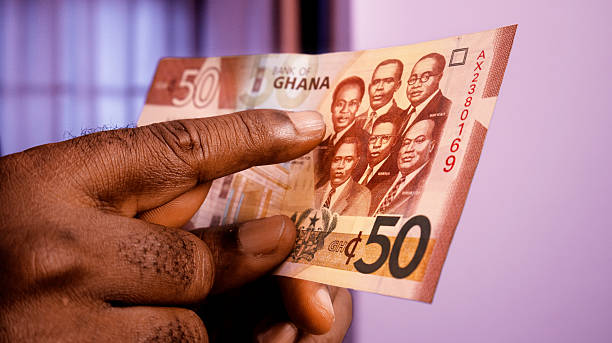
The Governor of the Bank of Ghana (BoG), Dr Johnson Asiama, has issued a stern condemnation against individuals involved in the counterfeiting of the Ghana cedi, urging the public to actively collaborate with the central bank in combating this illicit activity.
Speaking passionately at a Graphic Business/Stanbic Bank Breakfast Meeting on Tuesday, July 15, Dr Asiama highlighted the insidious nature of currency counterfeiting and its detrimental impact on the nation's economy.
"I can't understand, for example, the counterfeiting of our cedi notes," Dr Asiama lamented. He revealed a troubling trend, stating, "Apparently, there are foreigners who are doing this, and they are doing it among our own business people. They know them, and yet people just look away. And I can't imagine how we tolerate that."
- READ ALSO: We can’t stop cryptocurrency use – BoG
This candid admission from the head of the central bank underscores a serious threat to the integrity of Ghana's currency and the broader financial system.
Counterfeit currency undermines public trust in the cedi, distorts market prices, and can lead to financial losses for unsuspecting individuals and businesses.
According to the Bank of Ghana's own "2024 Fraud Report" for banks, SDIs, and PSPs, while overall fraud values can fluctuate, the constant threat of counterfeit money contributes to the financial risks faced by institutions and the public.
Counterfeiting in Ghana extends beyond currency to include pirated and substandard goods, posing significant economic and social challenges.
While precise figures for cedi counterfeiting are not always publicly disaggregated, the impact of illicit trade, including fake currency, is substantial.
- Loss of Revenue: Counterfeiters operate outside the tax net, depriving the government of vital revenue that could be channelled into public services like healthcare, education, and infrastructure.
- Undermining Trust: The circulation of fake currency erodes public confidence in the national currency and the financial system. If people are constantly wary of accepting notes, it can slow down transactions and even encourage the use of foreign currency.
- Direct Financial Loss: Individuals and businesses that unknowingly accept counterfeit notes bear the entire financial loss, as such notes are worthless and cannot be exchanged for genuine currency. This particularly impacts Small and Medium-sized Enterprises (SMEs), which are crucial to Ghana's economy.
- Inflationary Pressures: A large volume of counterfeit currency, though not officially part of the money supply, can behave like an unauthorised increase in money, potentially contributing to inflationary pressures by diluting the value of genuine currency.
- Organised Crime Link: Counterfeiting is often linked to sophisticated criminal networks involved in other illicit activities, including drug trafficking, human smuggling, and fraud, further destabilising the economy and national security.
BoG's call for public vigilance
Dr Asiama explicitly appealed to the public to become active partners in the fight against currency forgery.
"So if you observe any such practices, please pass on the information and quickly, quickly, we'll engage. We want you to collaborate with us in building the FinTech innovations that support cedi-denominated payments, credit access and cross-border transactions."
He highlighted the importance of collective action in maintaining a robust financial environment.
The Bank of Ghana has long maintained a public awareness campaign, providing details on the security features embedded in the cedi notes to help the public identify fakes.
These features include watermarks (like Tetteh Quarshie and cocoa pods), security threads, colour-shifting ink, and distinct textures.
The BoG emphasises that counterfeiting and even the possession of counterfeit banknotes are punishable by law.
Furthermore, the central bank has been working on enhancing its currency management through initiatives like the "Clean Note Policy", aimed at ensuring that only fit-for-circulation notes are in use, making it easier to spot counterfeits.
The ongoing pilot of the eCedi, Ghana's Central Bank Digital Currency (CBDC), is also seen as a long-term strategy to transform the payment infrastructure, potentially reducing reliance on physical cash and thereby mitigating the risks associated with counterfeiting.
"And we want you to join us in piloting and scaling initiatives talking about the eCedi, which has the potential to transform our payments infrastructure, etc. So together, we can shift from a reactive posture to a proactive partnership, where businesses help shape the very environment they operate in," Dr Asiama concluded.
His charge signals a move towards a more integrated approach, where public vigilance, technological innovation, and inter-agency collaboration are seen as crucial in safeguarding the integrity of the Ghana cedi against criminal elements.
Latest Stories
-
“Ghanaba Market” SME Fair slated for 26-27 March 2026
1 minute -
Last Gallop: Horse Racing feature sparks nostalgia and concern among Ghanaians
7 minutes -
‘We will do our best’ – Jordan Ayew looks ahead to strong outing against Austria
11 minutes -
Fast cash, slow ruin: Examining Ghana’s digital loan trend
27 minutes -
It’s a good call—UPSA Dean backs end of Ghana School of Law monopoly
42 minutes -
Land dispute behind Nkwanta South tensions; No arrests yet – Kwadwo Gyapong
51 minutes -
Ghana cancels plans to host 2026 African Swimming Championships
59 minutes -
Tilly Akua Nipaa elected UniMAC GRASAG General Secretary
59 minutes -
EPA sensitises 20 firms on environmental act 1124; offfenders risk up to 10 Years in jail
1 hour -
Kusasi Chiefs commend police for arresting suspects in late Naba Azimbe’s murder; call for swift justice
2 hours -
Today’s Front pages: Friday, March 27, 2026
2 hours -
Referee and VAR errors increase in Premier League
2 hours -
FIFA investigates Congolese FA boss jailed alongside wife and son
2 hours -
PSG’s league game between Liverpool legs postponed
3 hours -
Rodri open to Real Madrid move despite Atletico past
3 hours