

Audio By Carbonatix
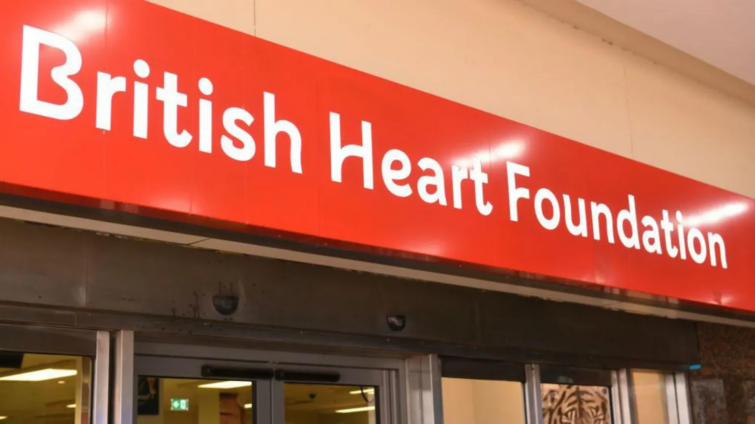
The British Heart Foundation (BHF) says it is planning to close around 150 charity shops, citing an "exceptionally challenging trading environment".
The charity, which reviewed its retail arm, said rising operating costs and changing customer habits meant some stores were "no longer financially sustainable".
Its overall financial position "remains healthy", it said, adding it is continuing to see strong fundraising and legacy income.
The BHF currently has 640 shops and stores across England, Wales, Scotland, and Northern Ireland. The proposed closures, within the next two years, make up just under a quarter of the total.
The charity plans to close around 90 stores by the end of March 2027, and the remaining affected stores by March 2028.
It said it would share the locations of the stores earmarked for closure on its website once affected colleagues had been informed.
The charity also plans to reduce the central teams that support its retail arm.
Chief Executive Charmaine Griffiths acknowledged this would be a difficult time for colleagues and volunteers, thanking them for their contributions.
"Like most retailers, we are facing an exceptionally challenging trading environment," she said.
"Cardiovascular disease remains one of the UK's biggest killers and our priority is funding research to save lives.
"We must take the difficult step to close some of our shops to sustain retail's important contribution to funding BHF's groundbreaking research."
The BHF said no single factor had led to its plans to close stores.
As well as its network of shops and donation points, the BHF has online retail channels including on its website and eBay.
It said it will continue to evolve its retail operations "to reflect changing customer shopping behaviours and donor habits".
Last year Cancer Research UK said it was planning to close around 90 High Street shops by May this year and up to 100 more by April 2027.
It also said it would open 12 out-of-town superstores over the next two years.
It said, like many High Street retailers, it was facing "rising costs, inflationary pressures, and changing consumer habits - including reduced footfall, higher national insurance contributions, and growing competition from online resale platforms".
Many retailers have argued they have been hit with a wave of extra costs since April last year, including increased employer National Insurance contributions (NICs) and higher minimum wages.
Latest Stories
-
PKO trio eye victories at Odwira Festival
14 minutes -
346 Ghana Navy recruits pass out after 26 weeks of intensive training
20 minutes -
Newsfile to discuss EOCO-MP arrest, drug trafficking, speech arrests and $235m water debt
47 minutes -
JoyNews gets results as listeners raise GH¢40,000 to help 17-year-old student with cerebral palsy attend SHS
1 hour -
Vice President calls for stronger local pharmaceutical production to reduce medicine imports
2 hours -
The brewing tension at KNUST; Beware the Ides of October….
2 hours -
Health Ministry moves to integrate traditional medicine into mainstream healthcare
2 hours -
550 pupils in Kintampo South get educational lifeline as ‘Seeds of Hope’ reaches farming communities
3 hours -
Opoku Mensah urges Christian Council, House of Chiefs to speak up on democratic freedoms
3 hours -
Teacher unions’ strike: Minority demands immediate payment of teacher arrears, 20% deprived area allowance
3 hours -
The Accra-Kumasi Expressway: Building it right
3 hours -
Beyond gold exports: Building value and economic resilience from Ghana’s gold
3 hours -
2027 AFCONQ: Ghana under pressure as Gambia beat Somalia 2-1
3 hours -
Eastern NPP Women’s Organiser calls on AG, Police to secure bail for Salomey Baffoe
4 hours -
Poverty, illiteracy driving acceptance of vote-buying among women – Damongo Queen Mother
4 hours