

Audio By Carbonatix
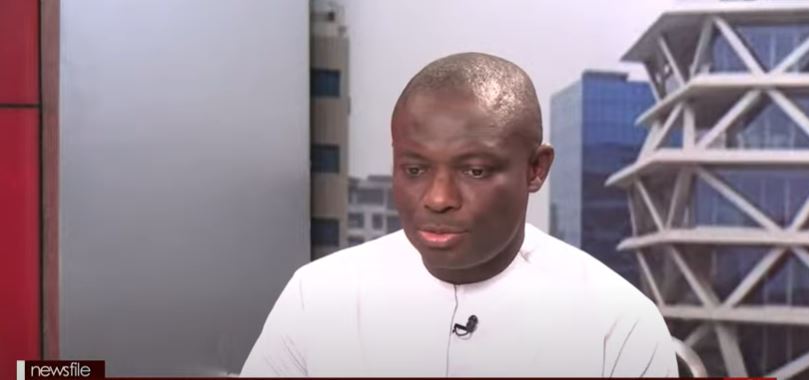
Communications Officer of the National Democratic Congress (NDC), Sammy Gyamfi has disagreed with the assertion that Ghana’s economy is run like a Ponzi scheme.
This follows former Deputy Finance Minister Kwaku Kwarteng likening the management of Ghana's economy to a Ponzi scheme.
According to Gyamfi, the current economic challenges at both national and household levels stem from decades of poor governance, marked by political mismanagement and economic inefficiency across various administrations.
In an interview on Joy FM’s Top Story, Mr. Gyamfi explained that this characterization does not apply to the NDC administration.
He pointed out that during Mr. Mahama’s tenure, the budget deficit was 6.1%, which was within acceptable limits.
Additionally, the debt-to-GDP ratio in 2016 was 56%, also within the acceptable threshold, while Ghana was still servicing its debt. Mr. Gyamfi noted that the NDC did not record a budget deficit that was considered reckless, unlike the NPP.
Read more: Audio: Kwaku Kwarteng explains ‘Ponzi scheme economy’ analogy and his criticism of NPP
"In 2018, under this government, documents they [NPP] submitted to the IMF in 2020 for the rapid credit facility of 1 billion dollars show that they recorded a budget deficit of 7.1% in 2018, before COVID. In 2019, they recorded a budget deficit of 7.5%, before COVID, indicating reckless spending...," he said.
He urged Mr. Kwarteng, who made the assertion about the economy, to acknowledge the differences in fiscal management between the administrations.
“You cannot say all governments are the same. Let’s call a spade a spade, not a digging tool. If your government has been reckless, you have to call them out. Don’t try to generalize and think all of us are the same,” he stated.
Mr. Gyamfi however agreed that the principle of Mr. Kwarteng’s argument is valid but noted that it applies specifically to the ruling NPP government.
“That is the argument we in the NDC have been making for a long time—that this Akufo-Addo-Bawumia-NPP government must learn to live within its means. The reckless expenditure, which led to excessive borrowing since 2017, was going to crash our economy. We sounded the alarm bells, advised the government, but they refused to listen, and that is why today, we find our economy in a mess,” he explained.
Latest Stories
-
I assure Otumfuo, Mahama will join him to commission KNUST Teaching Hospital by end of this year – Haruna Iddrisu
18 minutes -
Gov’t to roll out free special education for persons with disabilities from July 1 – Education Minister
40 minutes -
“We used it to test our officiating officials’ readiness” – Bawah Fuseini after CAA Athletics event
1 hour -
Volleyball emerges as Ghana’s fastest rising sport
1 hour -
National Sports Fund needs strong leadership from the top – Administrator David Wuaku
2 hours -
JoySports Exclusive: Steve McLaren in talks with GFA after expressing interest in Black Stars job
2 hours -
Fire guts auto parts warehouse at Bubuashie, one fire officer injured
2 hours -
I owe my victory to coach Ofori Asare – Allotey after winning WBA Africa Gold Super Flyweight belt
2 hours -
Church of Pentecost supports over 2,000 BECE candidates in Obuasi with career guidance seminar
3 hours -
Brandon Asante and Coventry all but promoted to Premier League despite Sheffield Wednesday draw
4 hours -
GPL 2025/26: Late Kwartemaa strike downs Hearts in Tema
4 hours -
Ghana Faces Sierra Leone Moment as Prosecutorial Powers come under strain
4 hours -
Don’t consume fish or seafood from Tema Shipyard until further notice – FDA warns
4 hours -
Why volunteering might be Africa’s most underrated career accelerator
4 hours -
ActionAid Ghana raises concern over gender gaps in Feed Ghana Programme
4 hours