

Audio By Carbonatix
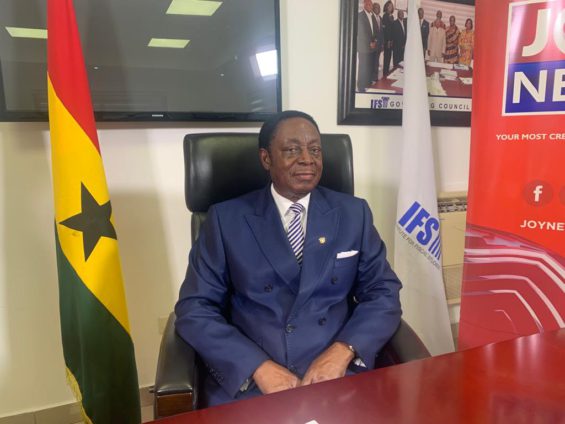
A former Finance Minister, Dr. Kwabena Duffour has intimated that the depreciation of the cedi accounts for 30% of the public debt.
Speaking in an exclusive interview with JoyNews, on November 30, 2021, Dr. Duffour opined that "the public debt is quoted in cedis [and] between 2006 and 2019, the cedi depreciation affected the public debt because about half of the public debt is in foreign money. So when the cedi depreciates, it affects that portion."
"So the increase you see is not money government has used or you and I have used," he said.
Commenting on the country's current economic situation, Dr. Duffour acknowledged that there are challenges that need to be addressed. Of great concern to him is the huge public debt the country has accumulated.
Regardless, he is optimistic that the challenges can be addressed. Proposing solutions to dealing with the situation, he urged the government to explore opportunities in the extractive industry. He noted that government can raise revenue as well as reduce the public sector debt through investing in the extractive sector.
“I would have looked at the extractive industry [i.e the minerals, the mining, and the oil and gas industry] if I were the Finance Minister. I think we can have a deal with them,” he said.
“Botswana lives on diamonds mainly and their diamond reserves are not bigger than our gold reserves at all, but Botswana rakes in almost 4billion dollars every year from their diamonds because of the module they have.
“Government should look at acquiring more shares in the mining and oil industries. They can sit down with the players in the mining industry and renegotiate,” he added.
Performance of the Cedi against the dollar
Meanwhile, with barely five weeks to end the year, the Ghana cedi has come under intense pressure and is being classified among African currencies with the ‘Worst Spot Returns’.
The cedi is now ranked 14th among 20 top African currencies tracked by Bloomberg. It was actually the best-performing currency in Africa in the first quarter of 2021.
A combination of factors including increased corporate demand for the US dollar and the exit of the country’s bond by some foreign investors have put pressure on the local currency, lately.
The past week has been worst as the local currency lost more ground to the dollar.
Bloomberg, therefore, put the depreciation of the cedi at 4.05%, though the Bank of Ghana data shows a lower decline in value of the local currency to the US dollar.
Despite a rebound in oil prices, amongst other exports commodities, it appears dollar inflows are not enough to stabilize the local currency.
Latest Stories
-
UniMAC-IF holds workshop on Vertical Revolution: Mastering micro-dramas for African digital economy
2 minutes -
Pan-African Progressive Front hosts landmark online conference ahead of Geneva Forum
7 minutes -
Civil society is not an adversary of gov’t, but partners in nation-building – Mahama
15 minutes -
Defeamekpor calls for interdiction of Land Ministry’s director of finance
19 minutes -
Atebubu Paramount Chief visits NPA boss to strengthen ties
19 minutes -
TGMA Group of the Year nominees to be announced this week – Robert Klah
24 minutes -
Ex-Effia MP writes: Big Push for infrastructure, Small Push for people
25 minutes -
Interior Minister demands probe into GH¢3m payments made outside GIFMIS
28 minutes -
Ex-Defence Ministry procurement director to face prosecution over GH¢4.8m scandal
43 minutes -
Gov’t committed to finishing Tema Motorway by 2027, says Agbodza
50 minutes -
OSP under threat from political interference — Kissi Agyebeng calls for constitutional protection
54 minutes -
T.I. Ahmadiyya SHS, Kumasi, celebrates 75 years of excellence
1 hour -
Court orders SHS students to pay compensation for assault on teacher
1 hour -
Mahama assents to 5 bills, including key amendments on security, education and finance
1 hour -
Students of Nkwantanang M.A 6 Basic School benefit from ‘Break the Silence’ Menstrual Awareness Initiative
1 hour