

Audio By Carbonatix
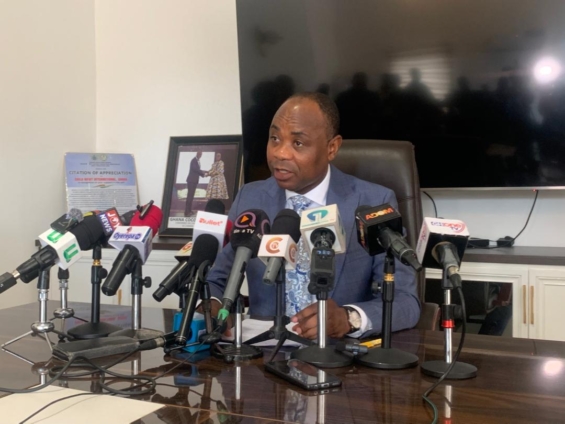
The Executive Director of Child Rights International, Bright Appiah, has called on the government to adhere to the appropriate protocols and procedures in addressing the situation of street children, most of whom are foreign nationals.
He said this formed part of the State’s obligations under social protection and should not be overlooked in the ongoing repatriation efforts.
Speaking at a news conference in Accra, Mr Appiah raised concerns over the methods employed by the Ghana Immigration Service during its recent operations to evacuate beggars from key hotspots in the capital, including Kaneshie, Abossey Okai and Kwame Nkrumah Circle.
He noted that most of the individuals involved had entered Ghana through the northern sector and Aflao in the Volta Region and were quickly absorbed into informal networks that facilitated street begging.
“They find accommodation, and the next morning, they’re out on the streets. Buses pick them up and take them to various traffic lights to beg. At the end of the day, they return to those who organised this for them. This implies that, in effect, we are allowing these children to be here,” he said.
Mr Appiah said whether the children were in Ghana by choice or coercion, the State had a duty to provide them with the appropriate accommodation and care, in line with national and international child protection laws.
“This isn’t the first time the state has attempted repatriation. We saw similar efforts in 2022, but the focus needs to shift towards the children, who constitute nearly 60 per cent of those rescued from the streets,” he stated.
He cited the United Nations Convention on the Rights of the Child and Ghana’s Children’s Act, emphasising the need for due diligence and humane treatment during such operations.
The Child Rights International Executive Director questioned the capacity of the Ghana Immigration Service to manage child protection responsibilities, suggesting that such functions be led by institutions like the Department of Social Welfare.
He called for the collection of biodata, thorough needs assessments, and detailed documentation on the rescued individuals, particularly the children, to ensure that interventions were targeted and effective.
“The state must prioritise the best interests of the child, regardless of nationality, and engage in bilateral discussions with the countries of origin to develop sustainable and respectful solutions,” he said.
The Government, Mr Appiah noted, must review its current approach to avoid legal challenges from affected individuals or human rights organisations in the future.
Latest Stories
-
Netherlands Fire Chief in Ghana to support fire safety reforms and market fire prevention efforts
56 minutes -
Mason goes on remand for stealing
58 minutes -
Gov’t cuts fuel taxes, deploys buses to curb impact of rising fuel prices
1 hour -
Interior Minister calls for intelligence-driven strategy as Ghana strengthens counter-terrorism efforts
1 hour -
Adenta Circuit Court remands Pastor William Gyimah over viral threats against Vice President
2 hours -
“We’ve implemented changes to prevent a repeat of the AFCON final” – CAF President Motsepe
2 hours -
Gov’t orders deployment of Metro Mass buses to cushion commuters amid fuel price hike
3 hours -
Key Indian state polls begin in test for Modi’s party
3 hours -
Playback: Gomoa Easter Carnival in photos
3 hours -
Gov’t orders removal of fuel taxes to ease pump price hikes
4 hours -
“Whatever the decision of CAS, we will respect it” – CAF President Motsepe after AFCON final meetings in Morocco
4 hours -
Emma Ankrah: When waiting becomes part of treatment – Reflections on hospital care
4 hours -
Ghana urges travellers to prepare for new EU border system roll-out
4 hours -
Mahama enforces fuel coupon ban for ministers as cabinet moves to slash fuel taxes
4 hours -
Task force probes strange fish deaths in Tema
4 hours