

Audio By Carbonatix
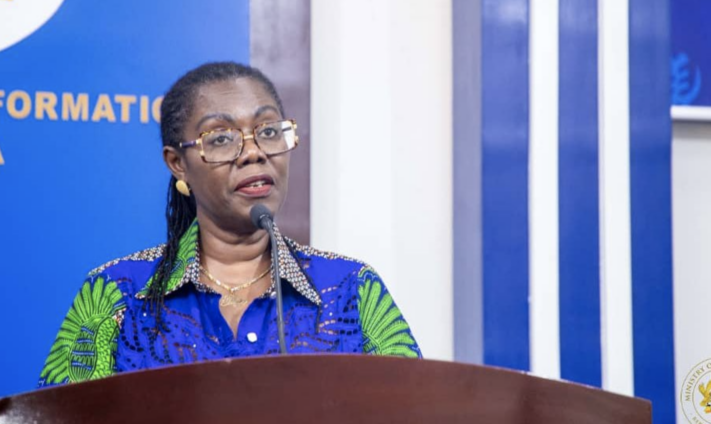
The Minister of Communications and Digitalisation, Ursula Owusu-Ekuful, on Thursday, launched Ghana’s Digital Economy Policy and Strategy to guide the implementation of the country’s technological advancement and consolidate the gains made.
The policy aims to leverage digital technologies to foster economic growth, improve public service delivery and ensure equitable access to digital resources.
At a media briefing in Accra to launch the policy document, Mrs Owusu-Ekuful highlighted the transformative power of digitalisation to the national economy, noting that access to digital technologies and services was no longer a luxury for the privileged few, but a human right.
The Minister mentioned the expansion of a high-speed e-Government network connecting 951 public institutions, backed by 3,500 kilometres of fibre optic cables laid in 2023 as a key milestone in bridging the digital divide.
She further stated that the Government was laying the groundwork for a digitally inclusive future, ensuring that every Ghanaian benefits from the opportunities of the digital era.
Madam Owusu-Ekuful highlighted five specific key areas of focus including entrepreneurship, digital skills, digital government, universal access, and emerging technologies, to deepen Ghana’s economic base.
She believed that the policy documents if fully implemented, would promote an ecosystem in which digital technology could drive inclusive growth and open opportunities for both individuals and companies.
Additionally, she said, the Government’s strategy was to leverage digital technologies to address Ghana’s present and future needs.
By aligning digital efforts with job creation and Gross domestic product (GDP) growth, she said, the policy would ensure that technology becomes a powerful tool for inclusive development, poverty alleviation and enhancing prosperity for all citizens.
“Through digital technologies, we are confident of seeing significant progress in entrepreneurship and efficient public service delivery,” Mrs Owusu-Ekuful stated.
The Minister acknowledged the support of key partners, including the World Bank and the Tony Blair Institute for Global Change in putting the policy documents together.
The Minister appealed for greater collaboration across various sectors of the economy to address connectivity gaps.
She reiterated the need for adaptive regulation to foster innovation and protect the citizens from risks such as fraud and misinformation while positioning Ghana as a leader in Africa’s digital future.
Latest Stories
-
At least 30 feared dead in crush at Haitian tourist site
1 hour -
Four arrested over murder of Scottish businessman in Kenya
1 hour -
New Mainoo deal closer, says Man Utd boss Carrick
1 hour -
Sinner beats Alcaraz to return to world top spot
2 hours -
An inappropriate joke nearly ended his career. Now he’s back with more humour
2 hours -
GPL 2025/26: Dreams FC stage stunning comeback to hammer Eleven Wonders
3 hours -
Livestream: The Probe examines Kumasi’s looming water crisis
3 hours -
MTN Ghana gears up to lead Africa’s AI revolution
3 hours -
Philanthropist Alhaji FuZak donates Da’wah bus to Ambariya Sunni community
3 hours -
GUTA calls for suspension of Publican AI system over trade disruptions
3 hours -
TTAG raises alarm over proposed recruitment of 7,000 teachers, demands national posting roadmap
4 hours -
Civilians feared killed after reports of air strike on Nigerian market
4 hours -
Bishop Simon Kofi Appiah installed as new Jasikan Diocese Bishop
4 hours -
Trump’s Strait of Hormuz blockade threat raises risks and leaves predicaments unchanged
4 hours -
US Court backs extradition of former MASLOC CEO Sedina Tamakloe-Attionu to Ghana
4 hours