

Audio By Carbonatix
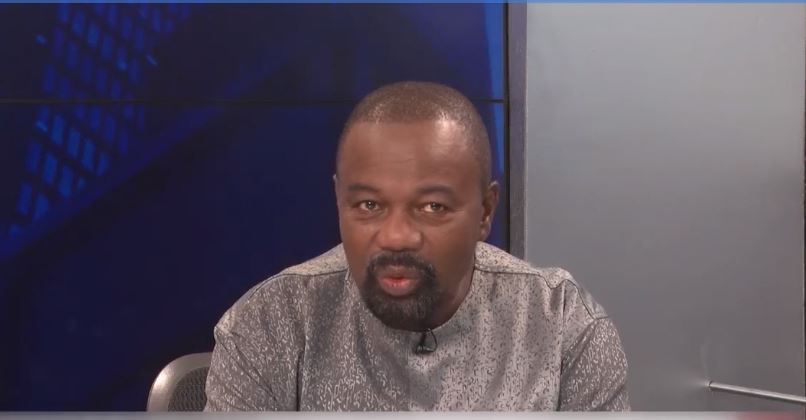
Security analyst and International relations expert, Prof Vladimir Antwi-Danso, has warned that the escalating conflict involving Iran could ignite a fresh wave of global terrorism and destabilise the international order if it spirals into broader state involvement.
Speaking on JoyNews' The Pulse on Monday, on the geopolitical implications of the crisis, the analyst described the attacks as illegal and contrary to the principles of the United Nations Charter.
He cautioned that history shows such actions often produce unintended and far-reaching consequences
“Any such attacks in history have brought about some form of instability for the world,” he said. “If this escalates, it will have geopolitical, economic and political implications globally.”
Prof Antwi-Danso outlined what he described as two dangerous “traps” that could worsen the situation.
First, he noted that the allies of the United States whose territories may be targeted by Iran could unite and escalate the confrontation, widening the scope of the conflict.
Additionally, he warned of the possibility of direct state inclusion in Iran. According to him, past experiences show that large-scale state involvement in similar conflicts has often resulted in prolonged instability and the rise of extremist movements.
Drawing historical parallels, the analyst referenced the 2003 invasion of Iraq, which he said led to the emergence of the Islamic State of Iraq and the Levant (ISIL) and a surge in global terrorism.
“We thought there would be regime change, but what emerged from the ashes was terrorism at its peak,” he noted.
He also cited the intervention in Libya, arguing that the country’s destabilisation created conditions that have since made the Sahel a hotspot for extremist activity, with West Africa bearing significant consequences.
Similarly, he pointed to developments in Afghanistan, where prolonged conflict contributed to heightened terrorist threats.
“If this new trap of state inclusion in Iran happens, there is going to be more terrorism in the world,” he cautioned.
Beyond security concerns, the internal relations expert warned of economic repercussions, particularly potential spikes in global oil prices.
He explained that sharp increases in oil prices historically trigger inflation, market volatility and broader economic turmoil.
“Anytime there are price hikes, there is instability in the global economy,” he said, adding that Ghana would not be immune to the impact of rising fuel costs and global economic shocks.
Latest Stories
-
Interest payments to average a high 20% of government revenue over next 4 years
8 minutes -
Strategy of accumulating foreign reserves, gold carries high fiscal cost – S&P Global
23 minutes -
Weak institutional arrangements, high debt servicing constrain Ghana’s rating – S&P
29 minutes -
Bond market: Turnover declined by 28% to GH¢1.56bn
59 minutes -
Volta Region National Public Speaking contest advances drug prevention conversation
1 hour -
New health training facility at Ampoma-Jema to address admission shortfalls, but Minister flags missing amenities
1 hour -
Black Challenge unveiled with sights set on Amputee World Cup glory
2 hours -
Pay striking teachers before expressway spending, Dr Kingsley Agyemang tells government
3 hours -
Customs intercepts assault rifle, two pistols and 610 rounds of ammunition at Tema Port
3 hours -
PKO boxers secure wins at Odwira Festival
3 hours -
South Tongu Records Rise in Teenage Pregnancy
3 hours -
Cabinet threw out US health compact faster than anything I’ve seen – Mahama
3 hours -
MoFA urges Finance Ministry to reverse World Bank food programme withdrawal over GH¢643m commitments
3 hours -
NAGRAT demands signed timelines before calling off strike
4 hours -
National Investment Quiz: West Africa SHS, St. Louis SHS advance to semi-finals
4 hours