

Audio By Carbonatix
Africa’s growth is expected to slow to 4.2 per cent in 2026 as conflict in the Middle East sends energy costs higher, reviving inflation threats, the International Monetary Fund (IMF) has said.
Sub-Saharan Africa’s growth is expected to ease from 4.5 per cent in 2025 to 4.3 per cent in 2026, while North Africa growth forecast is to slip to 4.1 per cent over the same period, which are both higher than the global growth of 3.1 per cent for 2026.
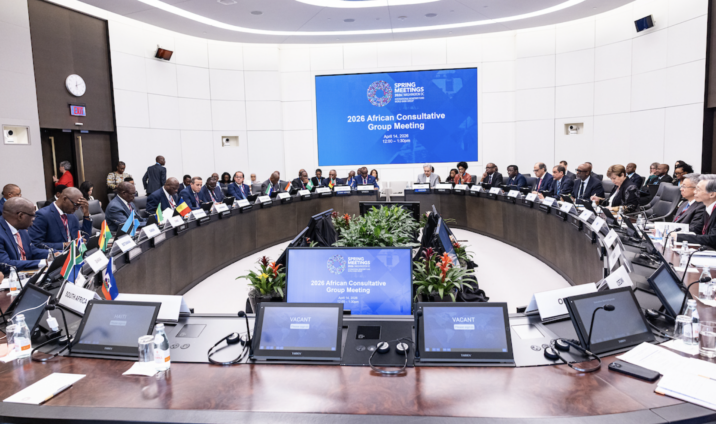
This development was noted at the African Consultative Group Meeting with Ms Kristalina Georgieva, IMF Managing Director, at the ongoing 2026 IMF/World Bank Group Spring Meetings in Washington.
The meeting was co-chaired by Mr Seedy Keita, Chairman of the African Caucus and Minister of Finance and Economic Affairs of The Gambia, and IMF Managing Director Kristalina Georgieva.
The two sides acknowledged that Africa had entered 2026 on the back of hard-won stabilisation gains following a strong 2025, but said those gains were now under threat from the spillover effects of the Middle East conflict, despite the recently announced ceasefire.
They noted that with a relatively swift normalisation following the ceasefire, global growth was projected to slow modestly to 3.1 per cent in 2026 and recover partially to 3.2 per cent in 2027 but warned that a prolonged situation would see Africa’s growth severely impacted.
The Ministers, Governors and the IMF noted that the Middle East conflict was worsening Africa’s economic outlook through inflation, food shortages, and social tensions, coupled with pre-existing structural vulnerabilities like high debt and limited financing options.
On policy response, the African Consultative Group agreed that the near-term priority for policymakers across the continent must be to keep inflation expectations anchored and protect the most vulnerable populations through targeted and time-bound fiscal support.
They advised oil exporting countries to save temporary windfalls and rebuild buffers, while oil importing countries must mobilise domestic revenues, improve spending efficiency, and strengthen public financial management.
Countries were urged to also speed up reforms to drive growth and diversification, deepen regional integration and domestic financial markets, and invest in power and digital foundations to harness artificial intelligence (AI) safely and productively.
The African Consultative Group asked the IMF’s to enhance its Comprehensive Surveillance Review, ensure surveillance activities delivered tailored and country-specific advice rather than generic policy prescriptions.
They also called on the IMF to strengthen its assessment of economic imbalances and cross-border spillovers, improve the Fund’s capacity to bolster shock management, and prioritise and streamline surveillance activities to maximise their impact.
In response to the concerns raised by the African Consultative Group, the IMF reaffirmed its strong commitment to the African members, indicating that it would continue to work closely with countries to support the design and implementation of sound economic policies.
The Fund also reiterated its support to helping to mobilise financing from international sources, to strengthen economic resilience, and advance the region’s development objectives in what it acknowledged is an increasingly complex global environment.
Latest Stories
-
Bond market: Turnover declined by 28% to GH¢1.56bn
8 minutes -
Volta Region National Public Speaking contest advances drug prevention conversation
13 minutes -
New health training facility at Ampoma-Jema to address admission shortfalls, but Minister flags missing amenities
38 minutes -
Black Challenge unveiled with sights set on Amputee World Cup glory
58 minutes -
Pay striking teachers before expressway spending, Dr Kingsley Agyemang tells government
2 hours -
Customs intercepts assault rifle, two pistols and 610 rounds of ammunition at Tema Port
2 hours -
PKO boxers secure wins at Odwira Festival
2 hours -
South Tongu Records Rise in Teenage Pregnancy
2 hours -
Cabinet threw out US health compact faster than anything I’ve seen – Mahama
2 hours -
MoFA urges Finance Ministry to reverse World Bank food programme withdrawal over GH¢643m commitments
3 hours -
NAGRAT demands signed timelines before calling off strike
3 hours -
National Investment Quiz: West Africa SHS, St. Louis SHS advance to semi-finals
3 hours -
Shatta Wale appeals to Mahama for balanced framework to tackle social media abuse without stifling free speech
3 hours -
Education Ministry urges data-driven talks to resolve teacher impasse
3 hours -
‘What we wanted was money to buy medications’ – Dr Nawaane on US health support
3 hours