

Audio By Carbonatix
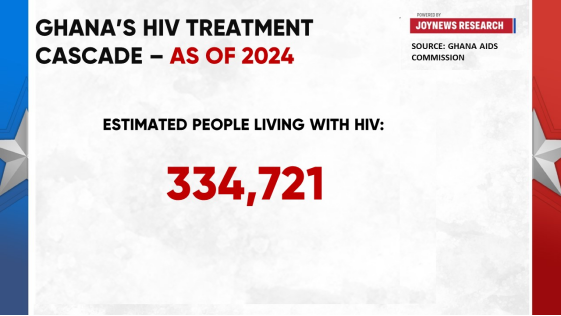
The Ghana AIDS Commission is calling for intensified HIV testing and treatment efforts as new data reveal significant gaps in Ghana’s progress towards ending the HIV epidemic by 2030. According to the Commission’s latest HIV treatment cascade for 2024, an estimated 334,721 people are living with HIV in Ghana.
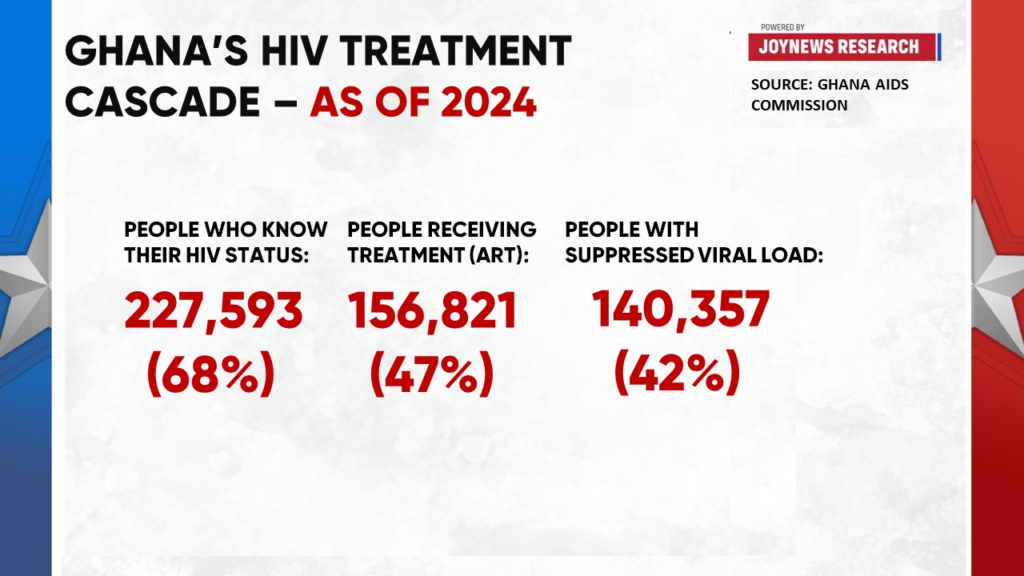
Out of this number, 227,593 people, representing 68%, know their HIV status, while 156,821 people, representing 47%, are currently receiving antiretroviral therapy (ART).
The data further show that only 140,357 people, representing 42% of all people living with HIV, have achieved viral suppression—a stage where the virus becomes undetectable and significantly reduces the risk of transmission.
The figures point to major gaps in Ghana’s HIV response chain, particularly in testing and treatment initiation.
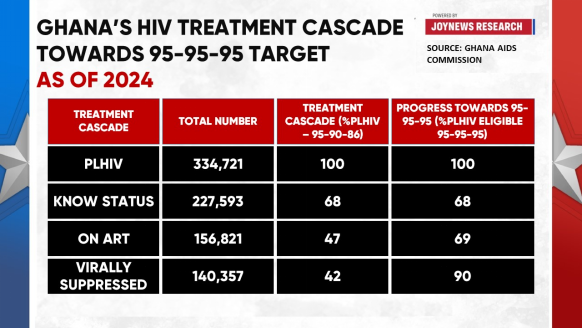
With respect to the global UNAIDS 95-95-95 targets, the data show that out of the total population living with HIV, 68% knew their status; of the 68% who knew their status, 69% were on treatment; and of the 69% on treatment, 90% had achieved viral suppression.
The UNAIDS 95-95-95 targets seek to ensure that by 2030, 95% of people living with HIV know their status, 95% of diagnosed persons are on treatment, and 95% of those on treatment achieve viral suppression.
Despite Ghana recording relatively stronger viral suppression rates among persons on treatment, the report notes that progress towards the global targets remains suboptimal, signalling the need for intensified efforts across testing, treatment initiation, and viral suppression.
Speaking on the worrying trend, Director-General of the Ghana AIDS Commission, Dr. Kharmacelle Prosper Akanbong, stressed the need for urgent action to identify and treat more people living with HIV.
“We need to step up our efforts and test more people, and these people must be brought to treatment, hence suppressing the viral load,” he stated.
According to him, viral suppression remains one of the strongest tools in reducing HIV transmission.
“As far as we get people tested and put on treatment, their viral loads will be suppressed,” he explained.
Dr. Akanbong added that the Commission is also expanding preventive interventions, including pre-exposure prophylaxis (PrEP), post-exposure prophylaxis (PEP), and condom accessibility services across the country.
“All these activities are targeted at minimising the figures when it comes to HIV in the country,” he said.
The Ghana AIDS Commission says it remains committed to strengthening Ghana’s HIV response through intensified testing, expanded treatment access, and stronger preventive interventions across the country.
With renewed efforts in awareness creation, PrEP and PEP rollout, condom accessibility, and community-based testing, the Commission believes Ghana can accelerate progress towards the global 95-95-95 targets and ultimately bring the HIV epidemic under control by 2030.
Latest Stories
-
Hubtel willing to contribute to Ghana’s proposed AI fund – CEO
2 minutes -
Nkrumah family pays tribute to Gamal, says he died after prolonged illness
11 minutes -
Police arrest eight suspects in anti-narcotics operation at Okaishie Drug Lane
22 minutes -
Benjamin Danso pledges grassroots empowerment in NDC regional chairmanship bid
25 minutes -
GES recommends reposting of Obuasi SHTS headmaster after August 2026 campus riot
28 minutes -
Rocky Dawuni celebrates King Ayisoba for taking traditional music global
40 minutes -
Ghana targets $5bn in annual economic gains from AI – Sam George
41 minutes -
From childhood dreams to future careers: Ecobank’s Big Pitch seeks to promote early savings and investment
43 minutes -
Public office demands make party work difficult for NDC appointees – Mahdi Gibril
45 minutes -
AI could deepen rural-urban inequality without better connectivity – Sam George
48 minutes -
One of six inmates who escaped from Konongo police cells rearrested
53 minutes -
Sam George cautions ministers against reading unverified AI-generated speeches
56 minutes -
Ghanaian entrepreneur Mary Nyamekye Asamoah wins Africa Travel 100 award
59 minutes -
Obuasi SHTS abuse: Sanction all officials who failed to act – Moving Masculinity
1 hour -
Lucy Agyepong honoured for excellence in engineering education at maiden GAAS Women’s Awards
1 hour