

Audio By Carbonatix
According to research, traditional farming methods often produce harmful pollutants that contribute to climate change.
Maize and rice farming have particularly been implicated in releasing harmful gases into the atmosphere.
Therefore, the Crops Research Institute of the Council for Scientific and Industrial Research (CSIR-CRI) is exploring various agricultural technologies to combat this menace through the Agroecology and Circular Economy for Ecosystem Services (ACE4ES) project.
The ACE4ES project seeks to explore innovative techniques that can reduce these pollutants while improving the health of the soil and the crops.
As part of the project objectives, scientists will try out different methods of farming, such as crop-livestock system, integrated soil fertility management, composting, biochar application, site-specific nitrogen management, rotational cropping, minimal tillage/zero tillage among others to see which ones work best for the environment and farmers.
The scientists will then build the capacity of farmers and policymakers on these technologies.
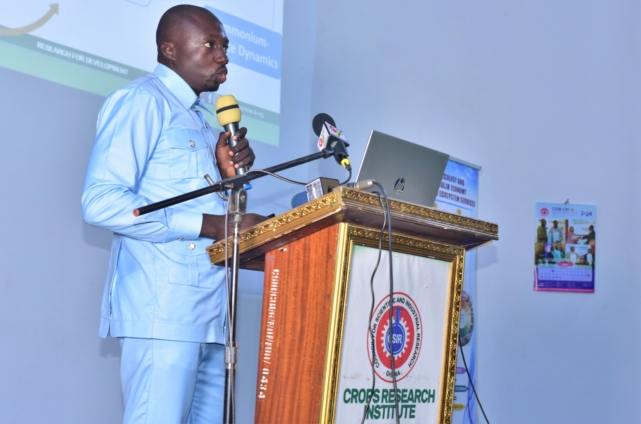
Speaking at the project launch, the project coordinator, Dr. Kwaku Onwona-Hwesofour Asante was hopeful that the adoption of these technologies will lead to better farming outcomes.
“Increased adoption of ACE practices by farmers, resulting in reduced harmful gas emissions and improved agricultural productivity,” he said.
The Director of Crops Research Institute, Prof. Moses Brandford Mochiah touted the institute’s quest to pursue initiatives aimed at combating climate change.
“As the lead institution for this project, we’re deeply honoured to spearhead efforts aimed at integrating agroecology and circular economy principles into maize and rice production systems.
“Today marks a significant milestone in our collective efforts to address the pressing challenges posed by climate change and environmental degradation,” he said.
Director-General of the CSIR, Prof. Paul Bosu was also grateful to the stakeholders for the realization of the project and asked for their commitment towards achieving the goals of the project.
Minister of Environment, Science, Technology and Innovation, Ophelia Mensah Hayford pledged the government’s support and urged the Council to intensify communication and advocacy of their activities.
Latest Stories
-
Prudential Life settles GH¢100,000 medical bills under its PRUCares Valentine Experience Initiative
4 hours -
Wa West Picnic: Peter Lanchene Toobu champions peace, health and unity in landmark celebration
4 hours -
Dr Mensah Market flooded after downpour in Kumasi
4 hours -
Armed men reportedly storm Adjen Kotoku Onion Market amid tensions
5 hours -
Tecco Mensah writes: Why football fans must look beyond statistics
6 hours -
Police recover stolen Honda CR-V in Kumasi within 48 hours
6 hours -
Apetorku Gbodzi 2026 Festival opens in Dagbamete with development focus
7 hours -
President Mahama arrives in Lyon to co-chair One Health Summit
7 hours -
Beverly View Plus Hotel draws crowds amid coastal Easter rush in Volta
7 hours -
Maiden Zongo Festival held in Wa amid calls to tackle drug abuse among the youth
7 hours -
FDA warns of fake HIV test kits on Ghanaian market
8 hours -
Africa urged to build resilient health systems as donor support tightens
8 hours -
Easter gesture: Ablakwa settles medical bills for 85 North Tongu constituents
9 hours -
Africa must harness its population strength—Titus-Glover
9 hours -
Visa-free access doesn’t mean unlimited stay – Lom Ahlijah
9 hours