

Audio By Carbonatix
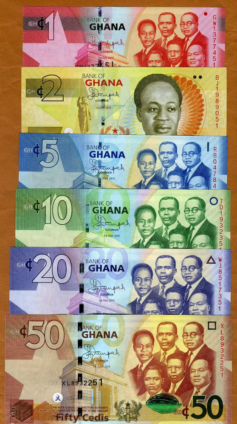
More monies continue to sit outside the banking system, according to the Bank of Ghana’s Summary of Macroeconomic and Financial Data.
The growth of currency in circulation has hovered around 37% on the average from June to August this year.
It stood at 19.8% in January 2020, but rose to 36.7% in June 2020 and then further to 41.9% in July 2020, the highest so far this year.
It however fell to 39.3% in August 2020.
Fast forward, it is unclear whether it will continue to record high growth going into the December elections.
Could this suggest the economy is very liquid or consumers have decided to avoid the banking system to deposit their savings, amid covid-19?
There is however a school of thought that currency in circulation is however more or less important to central banks’ monetary policy relative to other types of money because the quantity of currency is relatively less flexible.
Demand Deposits
Demand deposits which is largely current account and highly prioritized by banks because it comes at virtually no cost has also seen some growth of more than 24% since May this year.
It started the year at 18.9% and then Jumped to 20.9% in February 2020, but fell to 14.8% in March 2020.
It has since been above the 20% mark, registering 26% growth in August 2020.
Savings and Time Deposits
Savings and Time Deposits which are largely savings and fixed deposit accounts [products] has also seen remarkable growth from the year to about 22.3% in August this year.
It began the year at a very low 0.7% growth and then shot up to 6.8% in March 2020, and then fell drastically in April to 3.3% but has since remarkable growth.
Banks highly regard savings and current deposits because they are considered as cheap funds that the financial intermediaries trade with to make excess income.
Foreign Currency Deposits
Foreign currency deposits have however witnessed significant decline in growth, from 36.9% in January to 18.1% in August this year.
It could help track the performance of the local currency which was the best performing currency globally in the first two months of 2020.
So far this year, the cedi has depreciated by only 2.9%, compared to about 12% last year
Latest Stories
-
What everyone should know about C-sections
8 minutes -
Health Ministry engages Ga Mantse ahead of Free Primary Healthcare launch
37 minutes -
We can tackle multiple priorities – Sam George defends Anti-LGBTQ Bill push
1 hour -
Statement: Ghana Chamber of Mines’ Response to Claims in Joe Jackson’s “Ananse Stories about the Economy of Ghana”
1 hour -
GES opens 2026 teacher recruitment for licensed B.Ed graduates
1 hour -
Ghana must value skilled trades, build resilient learners — Ibn Chambas
1 hour -
Ghana must rethink education around relevance, resilience and responsibility — Ibn Chambas
1 hour -
Prince Harry faces defamation lawsuit from charity he co-founded
1 hour -
South Korea deploys thermal cameras to track escaped zoo wolf
2 hours -
Calls for royal meeting with Epstein survivors grow ahead of US visit
2 hours -
Ibn Chambas advocates blend of technology and human values in education
2 hours -
UMA improves healthcare access in Asutifi North with GH₵700k ‘Kim Taylor Legacy’ Walkway
2 hours -
Scholarships Authority and Fanaka University offer sponsorship for procurement and supply chain studies
2 hours -
Bisa Kdei drops new single ‘Go N Look’ featuring Medikal
2 hours -
Benin facing rising terrorism in north as French military presence faces growing criticism
2 hours