

Audio By Carbonatix
Researchers at ETH Zurich have concluded that the current climate is not the main reason why biodiversity is lower in Africa's rainforests of Africa.
In contrast, biodiversity stems from the dynamics of mountain building and climate change.
Led by Professor of Landscape Ecology, Loïc Pellissier, the researchers used a new computer model that enabled them to simulate species diversification over millions of years of evolution.
Africa Rainforests have fewer species than the tropical forests of South America and Southeast Asia.
The researchers say the pantropical diversity disparity (PDD) is a good illustration of the uneven distribution.
For instance, there are 2, 500 species of palm trees in the world, 1,200 in southeast Asia, 800 in the tropical forests of South America, but only 66 in African rainforests.
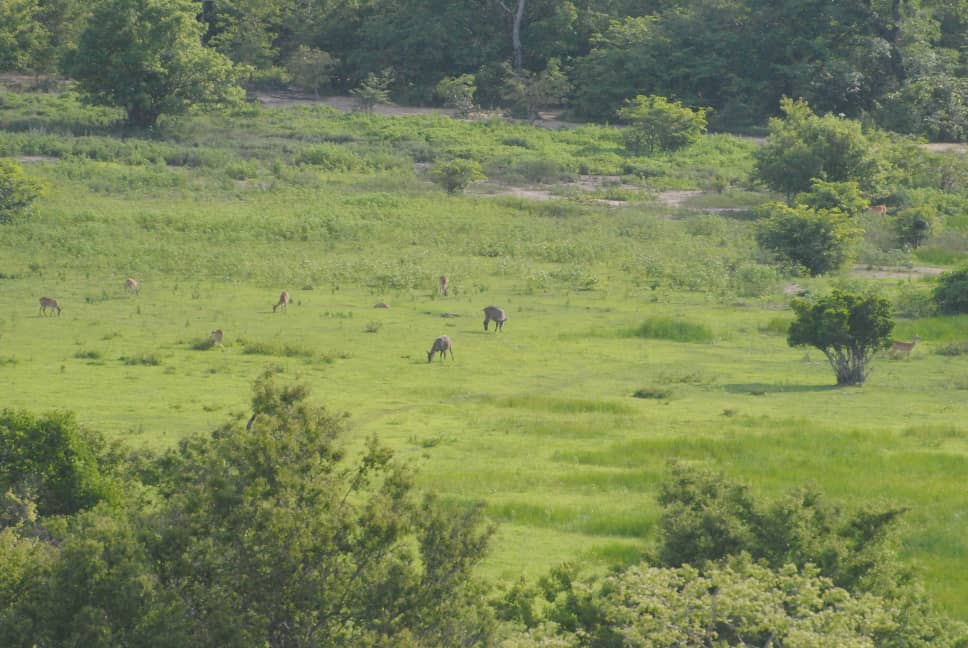
Evidence, according to the research, suggests that the different environmental and tectonic histories of the three tropical forest regions over tens of millions of years had an impact on the differing levels of biodiversity. For example, the formation of mountains, islands, or arid and desert areas.
"However, it is difficult to distinguish between the two factors of the current climate and environmental history." The research said. "The results of the historical simulations largely coincide with the patterns of biodiversity distribution observable today.” It added.
“Our model confirms that differences in palaeoenvironmental dynamics produced the uneven distribution of biodiversity, rather than current climatic factors,” says Pellissier. “Geological processes, as well as global temperature fluctuations, determine where and when species emerge or go extinct.”
According to the research, one factor is crucial to high biodiversity on a continent: geological dynamics. Active plate tectonics promote both the formation of mountains, such as the Andes in South America and the emergence of archipelagos, as in Southeast Asia.
The two processes, it said, result in many new ecological niches, which in turn give rise to numerous new species.
Africa’s rainforest belt, however, has had less tectonic activity over the past 110 million years and is relatively small because it is bordered by drylands in the north and south, limiting its spread.
“Species from humid regions can hardly adapt to the dry conditions of the surrounding drylands,” Pellissier indicated.
The “gen3sis” model developed by ETH Zurich researchers was only recently presented in the journal PLoS Biology. It is a mechanistic model in which the primary constraints such as geology and climate are represented together with biological mechanisms from which biodiversity patterns can materialize.
“With these four basic rules, we can simulate the population dynamic of organisms over shifting environmental conditions and offer a very good explanation for how the organisms came about,” Pellissier said.
Researchers can simulate species diversity using the model without the need for data entry for each species. However, the model requires data on the geological dynamics of the continents considered, as well as humidity and temperatures from climate reconstructions.
Researchers are now refining the model and carrying out simulations to understand the emergence of biodiversity in other species-rich regions, such as the western Chinese mountains. Mode code and the palaeoenvironmental reconstructions are open sources.
Latest Stories
-
Wenchi water project almost complete, critical to gov’t agenda – GWL MD
14 minutes -
Anti-LGBTQ+ bill not part of government’s legislative agenda – Inusah Fuseini
16 minutes -
Anti-LGBTQ Bill: Forget the rumour mongers, I’m a man of action, and will pass the bill – Speaker
1 hour -
Women and children among those killed in Sudanese army shelling of wedding celebration
1 hour -
President Mahama is not sincere with Ghanaians on LGBTQ bill matter – Hassan Tampuli
1 hour -
Gov’t to establish Prison Industrial Hub to equip inmates with income-generating skills – Prison Service boss
2 hours -
Alhassan Tampuli donates cement, roofing sheets to support storm victims in Gushegu
2 hours -
Alhassan Tampuli appeals for urgent support for storm victims in Gushegu
2 hours -
The hypocrisy must stop; pass Anti-LGBTQ+ Bill now – Alhassan Tampuli to Mahama
2 hours -
Imprisonment should be rehabilitative, not punitive – Ghana Prisons boss at UNGA
2 hours -
Ga Adangbe traditional priests petition Mahama over McDan aviation licence revocation
2 hours -
Anti-LGBTQ Bill: NDC’s arrogance is worrying – Hassan Tampuli
3 hours -
Let’s give OSP time to mature, not to scrap it – Hassan Tampuli
3 hours -
Nigeria convicts 386 Islamist militants in mass trials
3 hours -
Djibouti president wins election with 97.8% of vote, state media says
3 hours