

Audio By Carbonatix
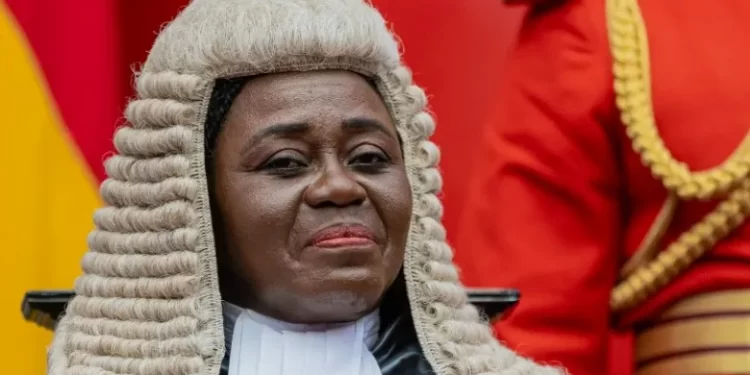
The Centre for Democratic Movement (CDM) expresses its unequivocal condemnation of the recent and constitutionally questionable decision by President John Mahama to suspend the Chief Justice, Her Ladyship Justice Gertrude Araba Esaaba Sackey Torkornoo. This action constitutes a serious breach of constitutional norms, a direct encroachment on judicial independence, and a dangerous politicisation of the judiciary; an institution that must remain impartial, respected, and sacrosanct in any democratic society.
This development is rendered even more alarming by the composition of the investigative committee appointed to assess the Chief Justice. In its current form, the committee bears significant political colouration and raises legitimate concerns about institutional neutrality and procedural integrity. These combined actions represent a profound threat to the rule of law and the principle of separation of powers.
Breach of Constitutional Norms and Misuse of Discretionary Power
The 1992 Constitution of Ghana sets out a deliberate and legally safeguarded framework for the removal of Justices of the Superior Courts:
• Article 146(1) stipulates that a Justice may only be removed for stated misbehaviour, incompetence, inability to perform the functions of office due to infirmity of mind or body;
• Article 146 and the case of Frank Agyei-Twum v Attorney General & Bright Akwettey provide that the President shall in consultation with the Council of State, establish a prima facie case and a committee constituted to investigate the matter where a prima facie case is so established.
The President’s decision to suspend the Chief Justice before the conclusion of a constitutionally prescribed process constitutes a breach of the express procedural requirements of Article 146. It undermines the institutional integrity of the office and erodes the constitutional protections afforded to the Judiciary.
More critically, this action raises fundamental constitutional concerns under Article 296(c), which mandates that any discretionary authority conferred on a person or body (other than a judge) must be exercised in accordance with clearly published criteria or regulations. No such framework appears to have been made public in this case. Without such guidelines, the use of discretionary power is arbitrary, unregulated, and constitutionally deficient.
In Ransford France v. Attorney-General, the Supreme Court, through Justice Date-Bah, affirmed that the exercise of discretionary power by administrative and quasi-judicial authorities must comply with Article 296, particularly in situations involving constitutional safeguards. This principle applies with full force in the current case, where the stakes involve the very independence of the judiciary.
A Politicised Committee and the Erosion of Credibility
The neutrality of any committee tasked with reviewing the conduct of the nation’s highest judicial officer must be unimpeachable. However, in this case, the makeup of the investigative committee is marred by political affiliations and past controversies, undermining both its perceived and actual impartiality. Notable concerns include:
• Mr. Daniel Yaw Domelevo, former Auditor-General, was appointed by President Mahama in the final months of his first term. His tenure was marked by politically charged confrontations, and he was embroiled in a public dispute over his date of birth and retirement timeline; issues that cast doubt on his suitability for such a delicate role;
• Justice Gabriel Pwamang, the committee chair, was nominated by President John Dramani Mahama on May 12, 2015, and subsequently sworn into office on June 29, 2015 as a Supreme Court Justice. Though a respected jurist, his close association with the appointing authority raises unavoidable concerns about independence in a process involving the judiciary’s top office;
• Professor James Sefah-Dzisah, a University of Ghana academic, was one of several NDC-aligned lecturers who publicly opposed the compilation of a new voters’ register ahead of the 2020 elections; an act widely perceived as partisan. His inclusion on the committee fuels the perception of political motive.
While the committee includes Justice Asiedu, a nominee of President Akufo-Addo, this lone balance does little to counter the perception that the body is overwhelmingly tilted toward the Executive’s interests.
In a matter of such constitutional gravity, the perception of fairness is inseparable from actual fairness. The public must be able to trust that the process is neutral, balanced, and free from political manipulation.
This setup violates international norms, notably:
• The United Nations Basic Principles on the Independence of the Judiciary (1985), which require disciplinary processes to be independent and transparent;
• The African Commission’s Principles and Guidelines on the Right to a Fair Trial and Legal Assistance in Africa (2003), which emphasise that judges must be disciplined only through impartial and constitutionally sound procedures.
Violation of International and Regional Legal Norms
Beyond domestic constitutional infractions, the suspension and flawed investigation process contravene Ghana’s commitments under binding international and regional frameworks:
• Article 26 of the African Charter on Human and Peoples’ Rights (ACHPR) mandates member states to protect judicial independence from political interference;
• The UN Basic Principles prohibit arbitrary suspension or removal of judges;
• The African Guidelines on Fair Trial affirm that disciplinary procedures must be free of Executive control.
By disregarding these standards, Ghana not only risks damaging its democratic reputation but also undermines its obligations as a respected member of the international legal order.
A Dangerous Precedent
This suspension sets a perilous precedent. It encourages Executive interference in independent institutions, fosters mistrust in the judicial system, and weakens constitutional checks and balances.
CDM does not view this case in isolation. It is part of an emerging trend of Executive overreach, cloaked in legality but corrosive to the democratic fabric of the nation. Left unchallenged, this trajectory threatens to reverse decades of progress in democratic governance and institutional stability.
Our Position and Call to Action
The Centre for Democratic Movement calls for the following immediate actions to restore constitutional integrity and safeguard judicial independence:
1. Immediate and unconditional reversal of the suspension of Her Ladyship the Chief Justice in accordance with constitutional due process;
2. Dissolution and reconstitution of the investigative committee, ensuring a truly independent and politically neutral membership;
3. Affirmation of judicial independence as a foundational pillar of the Republic, including constitutional and institutional safeguards against undue Executive influence;
4. A parliamentary inquiry or constitutional oversight mechanism to investigate the breach of procedure and propose reforms to prevent the abuse of discretionary power under Article 296;
5. Engagement with regional and international mechanisms, including the African Commission on Human and Peoples’ Rights and the United Nations Special Rapporteur on the Independence of Judges and Lawyers, to provide oversight, support, and accountability in line with Ghana’s international obligations.
We further call on all defenders of constitutional democracy, including the Ghana Bar Association, civil society, religious and traditional leaders, and the media, to rise above partisanship and defend the foundational principles of our Republic.
Conclusion
This moment demands vigilance, not silence. Ghana’s democratic future cannot be bartered for political gain. The Constitution must not be weaponised, and the judiciary must not be punished for its independence.
The Centre for Democratic Movement remains resolute in its mission to defend constitutionalism, uphold justice, and safeguard the future of democratic governance in Ghana.
Signed:
Centre for Democratic Movement (CDM)
CC:
• Office of the United Nations Resident Coordinator
• U.S. Embassy, Accra
• British High Commission
• Delegation of the European Union to Ghana
• Canadian High Commission
• Embassy of the Federal Republic of Germany
• African Union Commission
• ECOWAS Commission
• Ghana Bar Association
• Ghana Journalists Association
Latest Stories
-
Ablakwa says Ghana could evacuate more citizens from South Africa if the situation worsens
9 minutes -
Violence against girls must be tackled through individual responsibility – Gender advocate
13 minutes -
Ghana’s BRICS bid must be guided by national interest – International Affairs Analyst
26 minutes -
Journalists look back on a decade of breast cancer reporting in Ghana
1 hour -
President Mahama ends Resetting Ghana tour of Ahafo Region
3 hours -
African negotiators seek delivery of climate commitments at COP31
3 hours -
BoG develops AI rules for financial sector
3 hours -
‘Big Push’: Government assures contractors of prompt payments
3 hours -
Court fines miner for breaking into gold buying shop
3 hours -
Tarkwa court jails labourer for three years over GH¢123,000 theft
4 hours -
GAEC must retain nuclear scientists for Ghana’s nuclear ambitions – Minister
5 hours -
Man reportedly mistaken for game and shot by hunter dead in forest
5 hours -
19-year-old mason jailed 15 years for defiling seven-year-old pupil
5 hours -
Ghana’s banking sector assets rise 20.47% to GH¢500.2bn – BoG Governor
5 hours -
22 injured as Sprinter bus overturns at Sege after tyre burst
5 hours