

Audio By Carbonatix
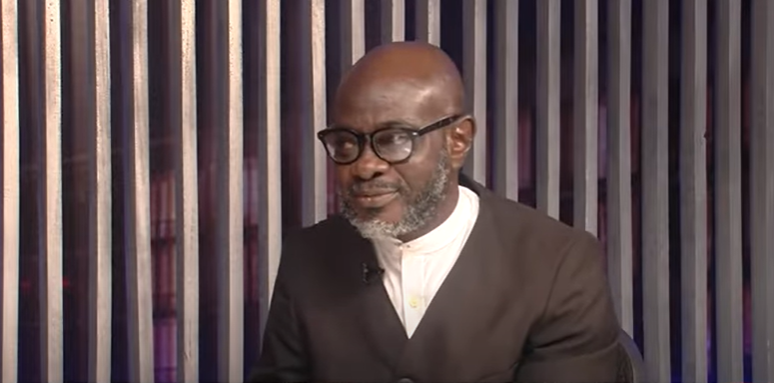
Chairman of the Constitutional and Legal Committee of the New Patriotic Party (NPP), Frank Davies, has raised serious concerns about the future of judicial independence in the country.
He says recent developments in the ongoing impeachment process against Chief Justice Gertrude Torkornoo may pose a danger to one of the cornerstones of Ghana’s democracy.
Speaking on Joy News’ PM Express on Wednesday, May 28, Mr. Davies reacted to the Supreme Court’s unanimous decision to strike out a supplementary affidavit filed by the Chief Justice in response to a petition before a committee.
He admitted he had not yet reviewed the full ruling but said the broader implications were troubling.
“I wasn’t in court and haven’t seen the full extent of the ruling, so I cannot say possibly that was to be expected,” he said.
“Be that as it may, the ruling has been handed down, and it was a unanimous decision. All five justices held that the application has no merit. Well, that is the first stage. I’m very sure that the Chief Justice and the lawyers would certainly know what to do next.”
But it was not the legal technicalities that disturbed him most—it was what he sees as a growing pattern that could chip away at the judiciary’s independence.
“As a trained lawyer, I’m really disturbed by what is going on,” he said.
“If we don’t take time, with the greatest of respect, our long-held hallowed principle of judicial independence possibly, maybe comes under threat. And I am not too comfortable with what is going on.”
Frank Davies pointed to the content of the Chief Justice’s affidavit, which was struck out by the court.
He insisted that the claims it contained deserved attention and reflection, even if the legal process had rejected the filing on procedural grounds.
“Well, the Chief Justice, in a supplementary affidavit, which was struck out by the court, made some very interesting and revealing information,” he explained.
“Even though the justices felt they had a reason for striking it out, the content of the affidavit is a bit worrying.”
Pressed by host Evans Mensah to explain exactly what in the affidavit troubled him, Mr Davies cited claims of unequal treatment and breaches of fairness in how the committee was conducting its proceedings.
“Fundamentally, she’s complaining about her rights being abused in instances of just casual reading,” he said.
“Her lawyers are not permitted to take some gadgets into the committee room, but the petitioners have their lawyers hold on to their phones and laptops. And her lawyers are denied that benefit or opportunity.”
He was careful to note that these were the Chief Justice’s claims, not proven facts. But he also argued that the absence of any rebuttal made them worth serious consideration.
“I am not saying that is the truth, but that is what she has said, and we should stick to that because there is no response to that,” he stated.
“If that is what has really happened, then from the get-go, whatever is being done is not right.”
Mr. Davies’ remarks come at a time when the judiciary is under intense scrutiny, and the stakes surrounding the impeachment process are unusually high.
His warning adds to a growing list of voices expressing concern that political battles may be seeping into the country’s judicial processes.
Latest Stories
-
Ghana’s BRICS move requires clear strategy to manage risks – Godfred Bokpin
56 minutes -
Pay teachers realistic income – Duncan Amoah to gov’t
1 hour -
Bechem to become chicken capital of Ghana – Mahama projects
1 hour -
Gov’t targets recruitment of 16,500 health professionals in 2026
2 hours -
Two-week strike will not derail academic calendar – GNAT President
2 hours -
Headmaster detained after BBC investigation into alleged sexual abuse of students
2 hours -
GNAT pushes for clear implementation procedures of teachers’ conditions of service
2 hours -
Recurrent strikes threaten quality of education and academic calendars – Prof Bokpin
2 hours -
‘Cockroach’ group leaders among hundreds detained in Delhi protest
2 hours -
Don’t let speed of information become your judgement – CJ tells new lawyers
3 hours -
World Cup visa scandal: People have leveraged public office to facilitate fraud – Senyo Hosi
3 hours -
Glut! Farmers count losses as prices crash, customers happy
4 hours -
GSA postpones auction of unserviceable vehicles
4 hours -
Man charged with attempted murder after stabbing
4 hours -
World Cup visa scandal: Senyo Hosi says issue goes beyond calls for Sports Minister’s resignation
4 hours