

Audio By Carbonatix
The Ghanaian informal sector is seemingly closed to external market forces, including international trade and import competition due to issues of quality and standard.
The sector which usually produces new or self-constructed products and services are rarely imported, leaving players in limited trade space. `
The Design and Technology Institute (DTI) , supported by the Mastercard Foundation has identified the lack of standardization as a major drive to boost and make Ghana’s informal sector products and services internationally marketable.
Ghana’s informal sector is the backbone of everyday economic activity, accommodating professionals in technical and vocational spaces, including fashion, carpentry, fitting and mechanical, wielding, automobile and tailoring.
Despite the size, the informal sector has long been characterized by challenges spanning from inconsistent standards, low productivity, and limited integration into formal economic systems.
This is closing Ghana’s opportunities on the global market.
Founder and President of Design and Technology Institute (DTI), Constance Swaniker, highlights the essence of prioritizing the informal sector, as a block to hold the Ghanaian economy.
“We firmly believe that the informal sector holds the key to Ghana's industrialization agenda. By integrating your enterprises into the larger economy – through business registration, access to finance, compliance with standards, and continuous upskilling, we are not just elevating individual businesses; we are building an economy that is competitive, inclusive, and sustainable,” she said.
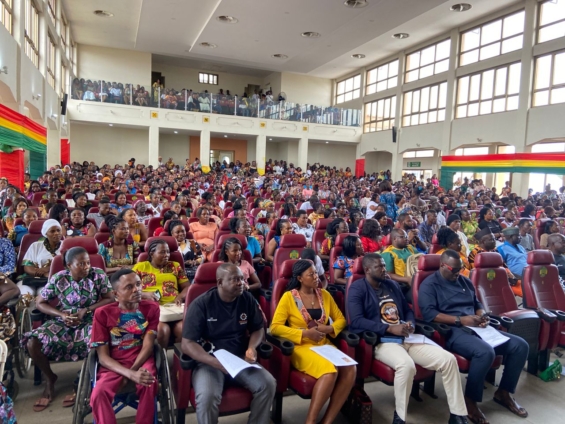
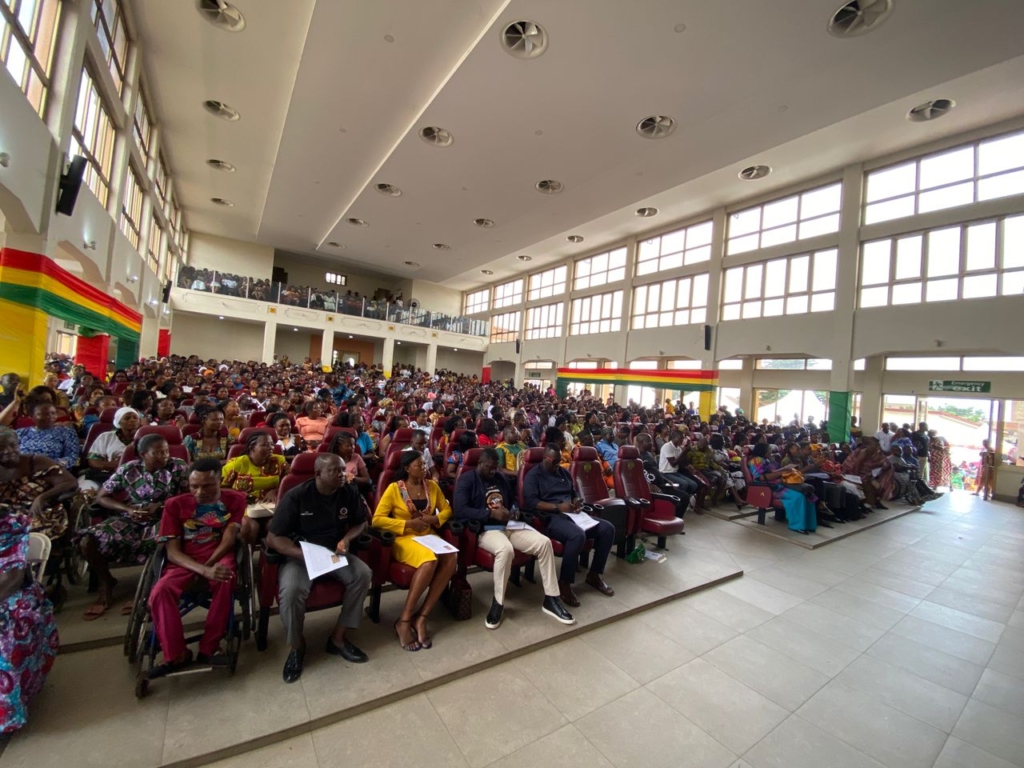
In recognition of this standard gap, the Design and Technology Institute introduced the Precision Quality at Work initiative that has trained and graduated 1,500 artisans cut across technical and vocational industries.
The intervention seeks to enable beneficiaries and their enterprises to operate with professionalism, deliver products and services that meet world-class standards, and become competitive in a global marketplace.
“Graduates, today you join a network of Mastercraft Persons and artisans equipped to apply precision and quality in every task, mentor apprentices and inspire them to adopt the same high standards, embrace innovation and technology to enhance productivity and build customer trust through reliability, accountability, and integrity.
“The products you make, the services you render, and the businesses you grow will contribute to GDP, create jobs, and project a new narrative of Ghanaian craftsmanship, one of excellence, creativity, and global competitiveness,” said Constance.
Mastercraft persons and artisans received training, including proper business culture, quality assurance, and marketing skills.
Project Coordinator for the Design and Technology Institute, Mohit Sharma touted the initiative’s inclusive quest to improve operations of the informal sector within vulnerable groups.
“At the Design and Technology Institute, our mission has always been clear: to transform Ghana's technical and vocational education and training landscape by instilling a culture of Precision Quality. The highlight for us is the massive participation of women in the initiative. We exceeded the target of 60% women participation, and now have 90%. We show a positive and deep-rooted interest when it comes to seeking precision in the quality of their businesses,” he said.
Beneficiaries say the training has already impacted their businesses, with the adoption of quality precision cultures.
“I got to understand how important it is to accept feedback from customers and so now I don’t joke with it. And for the first time my attention was drawn to the fact that I should have first aid at my work place. It was eye opening for me,” a food processing entrepreneur, Grace Addo said.
“I didn’t even think I needed a bank account for my business, and also pay myself as the business owner. So the financial management of my business was not coordinated. But after the training, I had my business bank account registered, and I am seeing improvement in how I trace my profits,” Gas wielder, Frimpong Aboagye said.
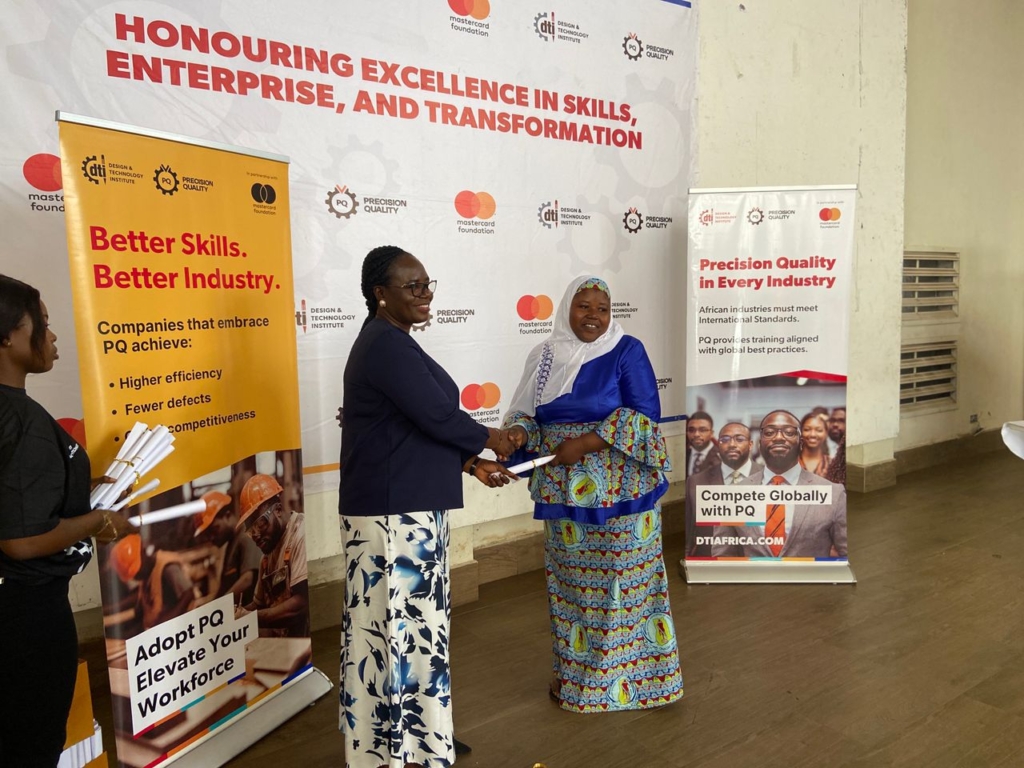
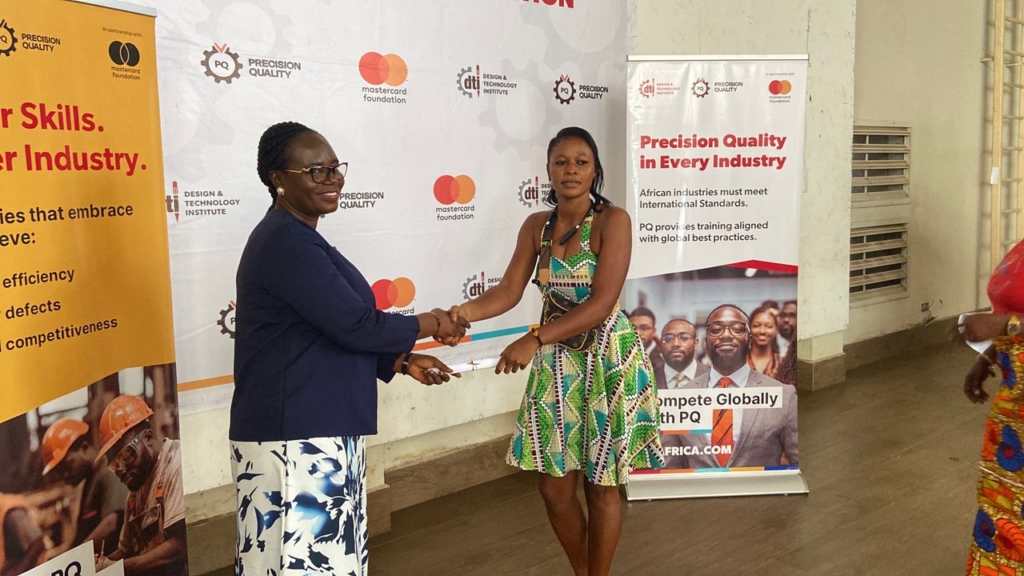
The graduation of the artisans who have successfully completed their training in Precision Quality at Work was under phase two of the DTI/Mastercard Foundation initiative.
Award in the form of tools, business scale and apprenticeship support kits to scale their business and engage apprentices, further opening gateways of job creation best trainees at the ceremony
Latest Stories
-
TTAG raises alarm over proposed recruitment of 7,000 teachers, demands national posting roadmap
31 minutes -
Civilians feared killed after reports of air strike on Nigerian market
41 minutes -
Bishop Simon Kofi Appiah installed as new Jasikan Diocese Bishop
42 minutes -
Trump’s Strait of Hormuz blockade threat raises risks and leaves predicaments unchanged
44 minutes -
US Court backs extradiction of former MASLOC CEO Sedina Tamakloe-Attionu’s to Ghana
1 hour -
Seven arrested as NAIMOS dismantles illegal mining camp, seizes firearms at Boin River
1 hour -
Fire erupts at Madina Ritz Junction, destroys multiple wooden structures and containers
1 hour -
Daniel-Kofi Kyereh returns from long-term injury, registers assist for Freiburg U23
2 hours -
Knifeman calling himself ‘Lucifer’ slashes three at NYC’s Grand Central
2 hours -
Brands are built from within to without
2 hours -
Matriculants urged to pursue excellence as gov’t reaffirms support for Maritime education
2 hours -
See the areas that will be affected by ECG’s planned maintenance on Monday, April 13, 2026
2 hours -
GPL 2025/26: Salim Adams double fires Medeama back to summit after Kotoko rout
2 hours -
Two robbery suspects convicted following violent gold dealer attack in Obuasi
2 hours -
Supreme Court @150: Fanfare meets reflection as nationwide activities roll out
2 hours