

Audio By Carbonatix
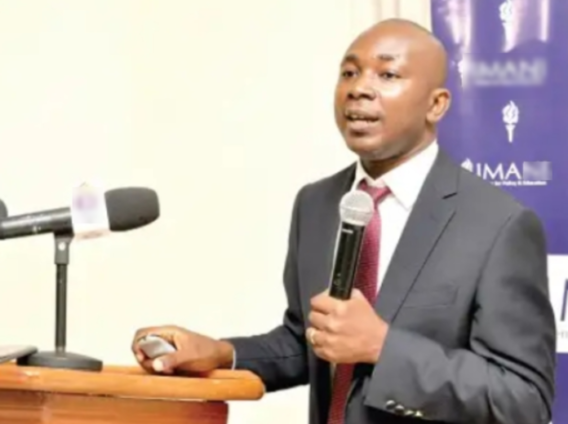
Professor of Finance and Economics at the University of Ghana, Godfred Bokpin, has warned that the country’s economic transformation depends heavily on reforms within the energy sector, particularly the Electricity Company of Ghana (ECG).
Speaking on Joy FM’s Super Morning Show on Monday, September 1, during a discussion on the annual report of the State Interests and Governance Authority on State-owned enterprises (SOEs), Prof Bokpin said that energy remains the foundation of national development.
“Nothing can happen in this country without energy. That is how fundamental it is. We currently don’t have enough power even for an eight-hour economy, and yet we are talking about scaling up to a 24-hour economy,” he said.
He explained that both industrialisation and the competitiveness of the private sector rely on “cheap and reliable energy,” adding that inefficiencies in the public sector only increase costs for businesses.
Prof Bokpin highlighted the weaknesses at ECG, pointing to poor revenue collection and high losses. “If you look at our current level, ECG revenue collection is at 85% while the global average is 98%. When it comes to losses, ECG’s losses are as high as 28% while the global benchmark is between 10 and 16%,” he said.
He warned that without “drastic reforms,” the situation will remain bleak. “Across all the indicators, there isn’t much that gives you hope. We are not seeing those reforms even under this new regime. It’s business as usual, and that comes down to governance and management failures,” he added.
According to him, political interference, procurement abuses, and poor investment decisions have worsened ECG’s inefficiencies. “You review the ECG report, and you will see over-investment in some areas and under-investment in critical areas, leading to idle inventory while deficits persist. The reason you have this idle investment is because of the procurement economy that benefits powerful people in this country,” Prof Bokpin explained.
He said that despite repeated reports of mismanagement, little action is taken. “We see this report day in day out, but nothing gets done. No arrest, no prosecution, no recovery. The next moment we'll hear is to introduce levies and pass on those inefficiencies to the ultimate taxpayer or the consumer. You can’t develop that way,” he said.
Prof Bokpin revealed the financial burden ECG’s inefficiencies place on the state. “If you look at it from now to 2029, the budgetary provision we have to make to cater for ECG alone is actually more than the annual budgetary allocation to the Ministries of Food and Agriculture, Trade, Health, and Education,” he warned.
Latest Stories
-
Former President Akufo-Addo takes on new role in Anglican Church
41 minutes -
MTN Ghana steps up sensitization on efficient and safe data usage
41 minutes -
Mfantsipim celebrates 150 Years with historic launch of anniversary songs and commemorative cloth
44 minutes -
Korle-Bu doctors accuse management of staging ‘perfect’ emergency ward for Health Minister’s visit
1 hour -
Ghana’s historic proposal for a UN Resolution on Transatlantic Slave Trade as the gravest crime against humanity. Revisiting the depth beneath our silence
1 hour -
Korle-Bu accident and emergency centre under strain as doctors warn of legal and safety risks
2 hours -
Ghana pushes landmark UN Resolution on Reparations for slave trade
2 hours -
NPP’s poll decline ‘startling’ – Prof Nortey calls for introspection
2 hours -
Consumers to feel impact of Burkina Faso tomato ban – Peasant Farmers Association
2 hours -
ICGC hosts DOULOS Conference 2026 to raise enduring church leaders
2 hours -
NPP support declining, NDC gaining ground – Global Info Analytics poll
2 hours -
LCF leads successful prison outreach at Nsawam, extends hope to inmates
2 hours -
Ibrahim Mahama announces legal action against Black Maria special operations team over alleged assault in Tamale
3 hours -
2026 World Cup: US Embassy reduces Visa waiting time, warns against wrong applications
3 hours -
E&P to invest $1.2bn in Tarkwa and Damang mines, sends 30 heavy-duty trucks to site
3 hours