

Audio By Carbonatix
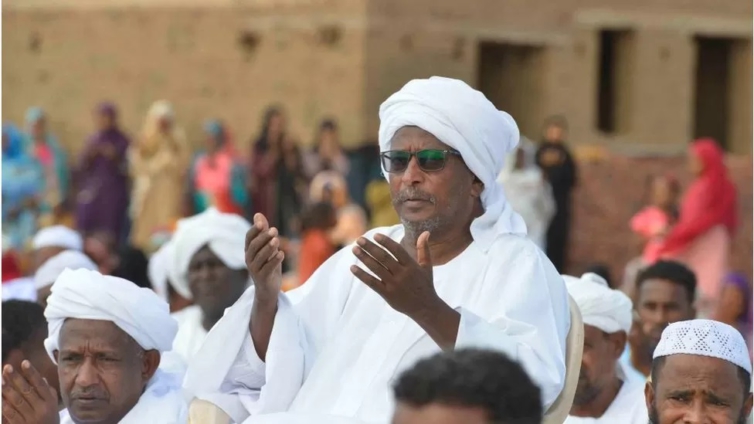
Muslims in Sudan have been celebrating Eid al-Adha amid the sound of gunfire despite a ceasefire announced by the warring military groups.
Residents have told the BBC that heavy artillery and airstrikes were heard in Khartoum state.
"It doesn't feel like Eid," said Zahra Saeed, adding that the streets are "empty" and that people are "scared".
"Last night I couldn't sleep because of the sounds of the gunfire," Ms Saeed added.
Others say they are too afraid to even attend the outdoor prayers which are normally a central part of the day: "For the first time in my life I didn't go," said 22-year-old former medical student Walaa Ibrahim.
Instead, many people prayed in their own homes.
"Now the airstrike is being carried out, they don't respect people, they don't respect the importance of... such occasions," the ex-student added.
Sudan is currently in its 10th week of a war which started in April, amid a power struggle between the country's military and a paramilitary group called the Rapid Support Forces (RSF).
Since then, more than 500,000 people have fled Sudan, according to UN figures from just over a week ago, while roughly 2.2 million people have fled their homes within the country.
Precise figures on the number of people killed in the fighting are difficult to establish, but it is believed to be well over 1,000, including many civilians caught in the crossfire.
As well as the fighting, many Sudanese are also struggling to celebrate Eid properly because they don't have enough money.

As part of Eid al-Adha, Muslims who can afford to sacrifice a sheep or goat and share the meat between family, friends and the poor.
This is because Eid al-Adha, means "festival of sacrifice" and commemorates the time when, according to the Qur'an, the Prophet Ibrahim was ordered by Allah to sacrifice his son - and as he was about to do so, the boy was exchanged for a ram.
"Every Eid we used to buy a sacrificed sheep, but this Eid the situation is quite difficult because of war and because most of us did not get paid. We cannot pay for sacrifice sheep due to the high prices," said Mohammed Abboud Soliman, a cattle trader from West Kordofan state.

The usual sweet Eid treats from bakeries are also in short supply. In Omdurman, one of three cities that make up Greater Khartoum, bakeries have been looted.
One resident told the BBC: "Two bakeries have been exposed to robbery and unfortunately one of the bakers was killed. These two bakeries were very important as their production was fulfilling the need of a large area.
"Houses are daily subject to looting and robbery. The situation is deteriorating."
Latest Stories
-
Asha Bhosle: The sound of Bollywood dies aged 92
17 minutes -
Fire destroys bedroom in Tantra Hill apartment
19 minutes -
Safe city: Unnoticeable protection
26 minutes -
North East Regional Police Commander raises alarm over burning of checkpoints
35 minutes -
Free Primary Healthcare Programme set for take-off — Health Ministry confirms readiness
51 minutes -
3 co-wives, 5 children perish in canoe disaster – Maritime Authority insists life jackets use mandatory for all water transport
2 hours -
Iran war lands ‘triple blow’ to flood-ravaged Sri Lankans
2 hours -
Gunmen kill at least 11 people at Afghanistan picnic spot
2 hours -
Woman, 25, in court for stealing baby at Bogoso
2 hours -
Trump unveils giant gold-accented victory arch design for US capital
3 hours -
We spoke to the man making viral Lego-style AI videos for Iran. Experts say it’s powerful propaganda
3 hours -
Hungarians vote in big numbers on whether to end Orbán rule and elect rival
3 hours -
At least 30 feared dead in crush at Haitian tourist site
3 hours -
Boxing: Abdul Ahmed wins WBA Africa Cruiserwight title after dispatching Nigeria’s Eradeye
3 hours -
Nearly 2,000 displaced, schools damaged as windstorm wreaks havoc in Gushegu
3 hours