

Audio By Carbonatix
The Head of the United Nations Office for West Africa and the Sahel (UNOWAS), Leonardo Santos Simão, has stated that Ghana’s upcoming general election will be a significant test of the country’s 33-year democratic resilience.
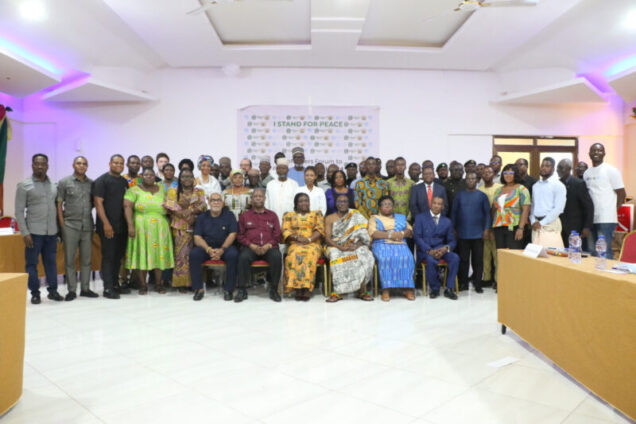
Speaking at the National Stakeholder’s Dialogue in Ho, organized by the National Peace Council, Mr. Simão highlighted the complex environment surrounding the December 7 polls, noting the need for proactive management to safeguard the integrity of the process.
“This year’s election will once more test the strength of Ghana’s thirty-year-old democratic process, especially as it unfolds in an environment marked by internal and regional security challenges, rapid spread of misinformation on social media, waning political engagement among the youth, socioeconomic hardships, and a rise in inflammatory rhetoric and hate speech,” he remarked.
As the Special Representative of the Secretary-General of the United Nations, Mr. Simão urged all stakeholders to commit to ensuring that these challenges do not undermine the elections or tarnish Ghana’s democratic legacy.
He emphasised the importance of peaceful conduct, urging leaders and citizens alike to foster trust and cooperation throughout the electoral period.
“Ensuring a violence-free election is everyone’s responsibility. I encourage all stakeholders to uphold peaceful elections through responsible individual actions, collaboration, and consistent dialogue. Leaders at every level bear a particular responsibility to promote a peaceful electoral environment.”
Mr. Simão also underscored the importance of inclusive decision-making, advocating for the voices of women, youth, and persons with disabilities to be considered.
“Women, youth, and persons with disabilities occupy vital roles in society, and their perspectives deserve special attention,” he added.
Rev. Seth Mawutor, the Volta Regional Chairman of the National Peace Council, reiterated the Council’s dedication to preserving Ghana’s peace and stability post-election.
“The National Peace Council remains fully committed to its mandate of facilitating mechanisms for conflict prevention, management, and resolution,” he said, commending stakeholders for their efforts in fostering local peace initiatives and stressing the need for innovative approaches to emerging security challenges.
Togbega Tepre Hodo IV, President of the Volta Regional House of Chiefs, emphasized the high value of peace, warning that disruptions could have long-lasting repercussions.
“Peace is a very costly commodity. Disregard it, and you risk the consequences for a lifetime,” he cautioned.
The dialogue brought together representatives from political parties, civil society, security agencies, the Electoral Commission, traditional authorities, and international observers, all united in their commitment to a transparent, peaceful election.
Latest Stories
-
Ghana begins review of 1999 National Land Policy, targets new framework by 2027
2 minutes -
Tiptoe Lane’s tech takeover: The story behind Ghana’s booming informal phone market
1 hour -
Abanga vows to use social media to counter NDC messaging ahead of 2028 elections
1 hour -
Okai Mintah seeks Sabah Zita Benson’s support for NDC National Youth Organiser bid
2 hours -
Okai Mintah vows to strengthen NDC campaign machinery ahead of 2028
2 hours -
Mother of four and Jasikan teacher among new Telecel M’ahitti Promo winners
2 hours -
International Youth Shakers Conclave 2026 set to bring global young leaders to London
2 hours -
Gov’t is committed to addressing teachers’ conditions of service, deprived-area allowance – Education Minister
2 hours -
GoldBod’s structure encouraging galamsey – Afenyo-Markin
2 hours -
Tullow starts selling Jubilee, TEN crude to Ghanaian refineries
2 hours -
Local Government Service authorises rationalisation, redistribution of staff
2 hours -
PURC assures consumers of working to ensure quality services in Northern Region
2 hours -
Ghana develops US$4.28bn water financing framework
2 hours -
Christian Council calls for protection of mission schools’ religious identity
2 hours -
Mahama holds discussions with India’s External Affairs Minister
2 hours