

Audio By Carbonatix
As an advocate for menstrual health and gender equity, I commend the Ghanaian government for allocating GH¢292.4 million in the 2025 budget to provide free sanitary pads to female students in primary and secondary schools.
This is a significant step in addressing period poverty, reducing school absenteeism, and ensuring that no girl is forced to stay home simply because she cannot afford menstrual hygiene products.
At Alive Today, a youth-led non-profit organisation, we have been distributing free sanitary pads to schools across Ghana for years. We have seen firsthand how a simple pack of sanitary pads can restore a girl’s confidence and keep her in school. While we welcome this initiative, we must ensure that its implementation is inclusive, decentralised, and sustainable.
One of our biggest concerns is the risk of urban bias in distribution. Too often, well-intentioned programs concentrate resources in cities while rural and underserved communities are left behind. A needs-based, community-driven model is essential to ensure that every girl, regardless of location, has access to sanitary products.
At Alive Today, we believe that collaborating with civil society organizations (CSOs) and community-based groups is the best way to achieve this. These organisations have the experience, networks, and deep-rooted connections to ensure equitable distribution, especially in hard-to-reach areas.
Another critical aspect we must consider is sustainability. As we provide free sanitary products, we cannot ignore the environmental impact of single-use plastic pads. We urge the government to promote biodegradable and reusable sanitary products where possible. Sustainable options not only reduce plastic waste but also provide long-term solutions for girls who may struggle to access disposable pads regularly.
Beyond sustainability, we must also think about local production. A long-term strategy that invests in young Ghanaian entrepreneur in the menstrual hygiene sector will create jobs and boost our economy. Instead of relying on imported products, let us build local capacity to produce eco-friendly sanitary solutions for our girls.
Alive Today stands ready to work with the government, development partners, and other stakeholders to ensure the success of this initiative. If done right, this program can transform menstrual health management in Ghana, ensuring that no girl is forced to miss school because of her period.
We look forward to meaningful engagement and action that will make this initiative not just a short-term intervention but a lasting solution to period poverty in Ghana.
********
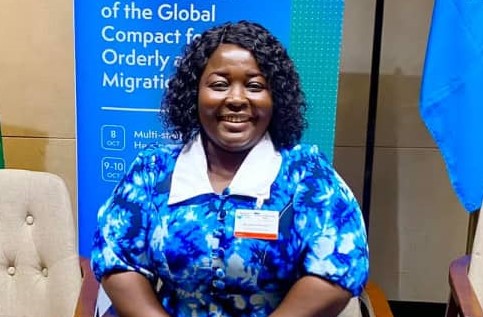
Sandra Teiko Lewu, Executive Director, Alive Today
Latest Stories
-
Knights and Ladies of Marshall group backs Catholic Bishops’ stance on anti-LGBTQ+
35 minutes -
Bright Simons writes: All the Filla in the Ibrahim Mahama/E&P – Gold Fields Saga
60 minutes -
Monetise Idiocy In Ghana
1 hour -
The Ghanaian prophet and the mysterious death of his scottish wife Charmain Speirs
2 hours -
Nearly 400 sentenced in Nigeria for links to militant Islamists
2 hours -
Ghana’s recovery supported by gold strength despite global oil price pressures – Standard Bank Research
2 hours -
Methodist Church hails Mfantsipim@150; calls for “fresh consecration” to excellence
3 hours -
‘Excellence is our inheritance’ – Nana Sam Brew-Butler hails Mfantsipim’s 150-year reign in leadership
3 hours -
Kwaku Azar writes: A-G vs OSP
3 hours -
Mfantsipim–Adisadel rivalry built excellence, not division – Sam Jonah
3 hours