

Audio By Carbonatix
The Environmental Protection Authority (EPA) has begun a training initiative aimed at equipping Ghanaians with the skills to tap into opportunities within the global carbon market, a sector the Authority believes can generate significant revenue for the nation while creating thousands of jobs for unemployed youth.
The maiden programme is expected to train about 25 participants to build their capacity in carbon market trading and position them to support both personal growth and national development.
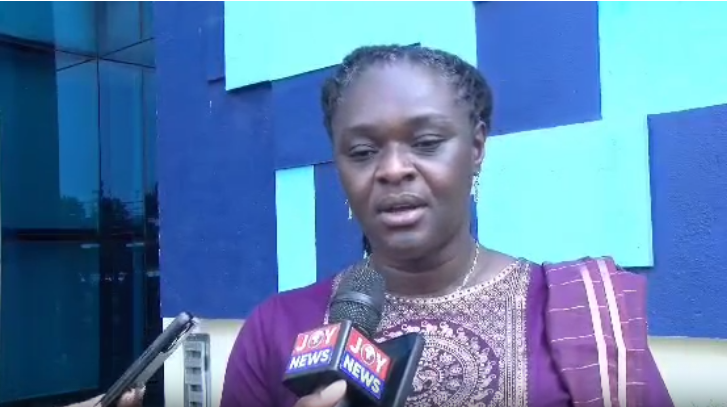
Speaking to journalists at the training, which was held at the AB & David Hotel in Accra, the Chief Executive Officer of the EPA, Professor Nana Ama Browne Klutse, described the initiative as a crucial step in Ghana’s broader climate finance and sustainability agenda.
According to her, “the Environmental Protection Authority is, for the first time, doing a training on carbon markets. What we want to do is that the carbon market is trending in the world, and in Ghana, per our assessments, we have a huge carbon credit. We can trade for money and for technologies, renewable energy technologies that will help the country and help the citizens.”
Professor Klutse explained that over two years, the Authority has been building technical knowledge through its Carbon Market Office, and it is now time to extend that expertise across institutions and individuals nationwide.
“We’ve done a lot of learning and had some experiences, and we need to expand it to other institutions in the country, other individuals to build their capacity in carbon market trading,” she stated.
She emphasised that the training will benefit not only participants but the country at large.
“Apart from individual gains, the country also gains as one of the countries with credibility in carbon accreditation and carbon market experience. So that is why we are setting up this training.”
Professor Klutse noted that interest in the programme has been encouraging, with participants drawn from diverse organisations eager to understand carbon trading.
“We have seen the participants coming from different institutions that are interested in carbon market trading. We believe this will be widespread through all other institutions.”
She revealed that the EPA intends to scale up the programme in response to demand.
“This is the first one. We expect to have different cohorts after this first one, depending on the interest of people. And we believe that several institutions should be interested in this. This is a big opportunity for us to gain money and also to gain technology.”
Professor Klutse stressed that the economic potential is significant, adding that if properly harnessed, Ghana could attract up to 1 billion dollars in investments over the next four years and create an estimated 5,000 jobs.
Latest Stories
-
Health Ministry engages Ga Mantse ahead of Free Primary Healthcare launch
40 seconds -
We can tackle multiple priorities – Sam George defends Anti-LGBTQ Bill push
35 minutes -
Statement: Ghana Chamber of Mines’ Response to Claims in Joe Jackson’s “Ananse Stories about the Economy of Ghana”
37 minutes -
GES opens 2026 teacher recruitment for licensed B.Ed graduates
39 minutes -
Ghana must value skilled trades, build resilient learners — Ibn Chambas
47 minutes -
Ghana must rethink education around relevance, resilience and responsibility — Ibn Chambas
50 minutes -
Prince Harry faces defamation lawsuit from charity he co-founded
52 minutes -
South Korea deploys thermal cameras to track escaped zoo wolf
54 minutes -
Calls for royal meeting with Epstein survivors grow ahead of US visit
57 minutes -
Ibn Chambas advocates blend of technology and human values in education
59 minutes -
UMA improves healthcare access in Asutifi North with GH₵700k ‘Kim Taylor Legacy’ Walkway
1 hour -
Scholarships Authority and Fanaka University offer sponsorship for procurement and supply chain studies
1 hour -
Bisa Kdei drops new single ‘Go N Look’ featuring Medikal
1 hour -
Benin facing rising terrorism in north as French military presence faces growing criticism
1 hour -
UEW Public Lecture Series 2026: Education debate ‘about the soul of Ghana’s future’ — Dr Ibn Chambas
1 hour