

Audio By Carbonatix
Ghana took center stage in climate adaptation discussions when the Environmental Protection Agency and the United Nations University – Institute of Natural Resources in Africa (UNU-INRA) hosted an IPCC outreach meeting at the Alisa Hotel in Accra. The event brought together government officials, academics, climate experts, and international development partners to explore how climate change strategies can focus on people’s lives and communities, not just infrastructure and projects.
At the heart of the meeting was a keynote presentation by Director of United Nations University- Institute of Natural Resources in Africa (UNU-INRA), Prof. Fatima Denton, titled “Adaptation: Whose Story Counts?”
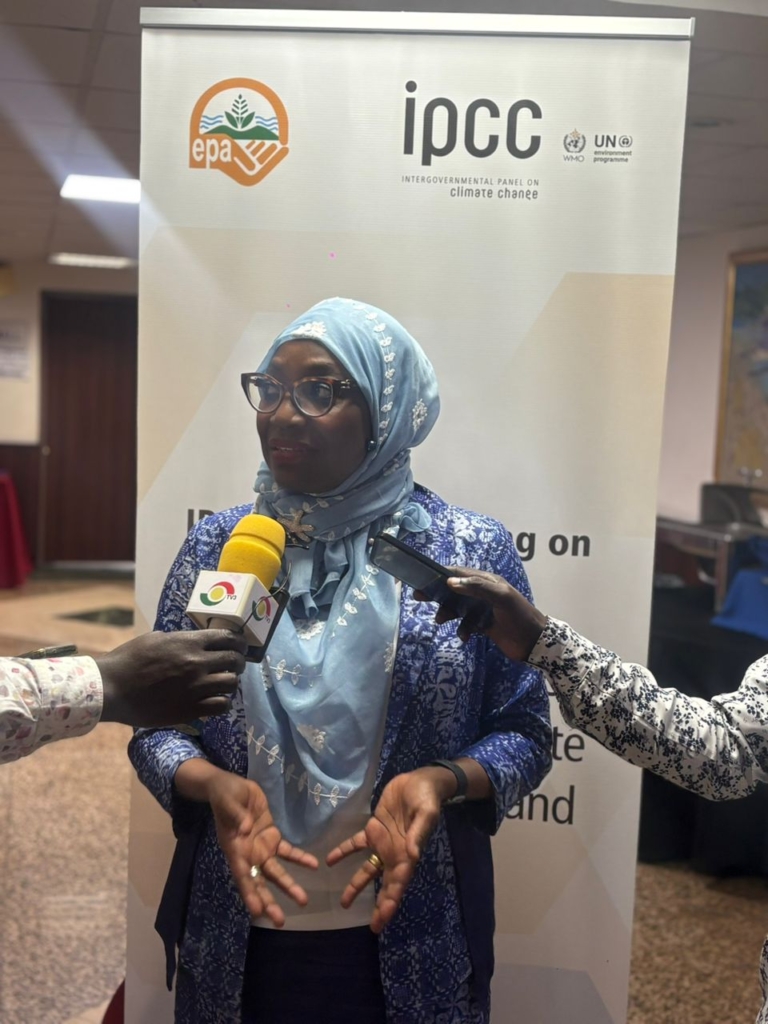
She explained that adaptation success is often measured by visible outputs such as flood barriers, drainage systems, or other infrastructure, while the real impact comes from improving people’s health, livelihoods, and daily resilience. She urged that metrics should reflect the experiences of vulnerable communities, showing what works for ordinary households and not only what can be counted easily.
Prof. Denton highlighted that adaptation planning must consider health impacts such as heat stress, changing disease patterns, and strain on local health systems. She emphasized that household coping strategies often disappear when aggregated into national or global indicators and called for adaptation measures that ensure justice for the most exposed groups. She said adaptation is not neutral, and it must make people visible in the way success is measured and funded.
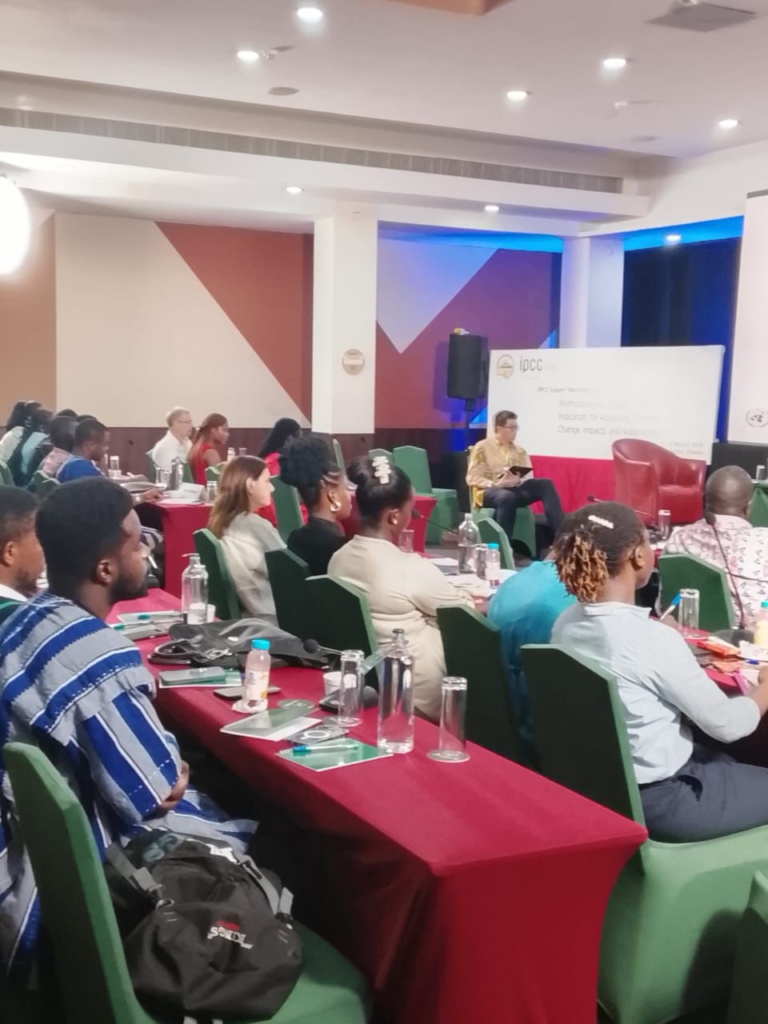
The outreach event also featured a panel discussion on how IPCC findings can inform national decision-making. Experts including Dr. Phillip Antwi from KNUST, Dr. Nana Antwi Boasiako Amoah from EPA, among others explored ways Ghana can design policies that use scientific evidence to support vulnerable communities.
The discussions showed that integrating human-centered metrics into adaptation strategies can guide finance, planning, and policy to deliver real benefits to the people who need them most.
The event demonstrated Ghana’s leadership in connecting global climate science with local realities to show that the country is moving beyond counting projects to counting lives, health, and livelihoods. Participants agreed that adaptation efforts that focus on people will not only improve outcomes for communities but also strengthen Ghana’s position as a model for climate action in West Africa.
Latest Stories
-
Tarkwa court jails labourer for three years over GH¢123,000 theft
53 minutes -
GAEC must retain nuclear scientists for Ghana’s nuclear ambitions – Minister
1 hour -
Man reportedly mistaken for game and shot by hunter dead in forest
1 hour -
19-year-old mason jailed 15 years for defiling seven-year-old pupil
2 hours -
Ghana’s banking sector assets rise 20.47% to GH¢500.2bn – BoG Governor
2 hours -
22 injured as Sprinter bus overturns at Sege after tyre burst
2 hours -
UN housing expert urges Ghana to strengthen Rent Control Department amid housing affordability concerns
2 hours -
Delta-BCI partnership reaches 166,000 people with breast cancer education
2 hours -
Power restoration fault suspected in Kumasi Central Market fire
7 hours -
The 7-foot giant of Ngleshie Amanfro: Seven-foot Ghanaian Ephraim Saawa dreams of joining the national basketball team
8 hours -
Government promises support for Kumasi Central Market fire victims
8 hours -
Vibes The Movie: Big Ghun’s Ghanaian film earns five nominations at 2026 REFFA
8 hours -
‘I’m a fulfilled man’—Justice Korbieh on missing out on Supreme Court despite two nominations
9 hours -
MamaCare CEO warns unresolved conflicts among health workers could undermine maternal and neonatal care
9 hours -
Health professionals urged to translate medical knowledge into practice to save mothers
9 hours