


Audio By Carbonatix
Europe has a message for employers: Think twice before you check the social media profiles of job applicants.
European officials have issued new guidelines that warn bosses about the legal hazards of scrolling through the social media profiles of potential hires.
The rules require employers to issue a disclaimer before they check applicants' online accounts, including Facebook, Instagram, Snapchat, Twitter and LinkedIn.
If applicants don't see the warning, the company could be in breach of European Union data protection rules.
Employers are also barred from compiling social media data as part of the hiring process unless it is "necessary and relevant" for a particular job.
The guidelines are part of a lengthy document clarifying data protection laws that apply to employers across 28 EU countries.
The rules may require companies to change how they recruit.
Surveys suggest that employers are increasingly using social media to vet job candidates. In the U.S., 70% of employers use social media as part of the screening process, according to a recent survey of more than 2,300 hiring managers and HR professionals by CareerBuilder.
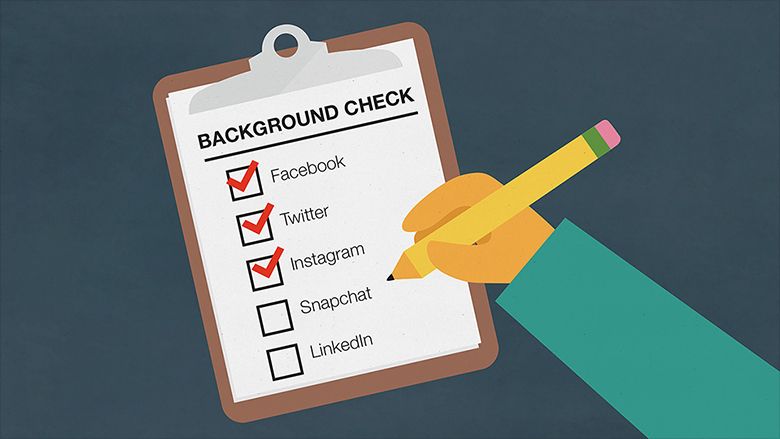
Companies in Europe have to warn job applicants that they plan to check their social media profiles as part of the hiring process.
EU officials also laid out other data guidelines for companies to follow:
Employers can give wearable devices like Fitbit (FIT) step counters to their workers, but they are prohibited from collecting any data from the gadgets. They are also barred from working with third parties that may possess the data.
Companies should also not provide their customers with overly detailed staff information. For example, a delivery company can text a client to tell them a delivery man is on the way, but they shouldn't include the employee's name or photograph.
There's no "legitimate ground" for this level of detailed information, the regulator said.
Related: When Millennials are the boss
A range of new data protection rules will be introduced across the EU in May 2018 covering everything from drones to driverless cars. The updated rules were designed to protect individual privacy rights and data sharing. Companies that don't abide could face a fine of up to 4% of their annual global sales.
A spokesperson at the European Commission said that even though the latest employer guidelines apply specifically to current data regulations, they were designed to be followed even when the new rules go into effect next year.
Latest Stories
-
Gold extends losing streak on expectations of tighter policy from central banks
4 minutes -
GTEC orders Royal Nursing College to refund fees to level 100 and 200 students after closure
44 minutes -
Africa! Arise and move : A philosophical awakening for Africa in a changing world
46 minutes -
Minority demands independent probe into fatal Tema microlight crash
49 minutes -
We’ll soon procure a chemistry analyser—Sissala East MP assures
1 hour -
“We saw things that should never happen again” – Hugo Broos criticises AFCON 2025 hosting
1 hour -
Deputy Health Minister tours Bono East, Ahafo ahead of free primary healthcare rollout, raises concern over low doctor retention
1 hour -
Trump administration seeks $200bn in military funding in wake of Iran war
2 hours -
Precious International School and God Reigns Academy secure semifinal spots in 2026 Luv FM VitaMilk primary schools quiz
2 hours -
Parliament ratifies Ghana–Barari DV lithium deal amid minority rejection
2 hours -
Decency, modesty, and legality: National Chief Imam issues Eid-Al-Fitr 2026 guidance
3 hours -
No more extravagant funerals: Tema Traditional Council sets tough new rules
3 hours -
World Cup 2026: Litina Travels secures Sports Ministry endorsement to facilitate Ghanaian fan travel
3 hours -
Perform or be dissolved: Gov’t bans bonuses for loss-making SOEs
3 hours -
Photos: Mahama cuts sod for 24-hour economy market at Dormaa Ahenkro
3 hours