

Audio By Carbonatix
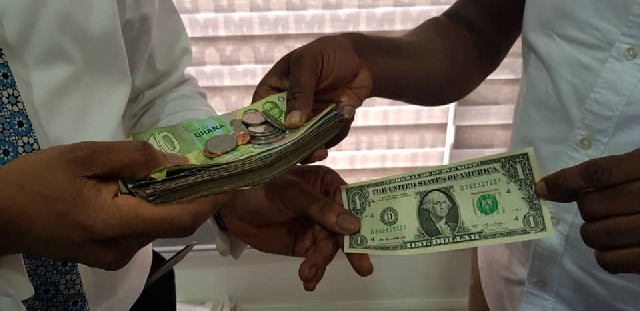
The cedi has had one of its most dramatic years in recent memory. It opened 2025 at GH₵14.7 to the dollar. By February it had weakened slightly to GH₵15.50 and held there until April, making it one of the longest periods of stability in more than a decade.
Then came the surprise. Between April and May the cedi shot up, strengthening from GH₵15.50 to GH₵10.30 in just five weeks.
From May through July and into early August it stayed stable again, hovering between GH₵10.3 and GH₵10.5. But by mid-August the tide had turned.
In only three weeks, it has slipped to GH₵11.90, making it one of the worst-performing currencies in the third quarter of 2025.
External conditions have not changed much. In fact, they should still be in Ghana’s favour.
Gold prices are at record highs, the U.S. dollar remains subdued, and the Federal Reserve is expected to cut interest rates soon—moves that normally support the cedi. The pressure is instead domestic.
Remittances, which are a critical source of foreign exchange, appear to have slowed. The earlier strength of the cedi distorted the incentive.
For instance, if someone abroad sent $100 in April, that converted into about GH¢1,550, enough to buy roughly 150 cement bags. By May, the same $100 fetched just GH¢1,030, barely enough for 100 bags.
With their dollars suddenly buying fewer goods in Ghana, many senders simply held back, betting that the cedi would weaken again. If it did, their transfers would convert into more cedis.
This pause in inflows removed a steady cushion of dollars from the market just as import demand was rising.
Imports have also surged because traders rushed to take advantage of the stronger cedi to stock up ahead of the festive season, adding to the pressure.
At the same time, there are signs the Bank of Ghana has cut back its dollar supply to the market.
Why scale back? The reasons are not fully clear, but there are strong clues.
The IMF had warned earlier this year that the Bank of Ghana was intervening too heavily after it injected about $1.4 billion into the market in the first quarter of 2025.

In response, the Bank pledged to introduce a formal framework for forex interventions by the end of September.
The recent slowdown in interventions may be a trial run ahead of that policy rollout.
Another factor may be the wide gap between the interbank and forex market rates. While the cedi traded at around GH¢10.30 to the dollar on the interbank market, it was consistently between GH¢11 and GH¢12 at forex bureaus.
Allowing some depreciation on the official side may be a way to bring the two markets into alignment, since the parallel rate divergence was distorting the market.
Meanwhile, the Bank has also tightened its regulations: reminding businesses that pricing in dollars is illegal, enforcing declaration requirements for travelers, blocking firms from withdrawing foreign currency they never deposited, demanding stricter documentation before importers can access forex, and clamping down on remittance operators who sidestep regulations.

The cedi’s performance so far in 2025 has been remarkable, though the recent slip is a reminder of how fragile sentiment can be.
Whether stability holds will depend less on global winds than on how firmly the Bank of Ghana sticks to its new playbook.
For now, with gold prices still hovering around $3,500 per ounce and foreign reserves above $11 billion, the Bank of Ghana has the firepower to steady the market.
Panic may be premature.
Latest Stories
-
Lands and Mines Watch Ghana commends Armah-Kofi Buah for transparent Damang Mine Lease Transition
1 hour -
GTVETS announces resumption of work as PSWU strike is called off
2 hours -
AratheJay brings “The Odyssey” to life with stunning live performance release
2 hours -
Gender Minister engages unemployed persons with disabilities
2 hours -
Formal education is a key to success, not the only path – Klef Carter
2 hours -
Why Africa’s creators must lead the movement To build Africa’s 1.5 Billion-consumer single market
2 hours -
IMANI-Africa flags ‘decade and a half of policy failure’ as SIM card re-registration returns
2 hours -
9th Africa Business Tourism & Mice Masterclass to spearhead regional integration and infrastructure readiness
2 hours -
South Africa’s premier sustainable tourism province to welcome Pan-African tourism industry leaders
3 hours -
Photos: Mahama leads wreath-laying ceremony honouring enslaved Africans in New York
3 hours -
Sulemana Braimah urges probe into ‘Big Push’ contracts
3 hours -
Honda Football Championship 2026 officially launched
3 hours -
Salah to leave Liverpool at end of season
3 hours -
Photos: President Mahama’s high-level session on reparatory justice at United Nations
4 hours -
‘Likely to cause financial loss’ – Minority demands OSP, CHRAJ probe into old BoG office contract
4 hours