

Audio By Carbonatix
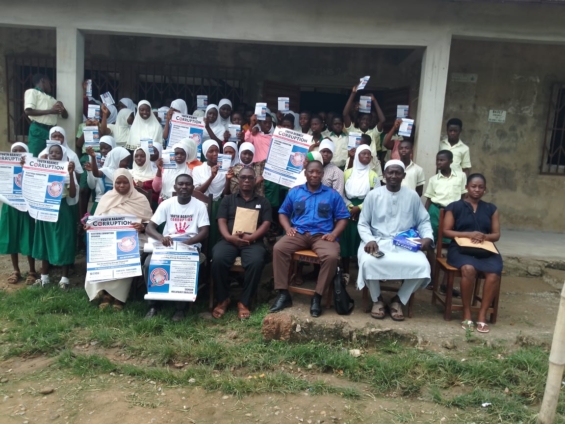
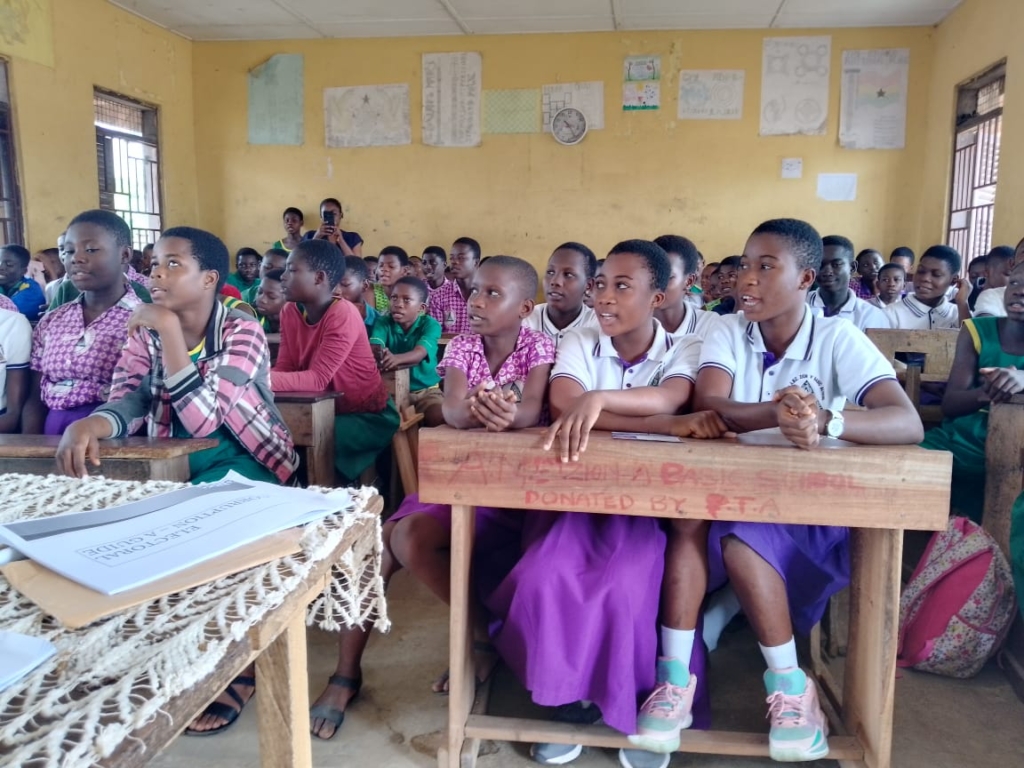
The Ghana Anti-Corruption Coalition (GACC), a non-governmental organisation (NGO) has sensitised the Agona Swedru Islamic Junior High and AME Zion (A) Junior high School students on the effects of electoral corruption and offences.
Done in collaboration with the Local Accountability Network (LANET) and Health Education and Relief Organization (HERO), the exercise was used to educate the students on the negative effects of electoral fraud, corruption, and bribery.
Mr Benjamin Buabeng, Focal Person of LANET in an address said corruption was the abuse of entrusted power by public office holders for private gains.
He stated that the misuse of public funds for instance derailed infrastructural and human development and admonished Ghanaian political leaders to first think of public good and work to achieve growth for the country.
Mr Buabeng urged politicians to stop vote buying, done by offering money or goods to voters in exchange for their votes as it constituted electoral corruption that could hinder a thriving democracy.
He said corrupt practices led to the diversion of public monies meant for development for personal gain.
Students should discourage their parents from engaging in vote selling because it is a criminal act.
On electoral fraud, Mr Buabeng said illegal acts that may increase votes for a preferred candidate, like snatching and stuffing of ballot boxes with ballots could result in electoral violence.
Also, malpractices where some candidates may intimidate voters at polling stations, tamper with ballot boxes or engage in vote buying to secure more votes to clinch victory, he indicated, changed the expected outcome of an election, and resulted in conflicts.
Mr Buabeng said the Criminal Offences Act, 1960 (Act29), section 256 as amended by section 9 of Act 1034 stated that a person shall not act in a manner that amounted to corruption, intimidation or impersonation in respect of a public election.’’
He said, “A person who contravenes the Act, commits an offence and will be liable to not less than five years imprisonment or more.’’
Mr Daniel Asomaning, Officer of the Commission on Human Rights and Administrative Justice (CHRAJ), briefed the students about the functions of state institutions that dealt with persons who engaged in corruption and other offences.
The institutions are the Attorney General, Office of Special Prosecutor, Auditor General, Police, CHRAJ and other investigative bodies where cases of corruption could be reported for appropriate actions to be taken against culprits.
Mr Asomaning urged the students and the public to report cases of corruption and fraud to the aforementioned institutions with sufficient evidence for investigations and prosecution.
He stressed that one could not report a corruption case without factual evidence else the suspect involved would be acquitted and discharged.
The CHRAJ Officer said students could also become whistle-blowers and report cases of corruption to the chief of a town, Assembly-member as well as their teachers to help reduce corruption and bribery in the country.
Mr Abubakar Al–Hassan Adams, Secretary of LANET advised the students not to indulge in corrupt practices like accepting bribes or gifts for votes because it could lead to fines and imprisonment.
Mr Adams urged them to be whistle-blowers in their various communities to help eradicate or reduce the canker of corruption which had bedevilled the country.
The Secretary of LANET reiterated calls on the students to desist from making unsubstantiated and wrongful corruption allegations against people since this could attract defamation suits at the law court.
Mr Michael Amissah, a member of HERO NETWORK said officials who secured power through electoral fraud, were more likely to engage in corrupt practices to recoup lost money for their selfish and parochial interest.
Read also: Ghana’s EOCO Boss now Chairperson of Anti-Corruption Agencies in Commonwealth Africa
He urged students to desist from acts that led to corruption and bribery as they grew to become leaders to hold key public positions.
Latest Stories
-
Trump seeks $152m to reopen notorious Alcatraz prison
24 minutes -
Ex-Chelsea player Oscar retires with heart issue
33 minutes -
CA Foundation drives constitutional literacy in Kpone Katamanso municipality
38 minutes -
GPRTU to hold talks with Transport Ministry over rising fuel costs
40 minutes -
CUTS International urges gov’t to halt sachet water price hike pending cost review
46 minutes -
Chief Justice: Efficient Judiciary essential to reducing business costs
49 minutes -
Bayern grabs 99th-minute winner to cap superb fightback
49 minutes -
Ahmed Ibrahim urges Ghanaians to reflect Easter values in nation-building
53 minutes -
ECG inefficiencies undermining power supply -Mahama outlines reforms
54 minutes -
Lewandowski scores as Barca fight back to defeat Atletico
56 minutes -
Lack of private sector consultation undermining economic growth – Jerry Ahmed Shaib
59 minutes -
Real Madrid seven points adrift after Muriqi’s late Mallorca winner
60 minutes -
Ghana must lead AfCFTA implementation by example – Trade Minister Ofosu-Adjare
1 hour -
Strong Judiciary key to business confidence – Chief Justice Baffoe-Bonnie
1 hour -
Mahama announces 60-Hectare irrigation project to boost tomato production
1 hour